Work & Study · Free printable
Free Character Change Graphic Organizer Printable
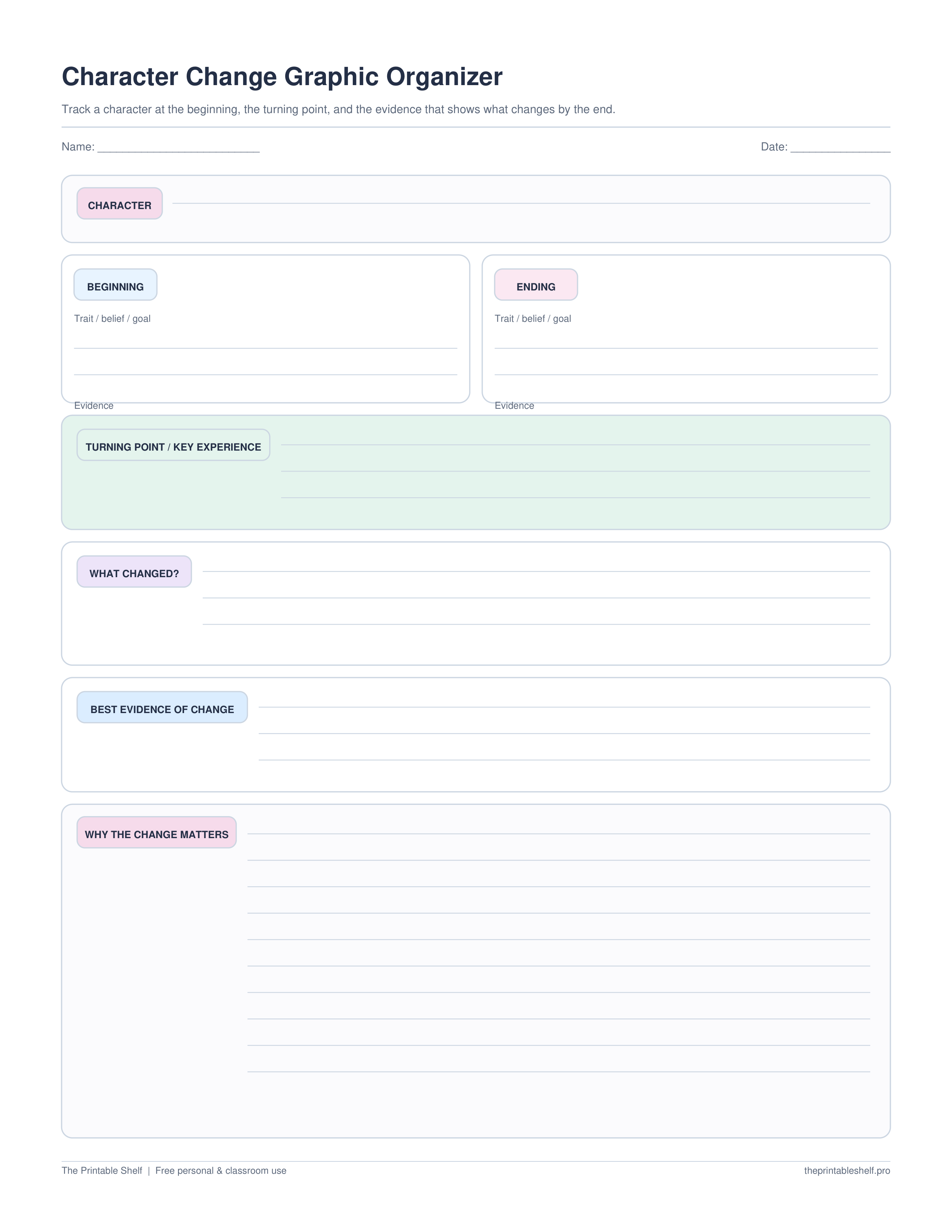
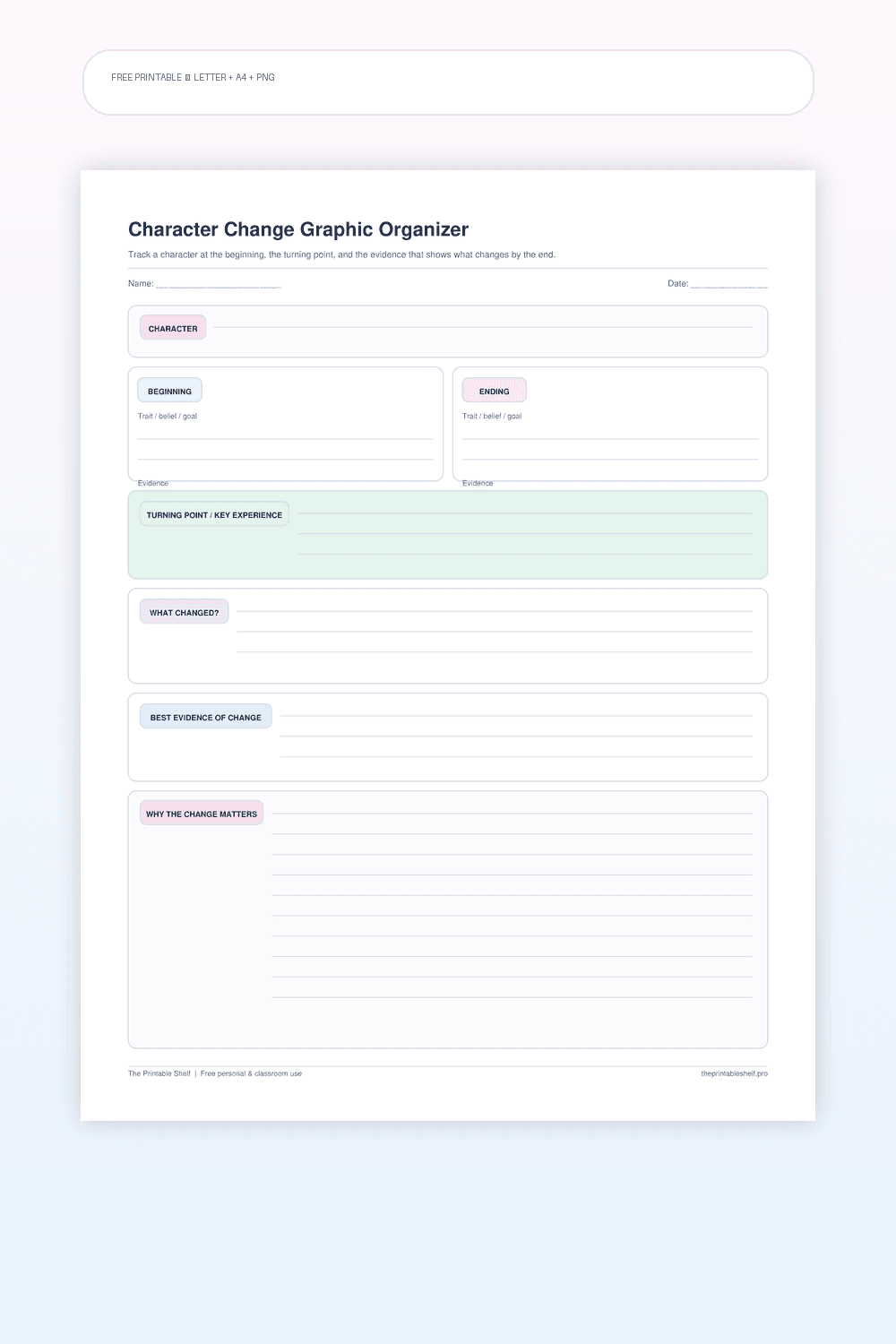
This free character change graphic organizer compares a character at the beginning and ending of a text, identifies the turning point or key experience, and requires evidence showing what changed and why the change matters. It is designed for character development, not just two disconnected trait lists.
Edited by Tessa Vaughn · Planning & Organization Editor
Free download
Choose your file size
Print at 100% / Actual Size for the cleanest margins. Pick the paper size your printer normally uses.
No sign-up required · personal/classroom use
What this printable is for
A literary-analysis organizer focused on development rather than a static list of traits. Readers compare a character's beliefs, goals, behavior, or traits across the story, connect the change to a turning point, and support the interpretation with text evidence.
How to use it
Choose one character and describe the character near the beginning of the story using a trait, belief, goal, attitude, or pattern of behavior. Add brief evidence rather than relying on a label alone. 'Selfish' is stronger when paired with an action, decision, or line that shows what the character values at that point.
Describe the character near the end using the same kind of lens. If you began with a belief, compare the ending belief; if you began with behavior, compare later behavior. The character does not have to improve. A character may become more fearful, more determined, more isolated, or remain largely unchanged despite pressure.
Identify the turning point or key experience that helps explain the difference. This may be one major event or a series of experiences. Avoid choosing the most dramatic event automatically; choose the moment that actually affects the character's decisions, understanding, relationships, or goals.
Use the 'what changed?' and evidence sections to explain the development precisely. State whether the character's belief, trait, goal, relationship, or behavior changed and cite the strongest detail that demonstrates the change. If there is no meaningful change, explain the pressure the character faces and the evidence that shows the character remains consistent.
Finish by explaining why the development matters to the story. Character change may help resolve the conflict, reveal a theme, alter a relationship, or explain the ending. Use the completed organizer to plan a paragraph that moves from beginning evidence through the turning point to ending evidence rather than listing traits separately. If the character does not change, use the same evidence pattern to explain what remains stable and why that consistency is important to the conflict, theme, or outcome. Then connect the stable or changing trait to a specific consequence so the analysis explains development rather than merely naming it.
Customize instead
Need a different title, paper size, or orientation? →
Use the free Graphic Organizer Maker to build a custom Venn, KWL, Frayer, story map, T-chart, main-idea, sequence, or cause-and-effect page.
Also in a free pack
Download this organizer together with related pages when you want one reusable master PDF instead of separate files.
Best uses for this template
Ways to use it
Compare beginning and ending
Use parallel evidence to show how the same character lens changes across the story.
Connect development to plot
Identify the event or experience that actually influences the character instead of choosing the most dramatic scene by default.
Link character to theme
Use the final section to explain how the character's development contributes to the story's larger meaning.
Common mistakes to avoid
Listing unrelated beginning and ending traits
Compare the same kind of trait, belief, goal, or behavior so the change is visible.
Assuming every character improves
Describe the direction the text supports, including negative change or meaningful lack of change.
Choosing a turning point with no connection to development
Select the event that affects the character's choices, understanding, relationship, or goal.
Classroom fit
Suggested grades, use modes & standards
Suggested grade bands
These are practical use ranges, not hard limits. Text complexity and the amount of teacher modeling matter more than the worksheet alone.
Good fit for
Scaffold level: Standard.
Common Core crosswalk
- RL.4.3 · Describe a character in depth using specific details
- RL.5.3 · Compare and contrast characters using specific details
- RL.6.3 · Describe how a story’s plot unfolds and characters respond or change
These codes are a practical crosswalk for skills this organizer can support. They are not a claim that the worksheet alone fully teaches or assesses the standard.
Frequently asked questions
Does every character change?
No. Some characters remain mostly consistent. You can still use the organizer to show the pressures they face and the evidence that they resist or fail to change.
What counts as character change?
Change may involve beliefs, goals, relationships, behavior, confidence, values, or understanding—not only a new personality trait.
What is the turning point?
Use the turning-point box for the event, key experience, or compact series of experiences that best explains the character's change in direction, decision, understanding, or behavior.
Helpful guides
See where this organizer fits, when a different layout works better, and how to turn the completed page into a useful next step.
Keep organizing
You might also like
Free printable
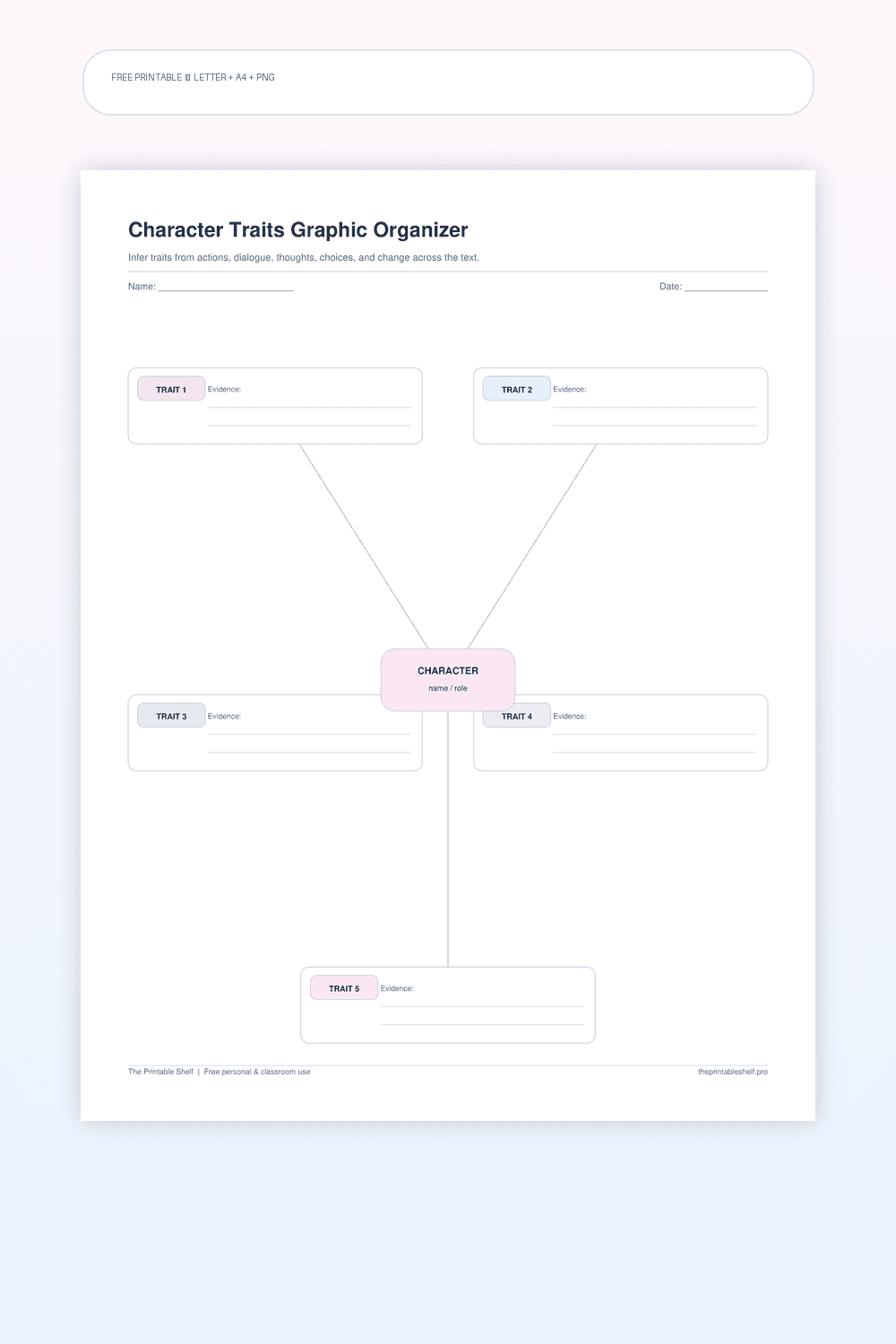
Character Traits Graphic Organizer
A reusable character-analysis page designed to make evidence part of the task. Instead of asking for a list of adjectives with no support, each branch asks for a trait plus evidence from the text. That makes the sheet useful for reading response, discussion preparation, and paragraph planning rather than simple vocabulary practice.
Free printable
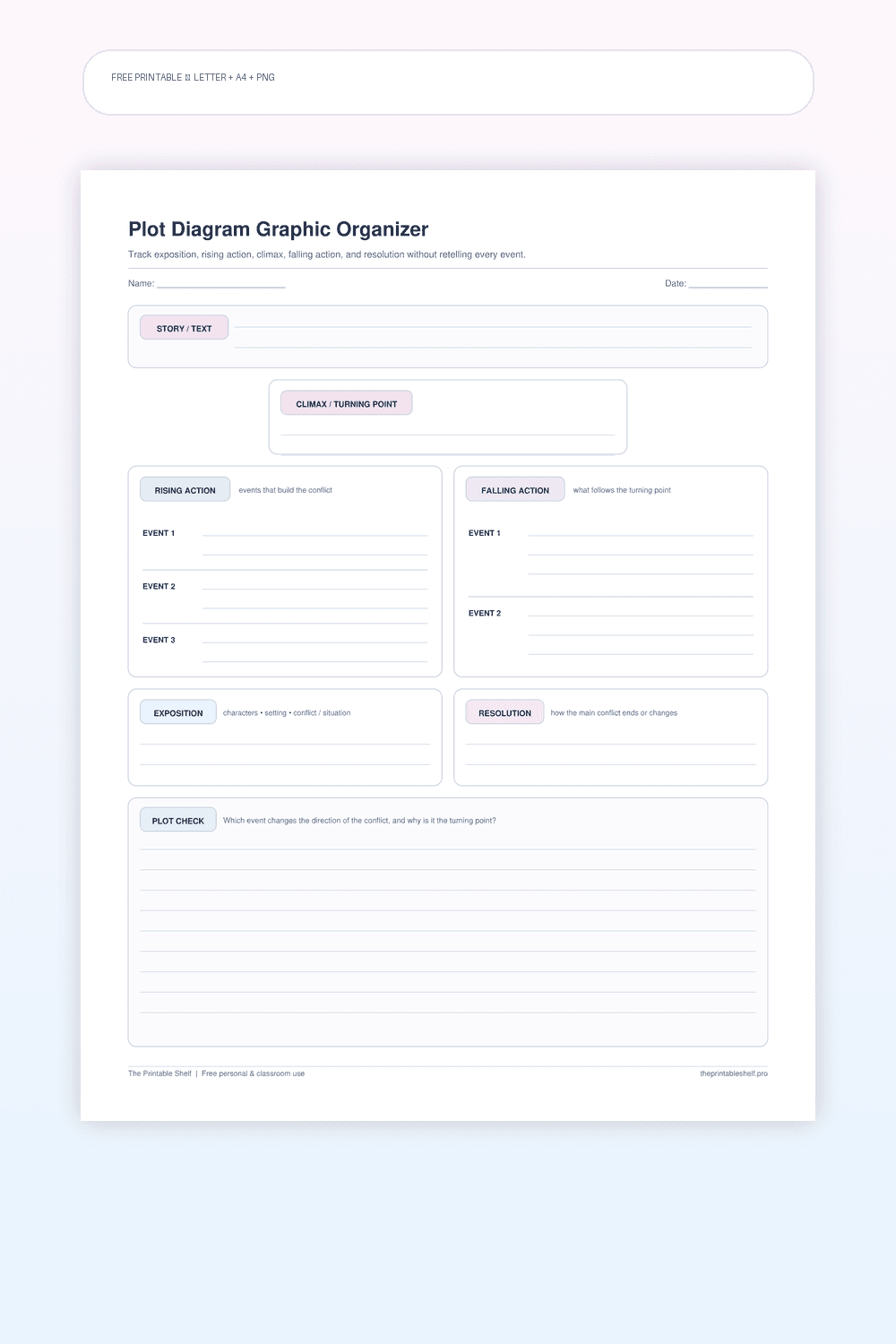
Plot Diagram Graphic Organizer
A plot-structure organizer for examining how a story develops around conflict and a meaningful turning point. It is more specific than a general story map: instead of collecting characters, setting, problem, and solution as separate story elements, this page asks the learner to sort significant events into exposition, rising action, climax, falling action, and resolution. The final plot-check prompt keeps the diagram focused on why the turning point matters rather than on the visual shape of a mountain.
Free printable
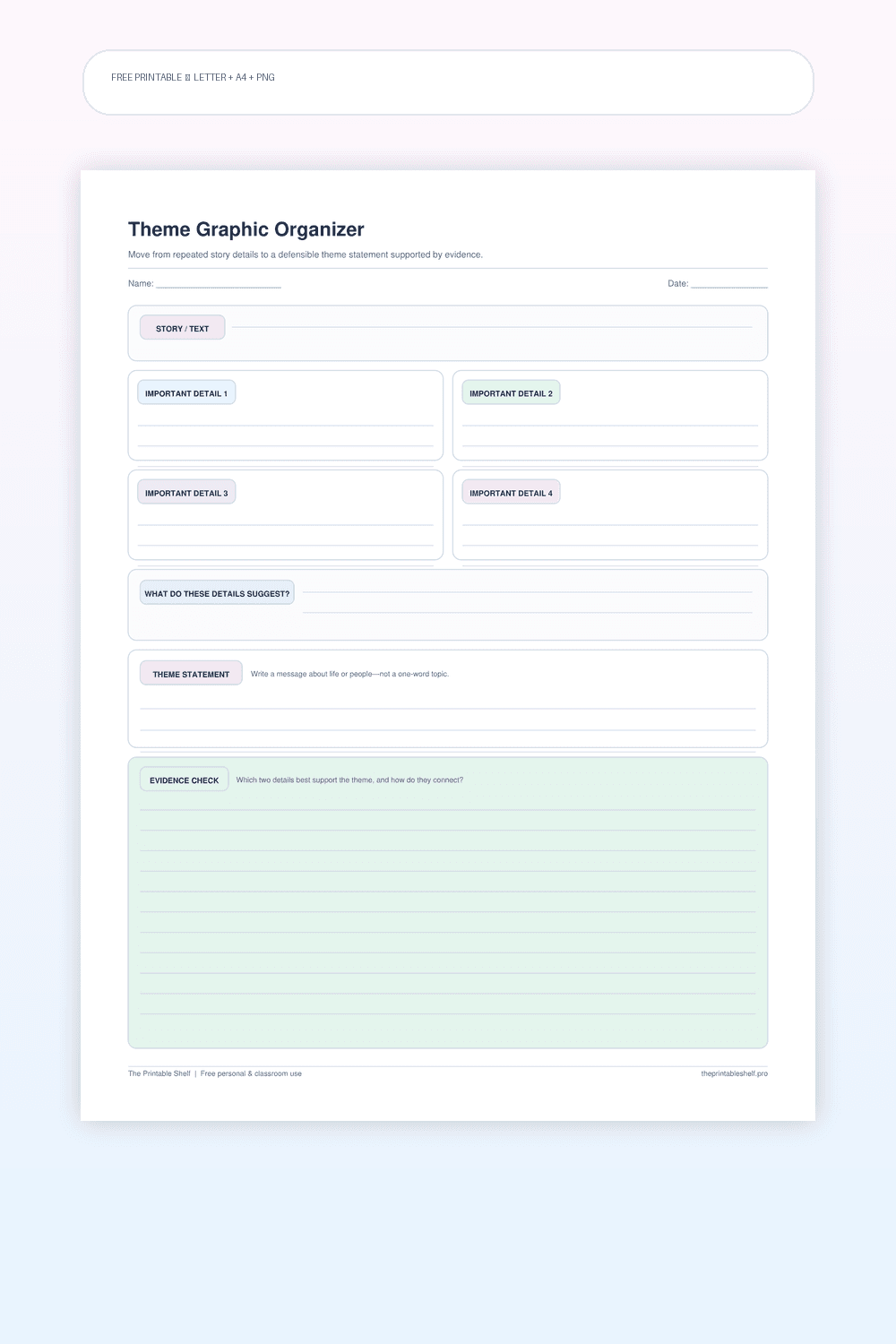
Theme Graphic Organizer Printable
A one-page reading organizer for determining theme in fiction or literary nonfiction. The layout deliberately delays the theme statement until after the reader has gathered repeated choices, conflicts, consequences, or changes from the text. That sequence makes it harder to guess a broad topic first and then hunt for details that merely sound related.