Work & Study · Free printable
Free Printable Primary Writing Paper
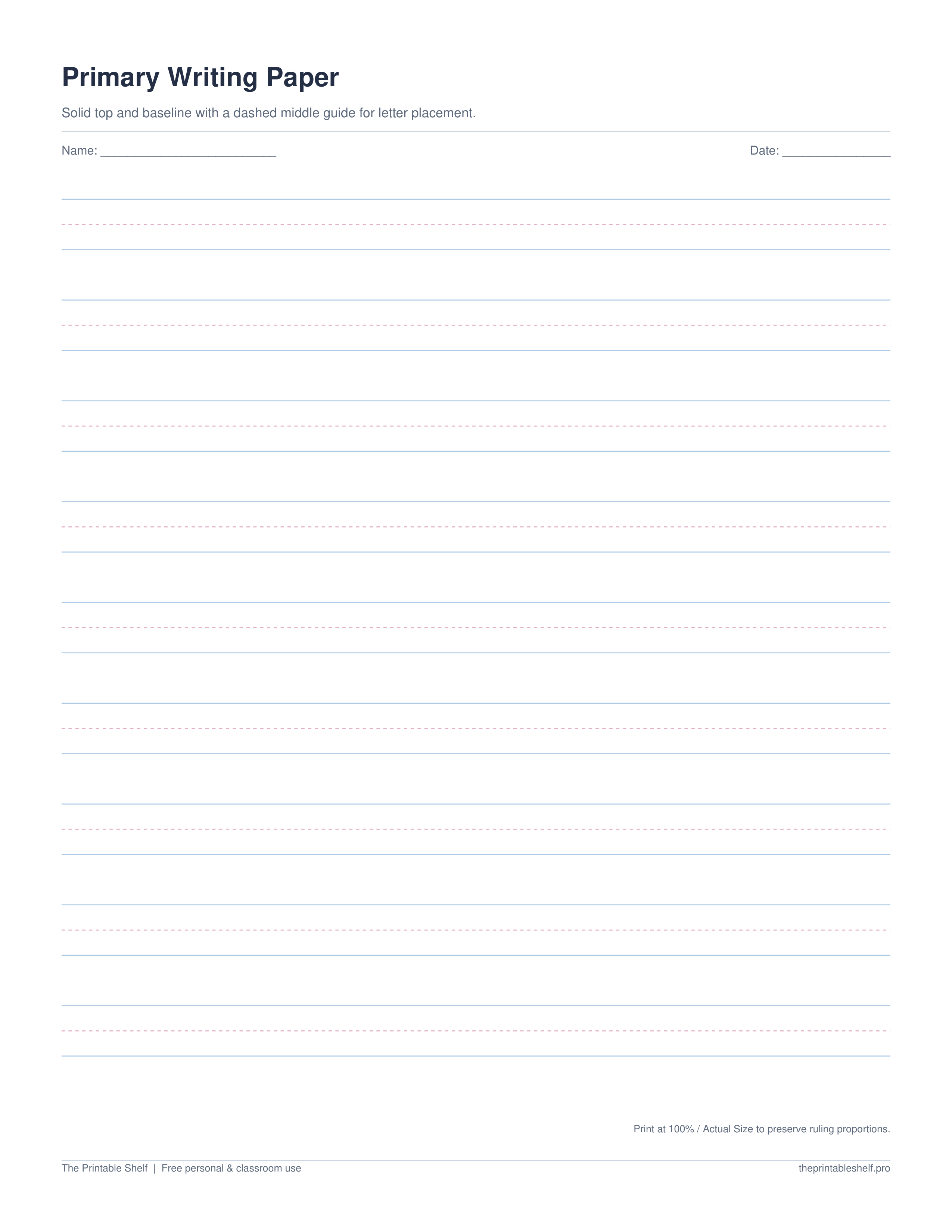
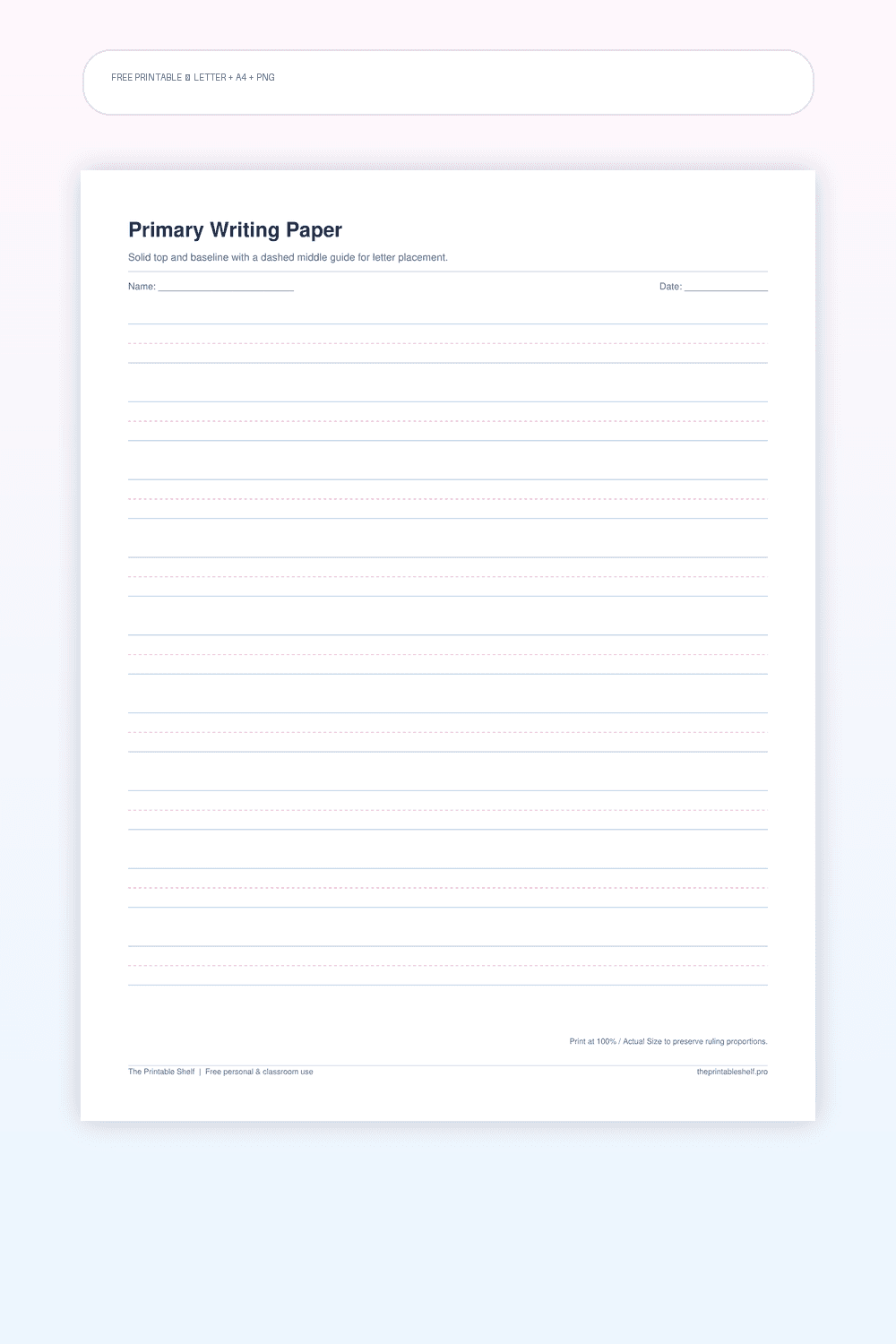
This free primary writing paper is designed for beginning writers who still benefit from clear handwriting guides. The set includes solid top and bottom lines, a dashed middle guide, generous spacing, and full-page or picture-and-writing versions. Use it for handwriting practice, journals, sentence writing, spelling, and early composition.
Edited by Tessa Vaughn · Planning & Organization Editor
Free download
Choose your file size
Print at 100% / Actual Size for the cleanest margins. Pick the paper size your printer normally uses.
No sign-up required · personal/classroom use
More useful layouts
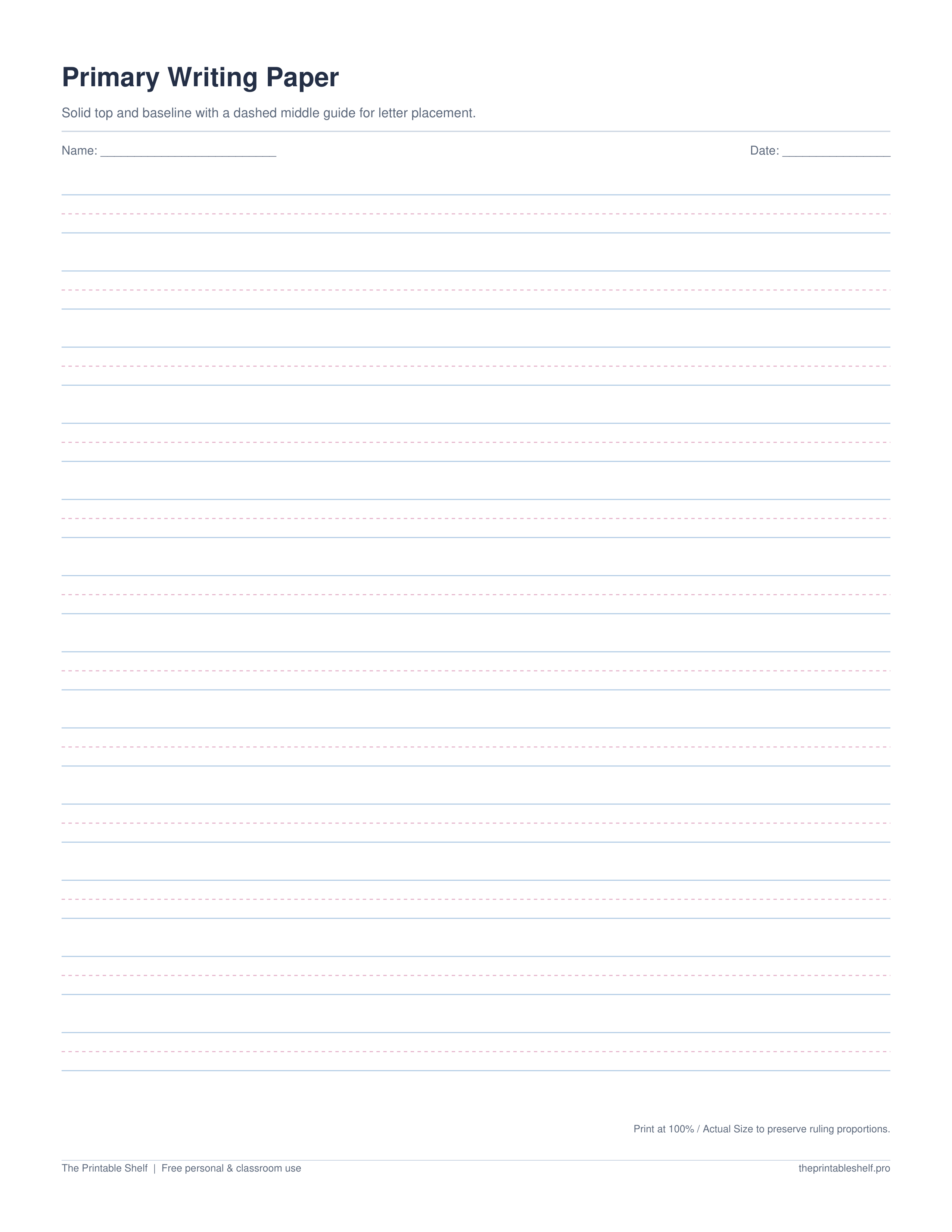
Medium primary lines
More rows with moderately smaller solid-dashed-solid guides for writers ready to fit more text on a page.
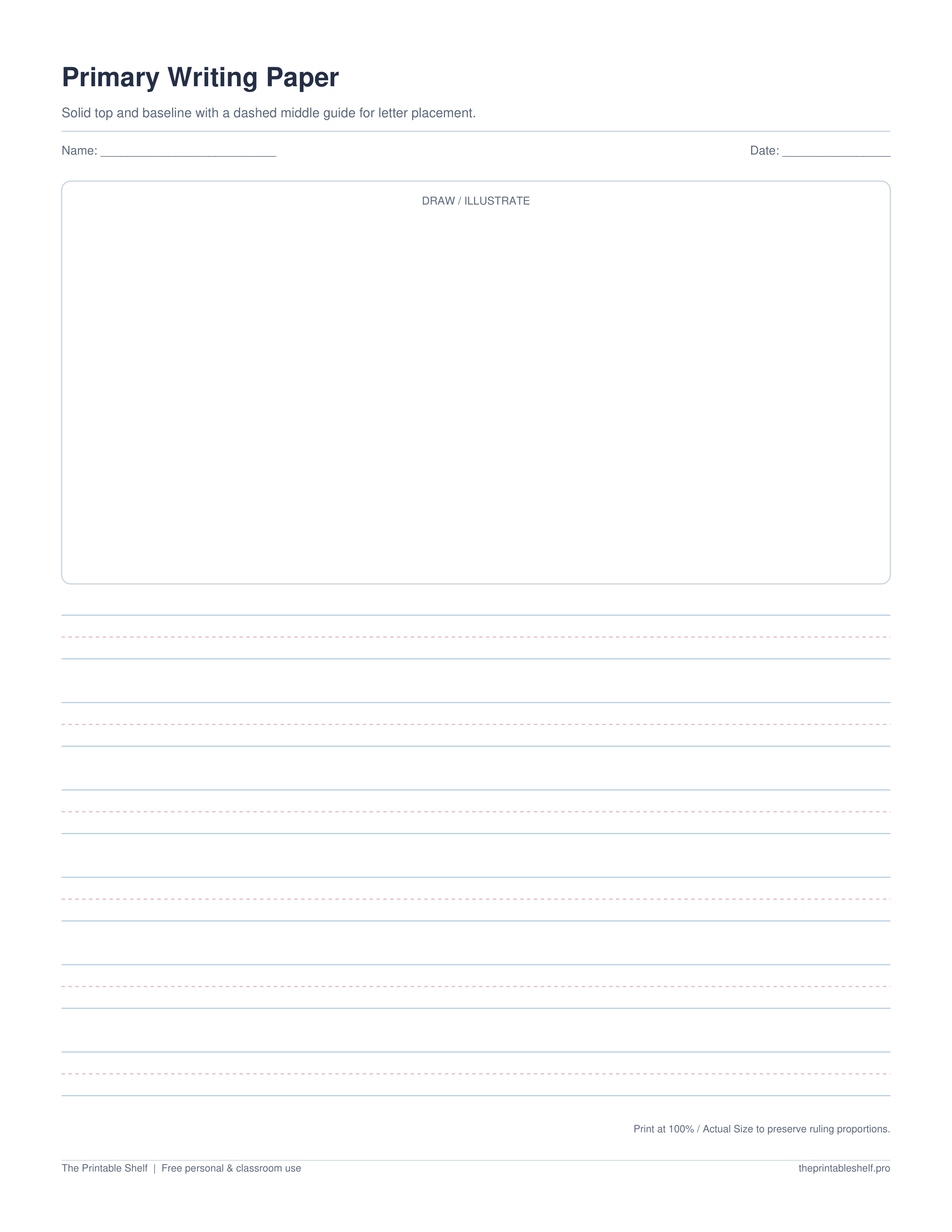
Large picture + writing
A generous illustration box above large primary handwriting guides for captions and short illustrated writing.
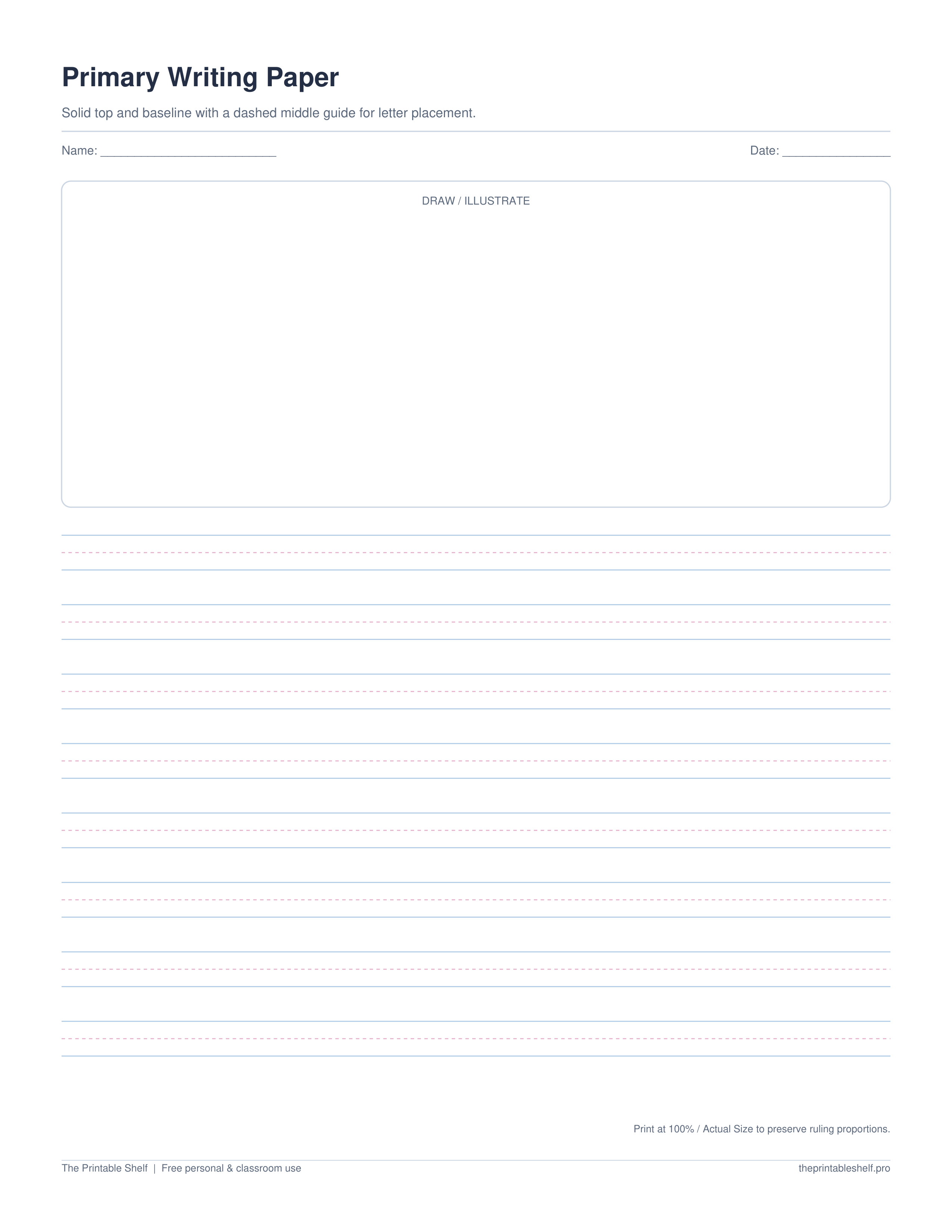
Medium picture + writing
A smaller illustration box plus medium primary lines for writers who need more room for sentences.
What this printable is for
A reusable writing-paper format for early elementary handwriting and composition, not a content worksheet. The key value is proportion and spacing: primary lines give children a visible baseline, top line, and middle guide for letter placement, while the included line-size variants let adults choose enough room for the writer’s current control instead of forcing every child onto the same ruling.
How to use it
Choose the line size based on how the writer currently forms letters, not only on grade level. Larger ruling gives beginning writers room to control tall letters, short letters, and letters that drop below the baseline. Move to a smaller line size only when the child can place letters consistently without squeezing or floating them. If handwriting becomes less readable after switching sizes, return to the larger ruling for longer assignments.
Teach the three-line system before expecting independent use. The bottom solid line is the baseline where most letters sit, the dashed middle line helps size short lowercase letters, and the top line guides tall letters. For letters such as g, j, p, q, and y, explain how the descending stroke moves below the baseline when the chosen paper style includes descender space. A paper template helps only when the child understands what the guides mean.
For sentence or journal work, focus first on readable spacing and letter placement rather than perfect decorative handwriting. Ask the writer to leave a finger space between words and begin near the left margin. If the page includes a picture box, let the child draw before or after writing depending on the task. Drawing first can help a reluctant writer generate language; writing first can keep an enthusiastic artist from using the entire work period on the illustration.
Use the paper for real writing as well as isolated letter practice. Short notes, labels, captions, simple explanations, daily journals, and responses to a read-aloud give handwriting a purpose. When correcting, focus on a small number of patterns at a time—such as floating letters or inconsistent size—instead of circling every imperfect letter. Too much correction can make a simple writing page feel like a test rather than a tool.
Print only the variant needed for the current task. A full-page lined version works for handwriting practice and longer writing; a picture-box version suits illustrated stories and nonfiction captions; a name-line version is convenient for classroom copies. If the child uses a binder, punch one master copy or keep several printed sheets in a writing folder so the same line style stays available without searching for a new worksheet each day.
Watch for signs that the paper itself is making the task harder. Lines that are too small can crowd developing handwriting, while lines that are too large can slow older writers who are ready for more text per page. The printable should reduce the physical planning required for writing. Adjust the ruling, picture space, and number of lines to the learner rather than treating one page style as a permanent grade-level requirement.
Best uses for this template
Ways to use it
Handwriting practice
Use the three-line guides to practice letter height, baseline placement, word spacing, and short copied or dictated sentences.
Illustrated writing
Choose a picture-box variant for a drawing plus one or more sentences, captions, or a short story about the illustration.
Everyday classroom writing
Keep a consistent ruling available for journals, spelling sentences, read-aloud responses, morning work, and writing-center routines.
Common mistakes to avoid
Choosing lines that are too small too soon
Use larger ruling until letter placement and spacing stay controlled during a full writing task.
Assuming the dashed line teaches handwriting by itself
Explicitly show what the baseline, middle guide, top line, and descender space mean.
Using only handwriting drills
Mix letter practice with purposeful sentences, captions, journals, and short responses so the line guides support real writing.
Included layout options
Large primary lines
Beginning handwriting and larger letter formation
Layout: Full page with generous solid-dashed-solid guide rows
Medium primary lines
Writers ready for more text per page
Layout: More rows with moderately reduced guide height
Large picture + writing
Illustrated captions and short stories
Layout: Large upper drawing box with large primary lines below
Medium picture + writing
Illustrated writing with more sentence room
Layout: Smaller drawing box with medium primary lines below
Classroom fit
Suggested grades, use modes & standards
Suggested grade bands
These are practical use ranges, not hard limits. Text complexity and the amount of teacher modeling matter more than the worksheet alone.
Good fit for
Scaffold level: Beginner.
Common Core crosswalk
No narrow standards code is listed for this general-purpose template. Use it where the thinking task fits your local curriculum.
Frequently asked questions
What is primary writing paper?
Primary writing paper uses larger handwriting guides, often with solid top and bottom lines plus a dashed middle line, to help beginning writers control letter size and placement.
What line size should I choose?
Choose the largest size the writer needs for comfortable, readable letter formation, then move smaller when placement and spacing stay consistent.
Should primary writing paper have a picture box?
It depends on the task. Picture-box versions are useful for illustrated stories and captions, while full-page lined versions provide more writing room for handwriting or longer responses.
Keep organizing
You might also like
Free printable
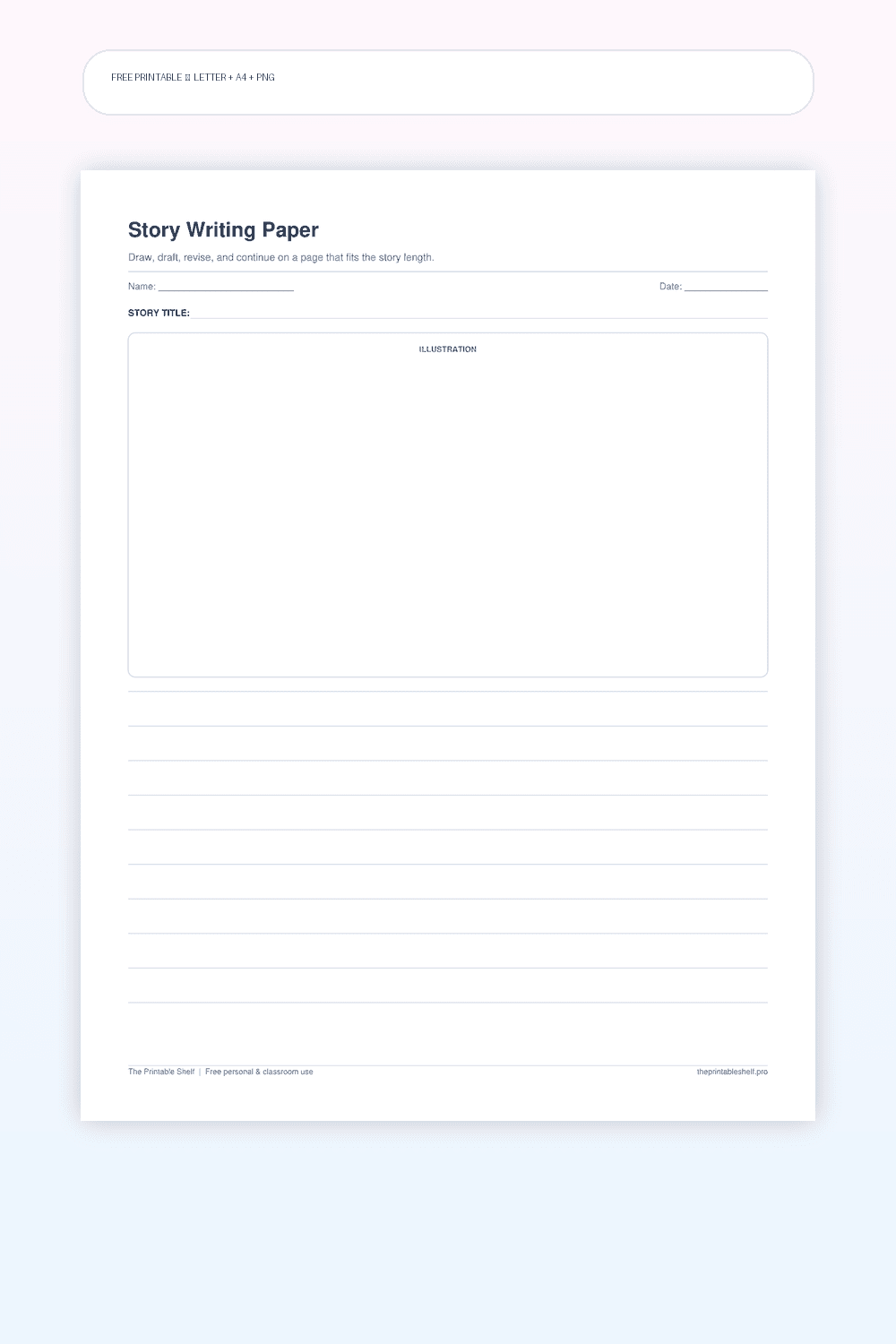
Printable Story Writing Paper
A simple narrative-writing page intended for drafting and presentation after ideas have already been planned. The design deliberately stays quieter than a story map or graphic organizer: it does not tell the writer what the characters or events should be. The included variants change the balance between illustration and writing space so the same resource can support short illustrated stories, continuation pages, or text-heavy drafts.
Free printable
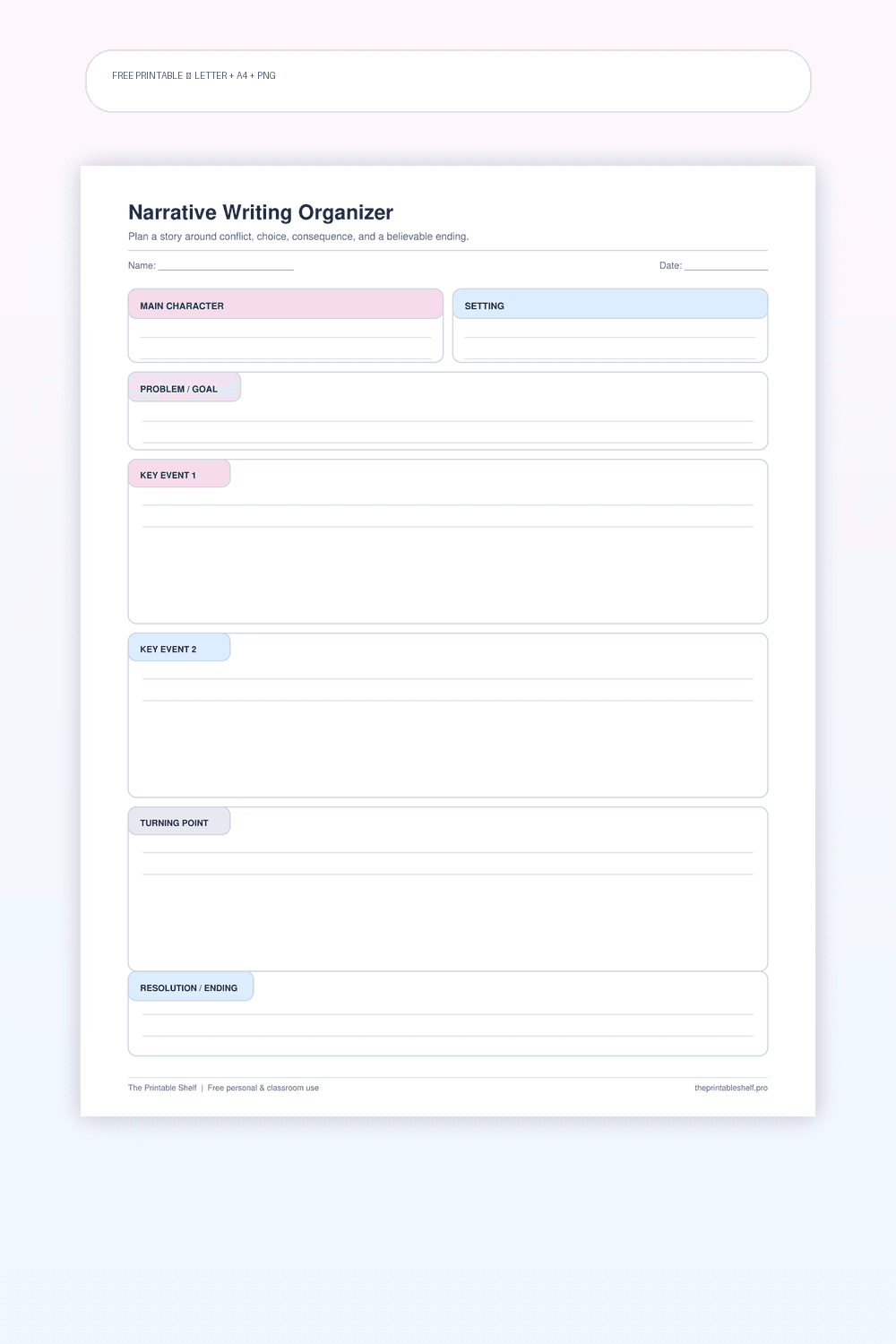
Narrative Writing Graphic Organizer
A one-page story-planning sheet for narrative and creative writing. It combines core story elements with a simple event path, giving writers more support than a blank beginning-middle-end page without turning the plan into a complicated plot diagram. The purpose is to make cause, choice, and consequence visible before the first draft begins.
Free printable
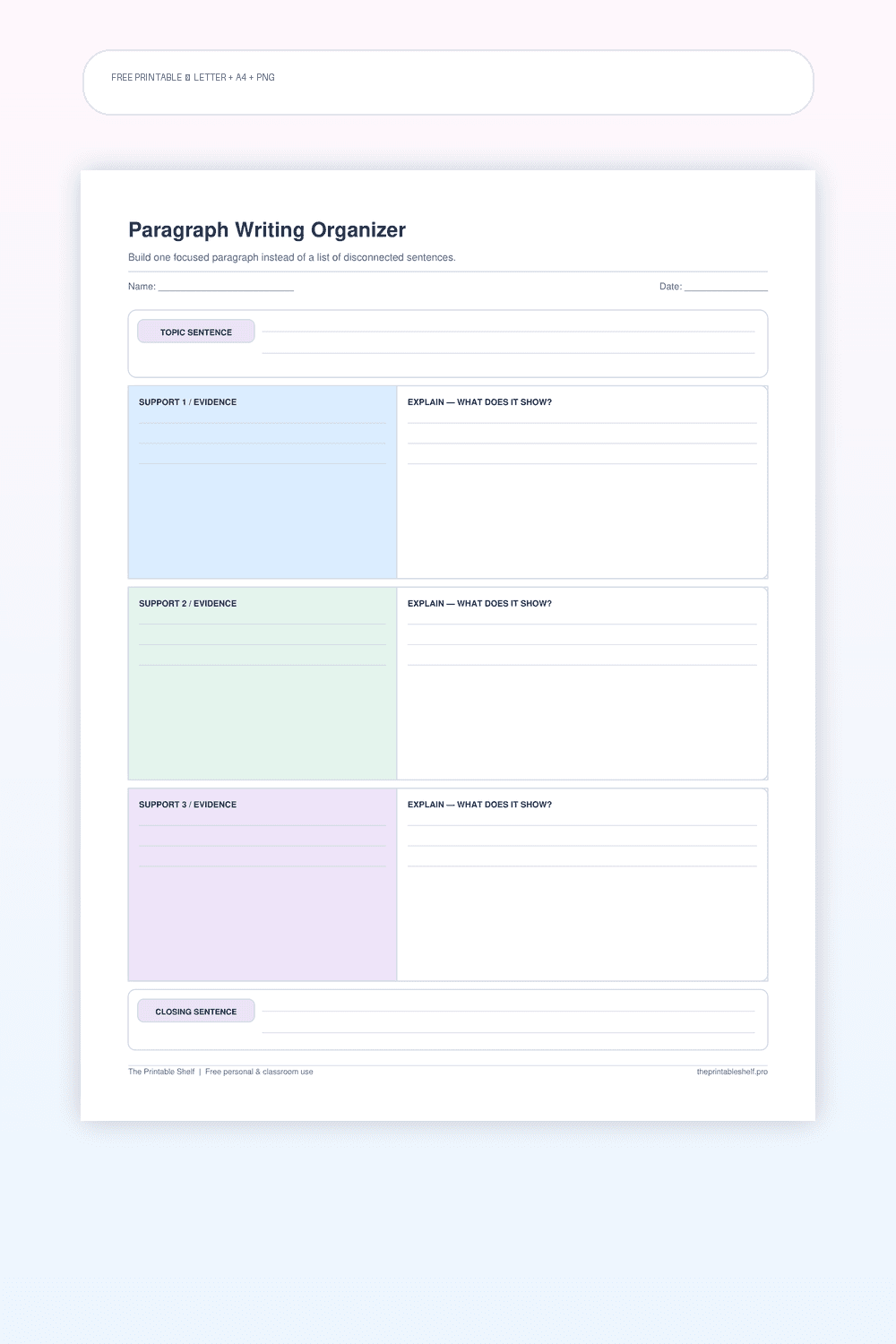
Paragraph Writing Graphic Organizer
A structured single-paragraph planner that separates the job of each sentence group: establish the controlling idea, support it with relevant points, explain those points, and close without introducing a new topic. The layout borrows the clarity of a hamburger-style organizer but avoids treating paragraph writing as a rigid five-sentence formula when a supporting idea needs more than one sentence.