Work & Study · Free printable
Free Printable Story Writing Paper
This story writing paper gives writers a clean place to turn a story plan into an actual draft. Unlike primary handwriting paper, it prioritizes composition space: standard writing lines, an optional illustration box, and room for a title and name. Use it for creative stories, personal narratives, prompt responses, writing centers, or final handwritten copies.
Edited by Tessa Vaughn · Planning & Organization Editor
Free download
Choose your file size
Print at 100% / Actual Size for the cleanest margins. Pick the paper size your printer normally uses.
No sign-up required · personal/classroom use
More useful layouts
Small picture + more lines
Reduces the illustration area so a writer can add a fuller paragraph without switching paper styles.
Lines-only continuation
A consistent continuation or draft page for stories that need more than one sheet.
Clean final-copy page
A quieter page with minimal prompts and standard lines for a polished handwritten final version.
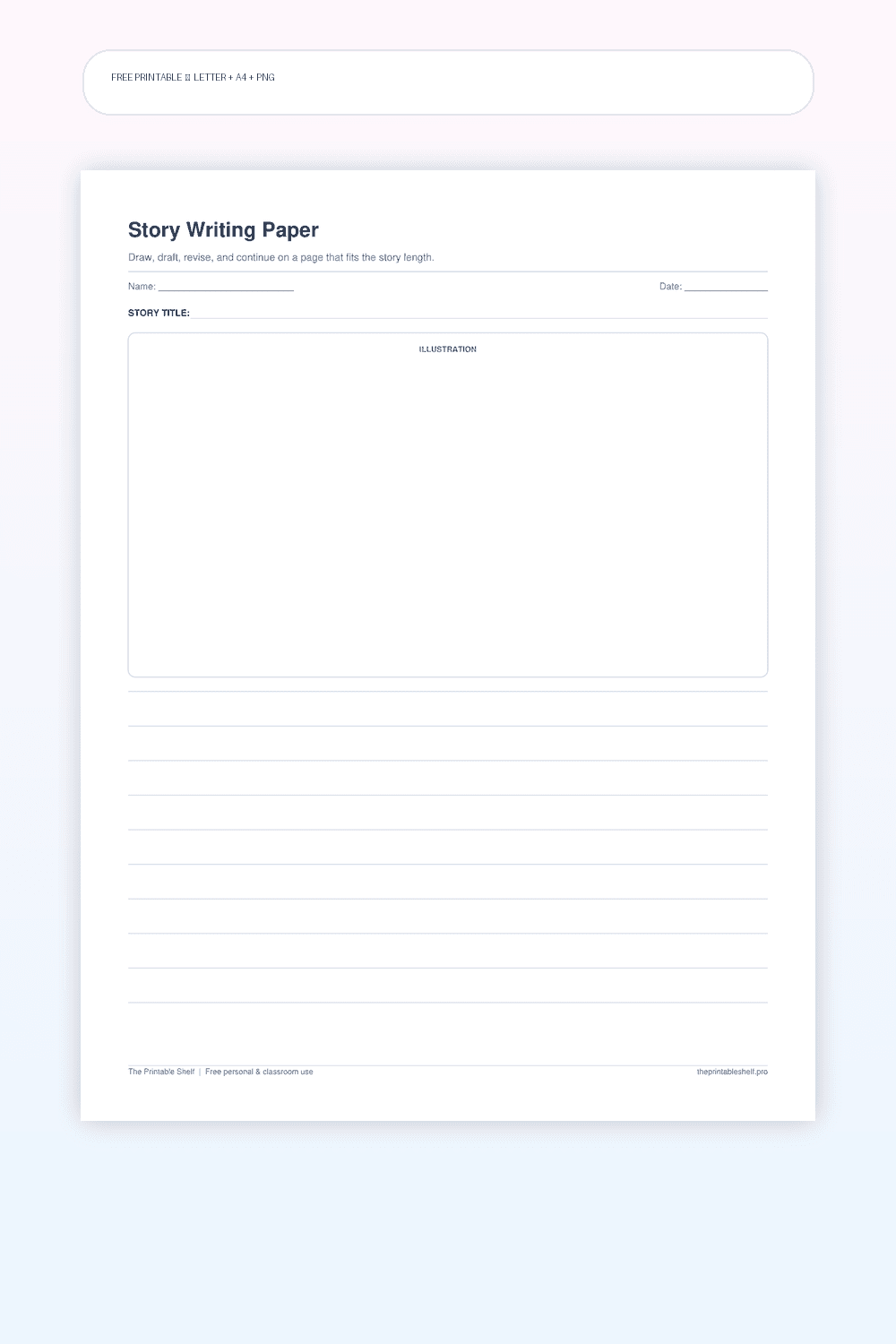
What this printable is for
A simple narrative-writing page intended for drafting and presentation after ideas have already been planned. The design deliberately stays quieter than a story map or graphic organizer: it does not tell the writer what the characters or events should be. The included variants change the balance between illustration and writing space so the same resource can support short illustrated stories, continuation pages, or text-heavy drafts.
How to use it
Use story writing paper after the writer has at least a rough idea of what will happen. A story map, beginning-middle-end organizer, or narrative planner is better for solving plot problems; this page is for turning that plan into sentences. Write the title last if choosing a title early creates pressure. For classroom work, adding the name and date first makes loose pages much easier to return to the correct writer.
Choose the page variant based on the amount of writing expected. A large picture box with fewer lines works well for a short illustrated story or younger writer. A smaller illustration area leaves room for a fuller paragraph. A lines-only version is better for longer narratives, revisions, or final copies. Matching the page to the assignment keeps students from writing microscopically or stopping simply because the paper runs out of room.
Draft for meaning before correcting every handwriting or spelling issue. The first goal is to get the story onto the page with a readable sequence of sentences. If the writer keeps stopping to erase minor mistakes, use a light single-line strikeout during drafting and save cleanup for revision. For a polished final copy, print a fresh sheet after the story has been revised so presentation does not interfere with idea generation.
Use the illustration intentionally when the page includes one. The picture can show the setting, a key event, a character reaction, or a detail that helps the reader understand the story. Ask what moment would be most useful to see rather than treating the box as unrelated decoration. For younger writers, discussing the drawing can also help generate the next sentence when they are unsure what to write.
When a story needs more than one page, number the pages before separating them. Continue on the same ruling rather than switching randomly between paper types, especially for younger writers who rely on consistent spacing. A simple first-page variant with title and illustration can be paired with continuation pages that contain only writing lines, giving longer stories a cleaner structure without wasting half of every page on repeated picture boxes.
After the draft is complete, read it aloud from the paper. Mark places where the sequence is confusing, where a reader needs a missing detail, or where the ending arrives too abruptly. Revise the story content before recopying. The paper should make writing comfortable and presentable, but it cannot replace planning and revision; pairing it with the right organizer is what turns a blank sheet into a useful writing workflow.
Best uses for this template
Ways to use it
Illustrated stories
Pair a meaningful scene drawing with a short narrative so the picture supports the story rather than filling unused page space.
Narrative drafts
Move from a story organizer onto standard lines, draft for meaning first, then revise before making a clean final copy.
Longer story sets
Use a title-and-picture first page followed by lines-only continuation sheets so multi-page stories stay consistent and easy to assemble.
Common mistakes to avoid
Using writing paper before the story has a plan
Use a story map or narrative organizer first when the writer is stuck on characters, conflict, sequence, or ending.
Choosing a picture box that leaves too little writing room
Match the illustration-to-lines ratio to the expected length of the story.
Editing every small error during the first draft
Draft for meaning, mark simple corrections lightly, then revise and recopy only after the story works.
Included layout options
Large picture + short story
Younger writers and illustrated narratives
Layout: Large upper illustration box with fewer writing lines
Small picture + more lines
Balance illustration with a fuller paragraph
Layout: Reduced picture box and expanded lined section
Lines only
Longer drafts and continuation pages
Layout: Title/name header with writing lines across the page
Final-copy page
Polished handwritten stories
Layout: Minimal prompts and clean standard writing lines
Classroom fit
Suggested grades, use modes & standards
Suggested grade bands
These are practical use ranges, not hard limits. Text complexity and the amount of teacher modeling matter more than the worksheet alone.
Good fit for
Scaffold level: Beginner.
Common Core crosswalk
No narrow standards code is listed for this general-purpose template. Use it where the thinking task fits your local curriculum.
Frequently asked questions
How is story writing paper different from primary writing paper?
Story writing paper focuses on composition space and usually uses standard writing lines. Primary paper uses larger handwriting guides such as a dashed middle line to support letter formation.
Should I choose a page with a picture box?
Use a picture box for short illustrated stories or younger writers. Choose a smaller box or lines-only page when the story needs more text space.
Can I use this for final copies?
Yes. Writers can draft on one sheet, revise, then recopy onto a clean story-writing page for a polished handwritten version.
Keep organizing
You might also like
Free printable
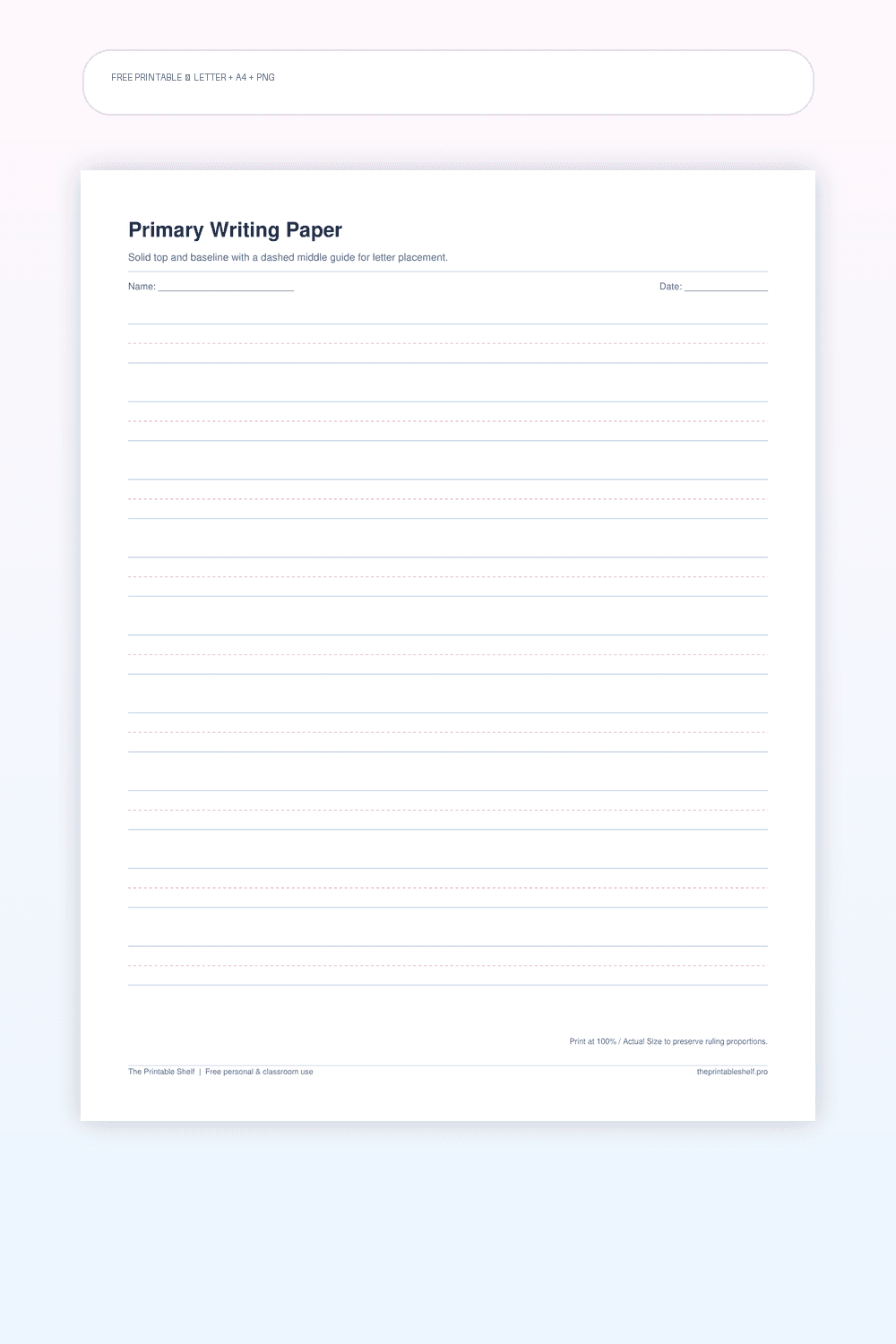
Printable Primary Writing Paper
A reusable writing-paper format for early elementary handwriting and composition, not a content worksheet. The key value is proportion and spacing: primary lines give children a visible baseline, top line, and middle guide for letter placement, while the included line-size variants let adults choose enough room for the writer’s current control instead of forcing every child onto the same ruling.
Free printable
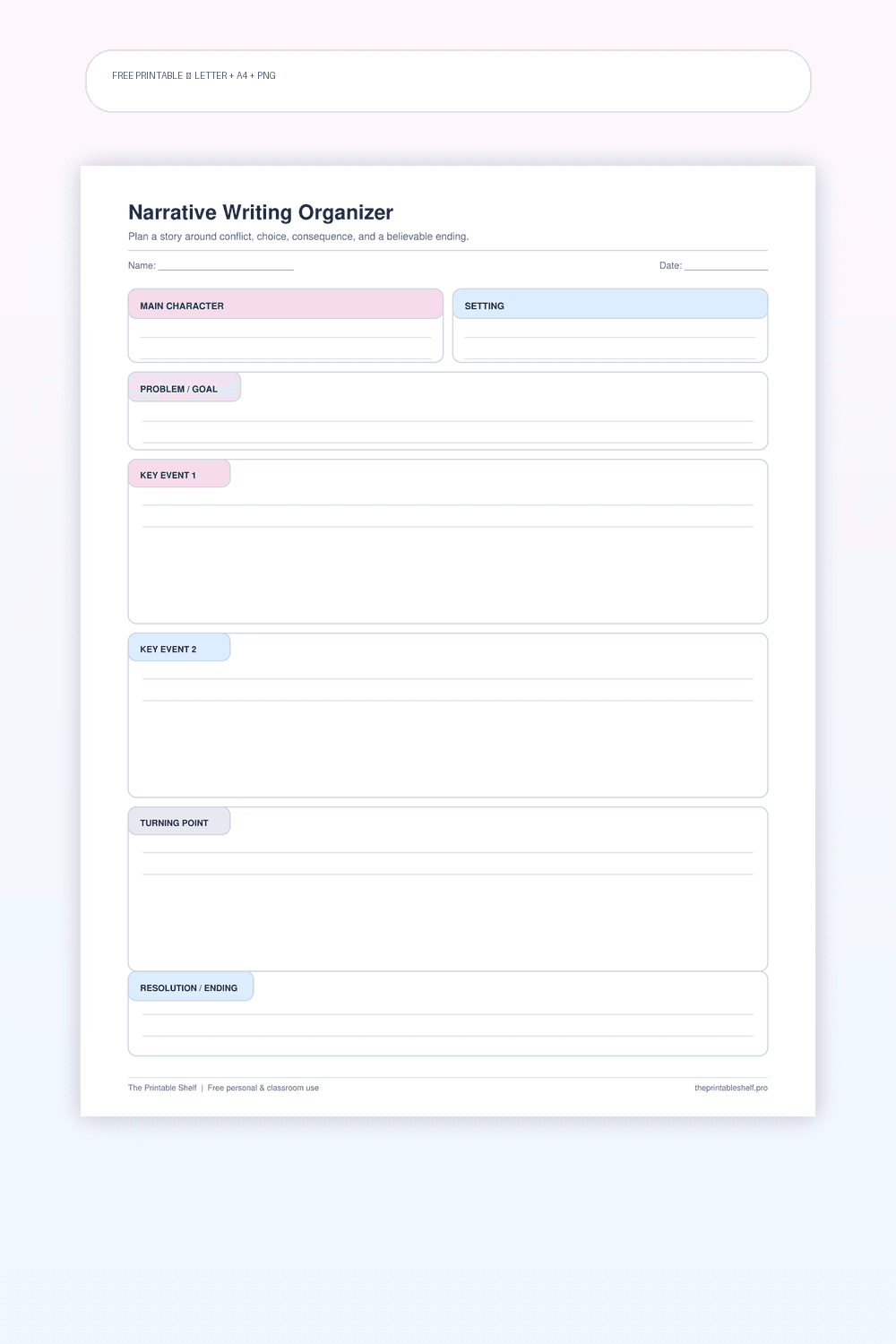
Narrative Writing Graphic Organizer
A one-page story-planning sheet for narrative and creative writing. It combines core story elements with a simple event path, giving writers more support than a blank beginning-middle-end page without turning the plan into a complicated plot diagram. The purpose is to make cause, choice, and consequence visible before the first draft begins.
Free printable
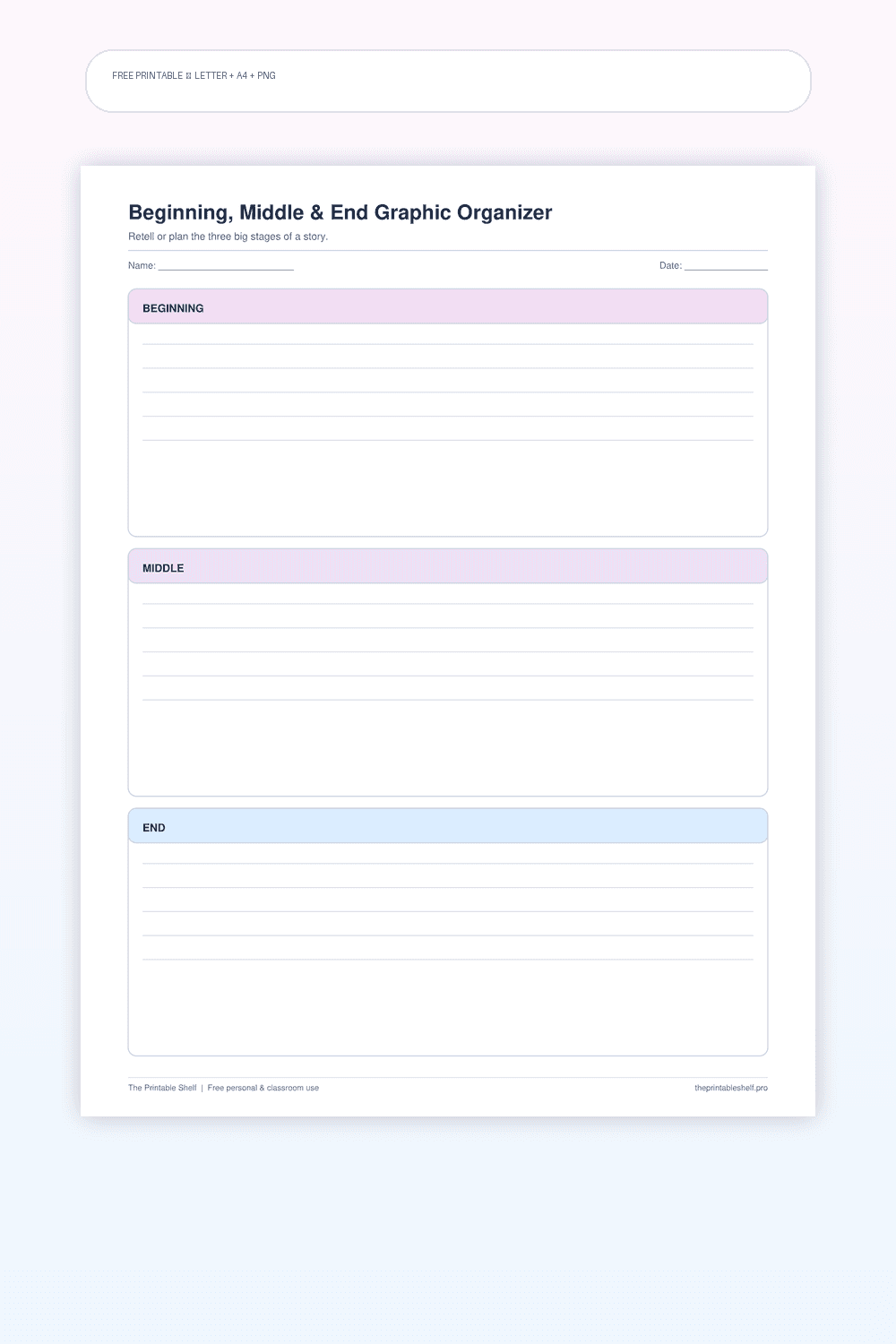
Beginning, Middle, and End Graphic Organizer
A three-part story structure page with enough room to write or sketch the most important events in each stage. It is deliberately simpler than a full story map or five-step sequence organizer, making it especially useful when the goal is basic retelling, summarizing, or planning a short narrative without overwhelming the learner with too many boxes.