How-to guide · Work & Study
How to Use Graphic Organizers Effectively (Without Turning Them Into Busywork)
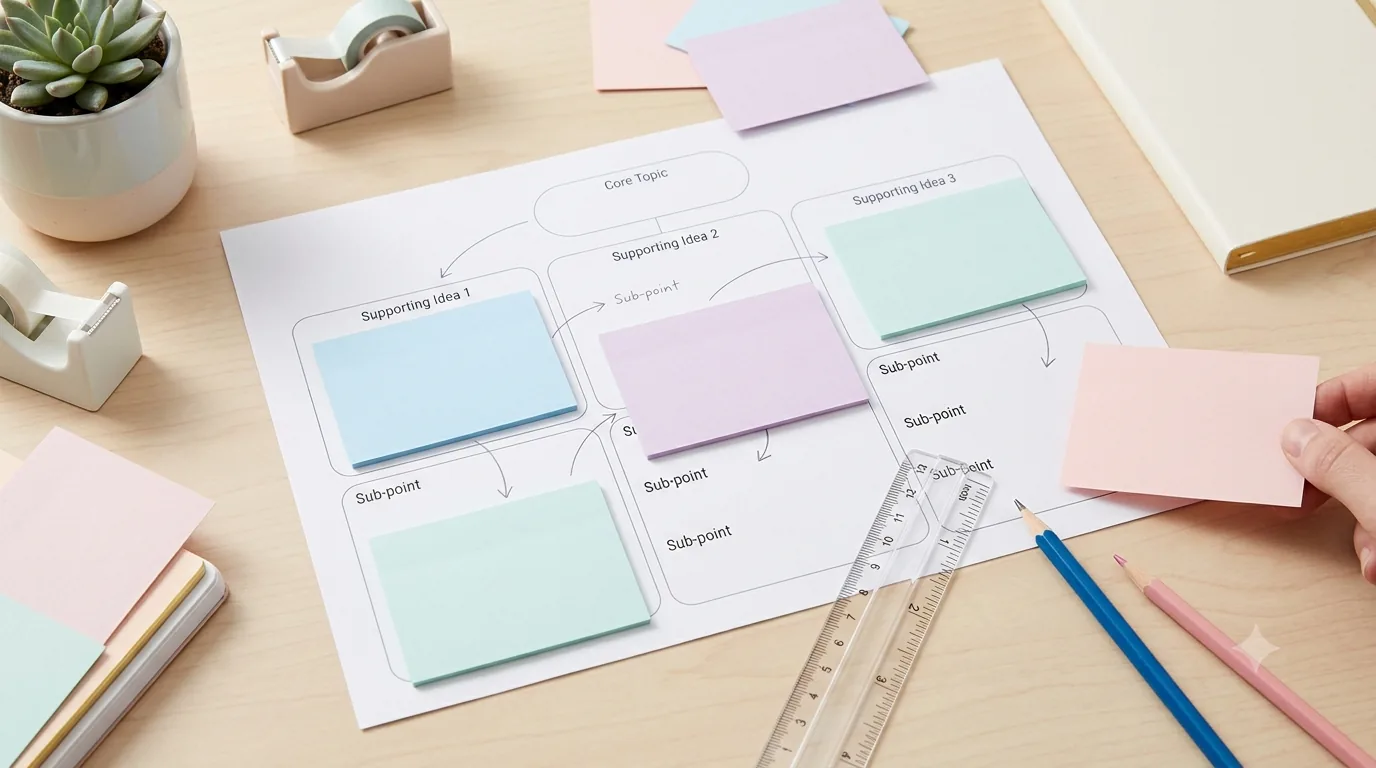
A graphic organizer can make a difficult reading or writing task feel manageable, but the same worksheet can become busywork when students are asked to fill every box without knowing what the boxes are meant to reveal. The useful part is not the circles, arrows, or rectangles. It is the decision the learner makes when placing an idea in one region instead of another.
That means the teacher, parent, tutor, or independent learner should start with the thinking goal and choose the page second. The process below works with story maps, Venn diagrams, T-charts, cause-and-effect sheets, sequence organizers, vocabulary maps, Cornell notes, and most other visual planning tools.
Step 1: name the thinking job before choosing a worksheet
Write the learning task as a verb. Compare two characters. Put a process in order. Separate causes from results. Identify a central idea and its evidence. Define the boundaries of a new concept. Plan a paragraph. That verb should determine the organizer. Choosing by topic alone often produces a sheet that looks relevant but asks the learner to make the wrong kind of decision.
For example, a student reading about the water cycle could use a sequence chart to show stages, a cause-and-effect organizer to explain what makes evaporation or condensation occur, or a concept web to connect vocabulary. The topic is identical; the thinking demand is different. Virginia's T/TAC guidance similarly recommends deciding how students need to think about content before selecting the visual structure that will support that thinking.
| Thinking task | Good starting organizer | What the learner must decide |
|---|---|---|
| Compare | Venn diagram or T-chart | What is shared, unique, or different by the same criterion |
| Sequence | Sequence organizer | Which stages matter and what order they belong in |
| Explain why | Cause and effect | Whether a real causal connection exists |
| Find what matters most | Main idea and details | Which details actually support the central point |
| Understand a concept | Frayer model or concept web | What defines the concept and what does not |
| Plan writing | Four-Square or writing organizer | Which ideas belong together before drafting |
Step 2: model the decision, not just the finished page
A completed organizer can show students what the page should look like, but modeling becomes much more useful when you say why an entry belongs in a particular place. Use familiar content so the learner can focus on the organizer rather than struggling with new subject matter at the same time. Fill one section and narrate the choice: 'This belongs in the overlap because it is true of both animals,' or 'This detail is interesting, but it does not support the main idea, so I am leaving it out.'
Colorín Colorado recommends clear directions, teacher modeling, supported practice, and eventually letting students decide which organizer best serves the task. That progression turns the format into a strategy. If a learner can explain the placement decision, the page is doing more than collecting copied phrases.
Step 3: use partly completed organizers when the thinking is new
Blank is not automatically better. If students are learning a new text structure, prefill one example, supply the main idea, place the first event, or label one cause-and-effect pair. Reading Rockets describes a progression from completed organizers to partially completed organizers and then to blank versions as students become more comfortable recognizing text structure.
The important distinction is between reducing writing load and reducing thinking. A younger reader might draw and label instead of writing three sentences. A multilingual learner might receive a short word bank. A student working with a dense science text might get the first row completed. Those supports can preserve the same comparison, sequencing, or causal reasoning while removing an unnecessary barrier.
Step 4: keep the organizer concise enough to show relationships
When every box contains a paragraph, the visual structure disappears. Encourage short phrases, keywords, evidence snippets, page references, or compact notes unless complete sentences are part of the actual learning objective. The organizer should make a relationship easier to see than it was in the original text or brainstorm.
This matters especially in Venn diagrams, concept webs, and sequence chains where overcrowding destroys the visual cue. If the learner needs to explain an idea at length, use the organizer to select and arrange the important points, then move to a separate paragraph or response. The worksheet is a bridge to the finished thinking, not necessarily the finished product itself.
Step 5: ask one question that checks the quality of the thinking
Do not grade completion alone. Add a short oral or written check that forces the learner to defend one choice. Ask: Why is this detail support rather than the main idea? What evidence shows that event A caused event B? Why does this trait belong in the Venn overlap? Which step could not be removed from the sequence? Which example does not fit the Frayer definition?
One explanation often reveals more than a fully filled page. A student who copied six correct-looking phrases may not understand the relationship among them, while a student who left one box empty may have made a sensible judgment that the text did not supply another strong example.
Step 6: use a follow-up task when the learning goal goes beyond the organizer
When the organizer is an intermediate step rather than the final learning task, give the learner a purposeful way to use it again. Turn a story map into a brief retell. Turn a main-idea organizer into a concise summary. Cover the note column in Cornell notes and answer the cue questions. Use a Venn diagram to write one comparison claim. Use a sequence organizer to explain a process without looking back at the source.
This second task also functions as a quality check. If the organizer cannot support the retell, explanation, paragraph, or self-quiz, revisit the entries. The learner may have copied details without selecting the important ones, mixed causes with chronology, or placed vague terms in the wrong region.
Try a Story Map →
Complete the map, then retell the story using the problem and resolution as anchors.
Try Main Idea and Details →
Use the finished hierarchy to produce a short summary without copying the source text.
Try Cornell Notes →
Turn cue-column prompts into a built-in self-test after notes are captured.
Step 7: fade the scaffold instead of using the same sheet forever
Repeated use is helpful at first because familiarity reduces the effort spent figuring out the page. But the end goal is flexible thinking without dependence on a particular printable. After several supported examples, remove sentence stems, reduce prefilled sections, or offer two organizers and ask the learner to choose one and justify the choice.
Eventually the student may sketch a quick organizer on blank paper or plan mentally. That is a success, not a reason to keep assigning the template. The reusable printable earns its value by making a thinking pattern visible long enough for the learner to internalize it.
Three signs an organizer has become busywork
First, every student is using the same organizer regardless of what the text or assignment requires. Second, the page is collected immediately after completion and never used for discussion, writing, review, or feedback. Third, success is measured by whether every space contains words rather than whether the relationships are accurate.
When one of those signs appears, simplify. Return to the thinking verb, choose a better-fitting structure, model one decision, and give the completed page a next job. A single well-used organizer can support more learning than a packet of five worksheets completed mechanically.
Frequently asked questions
Should students write complete sentences in graphic organizers?
Usually not unless sentence construction is part of the task. Short phrases and keywords often preserve the visual relationships better and reduce unnecessary writing load before the final response.
Should a teacher fill in part of a graphic organizer first?
It can help when the organizer or thinking relationship is new, or when the text is unusually demanding. A completed or partly completed example can model the relationship, and the support can be reduced as the learner becomes more independent.
How do you know whether a graphic organizer actually helped?
Use the finished organizer for a second task such as a retell, summary, explanation, paragraph, discussion, or self-quiz. If the learner can use it to communicate the relationship clearly, it served its purpose.
Sources & further reading
These sources support the instructional background in this guide. The printable recommendations and usage notes above are The Printable Shelf's editorial guidance.
- Virginia Department of Education T/TAC at VCU — Turning Information Into Understanding With Graphic Organizers — Guidance on matching organizer structures to the way students need to think about content and explicitly teaching their use.
- Colorín Colorado — Graphic Organizers — Practical modeling, supported-practice, and independent-use recommendations.
- Reading Rockets — How to Teach Expository Text Structure — Progression from completed to partly completed and blank graphic organizers as students learn text structures.
More guides
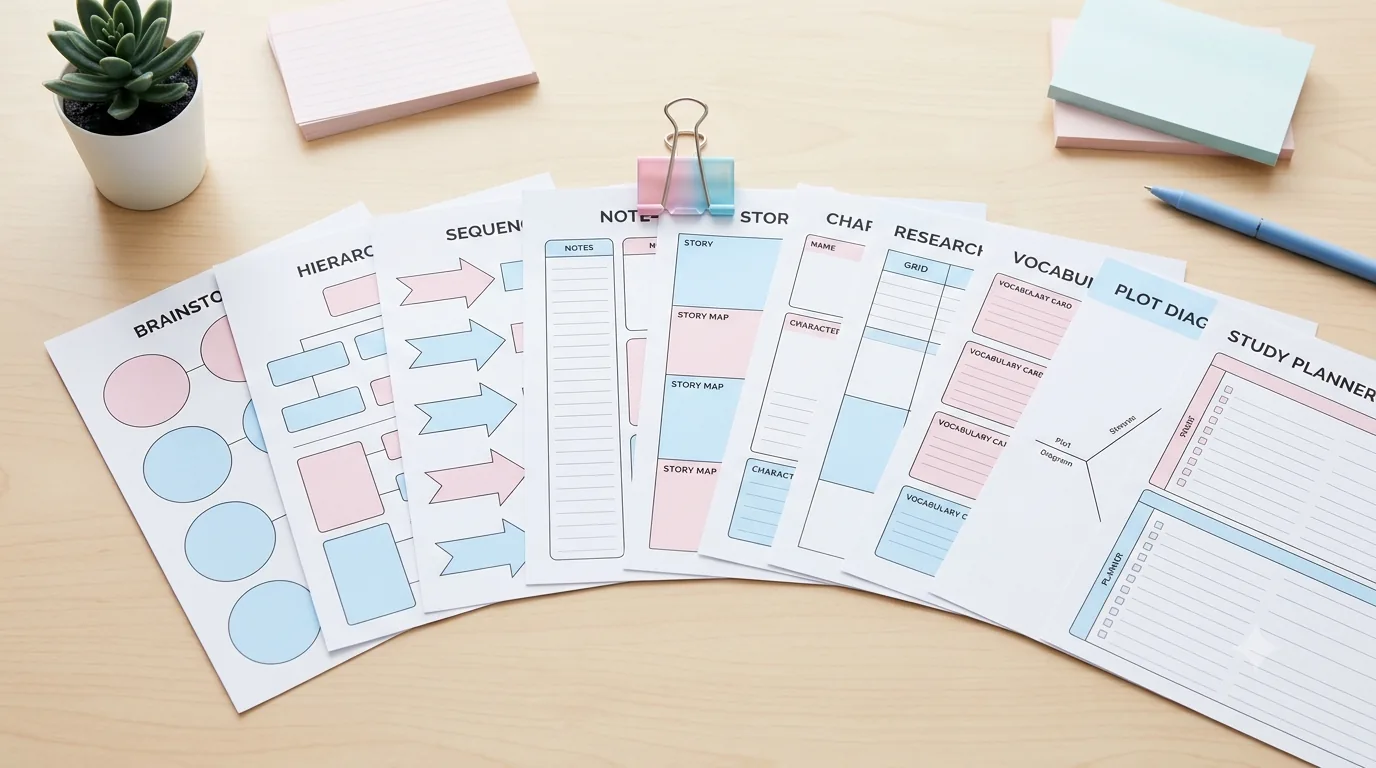
10 Free Graphic Organizers for Reading, Writing, and Studying
Download 10 free graphic organizers for reading, writing, comparison, vocabulary, sequencing, and study. Includes a guide to choosing the right one.
Read guide →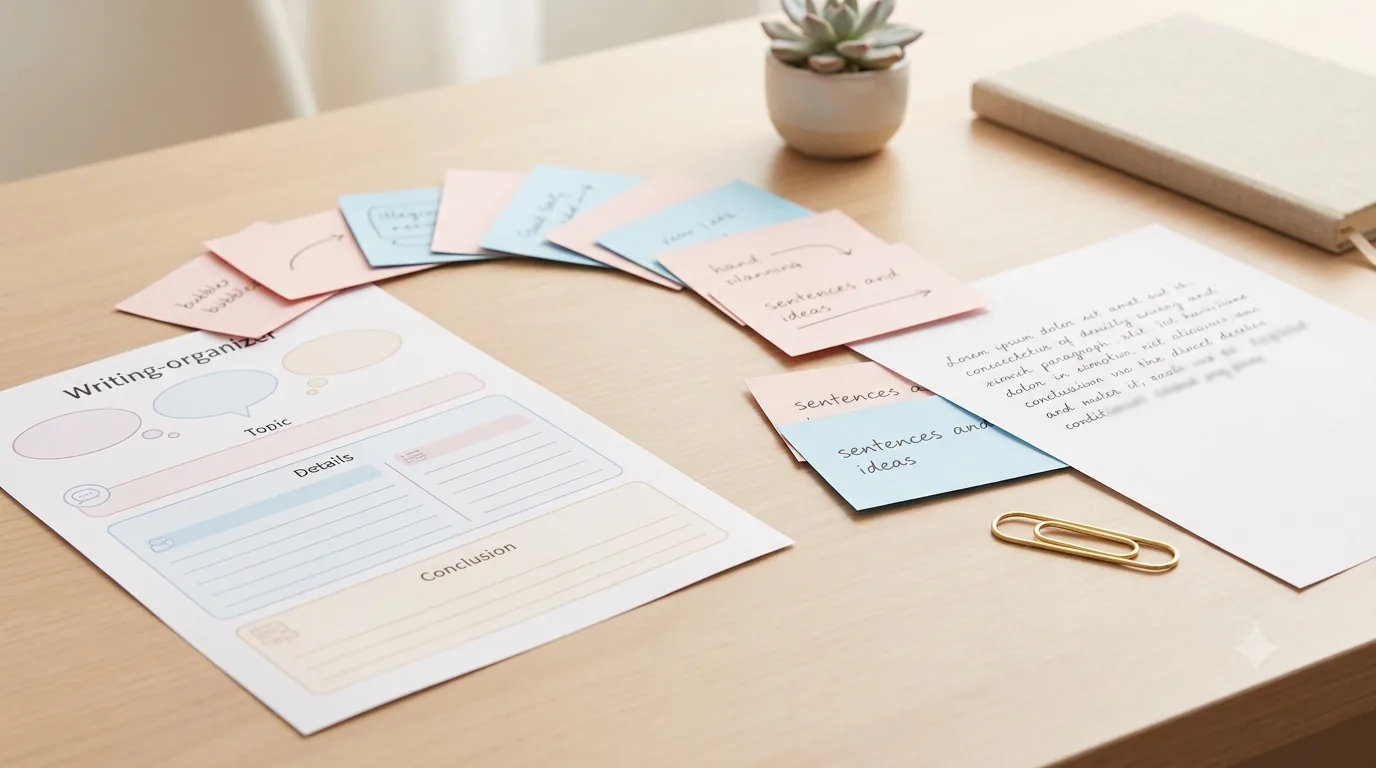
Free Writing Graphic Organizers: Which One to Use and When
Use free writing graphic organizers to plan ideas, structure paragraphs, compare evidence, sequence steps, and organize explanations before drafting.
Read guide →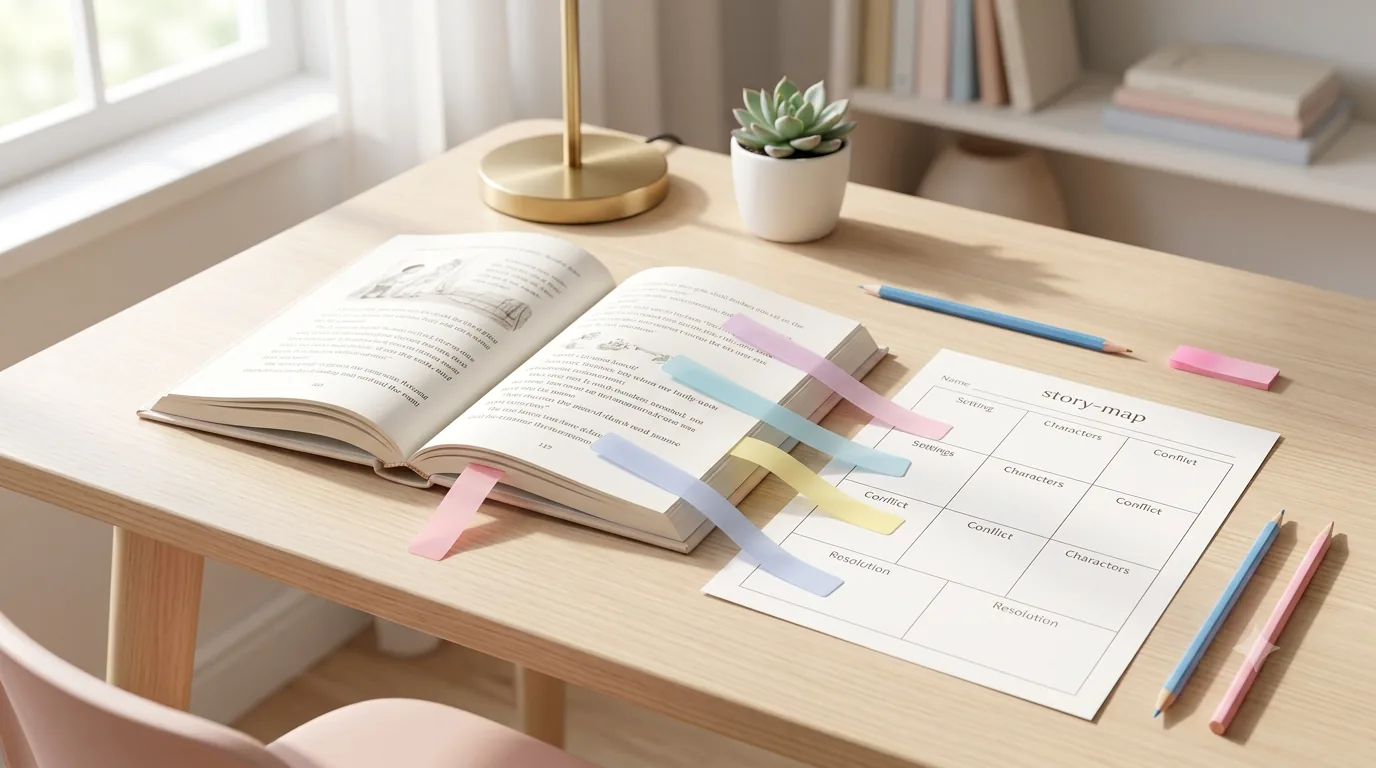
Free Reading Comprehension Graphic Organizers by Reading Skill
Free reading comprehension graphic organizers for story elements, main idea, sequence, cause and effect, comparison, vocabulary, and prior knowledge.
Read guide →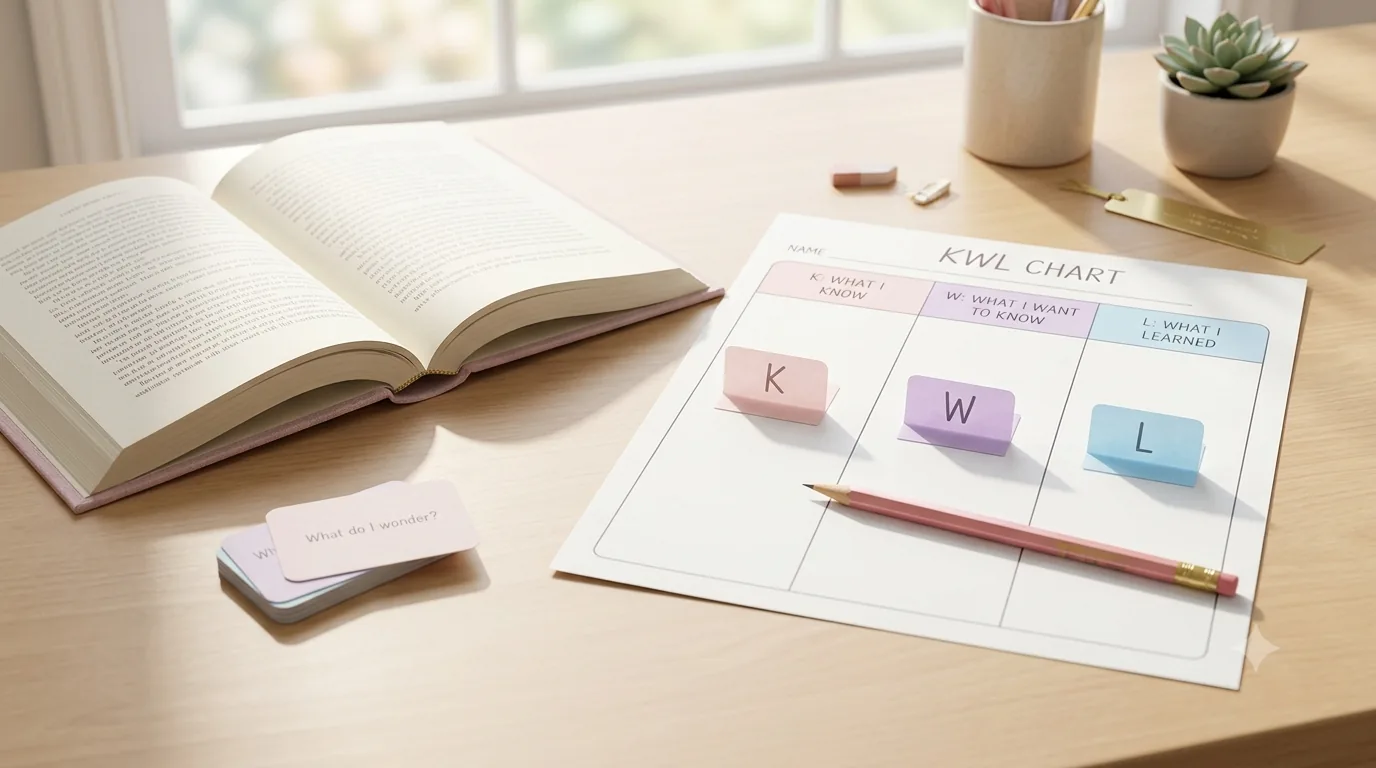
How to Use a KWL Chart Before, During, and After Reading
Learn how to use a KWL chart before, during, and after reading, with practical prompts, a worked example, and fixes for common KWL mistakes.
Read guide →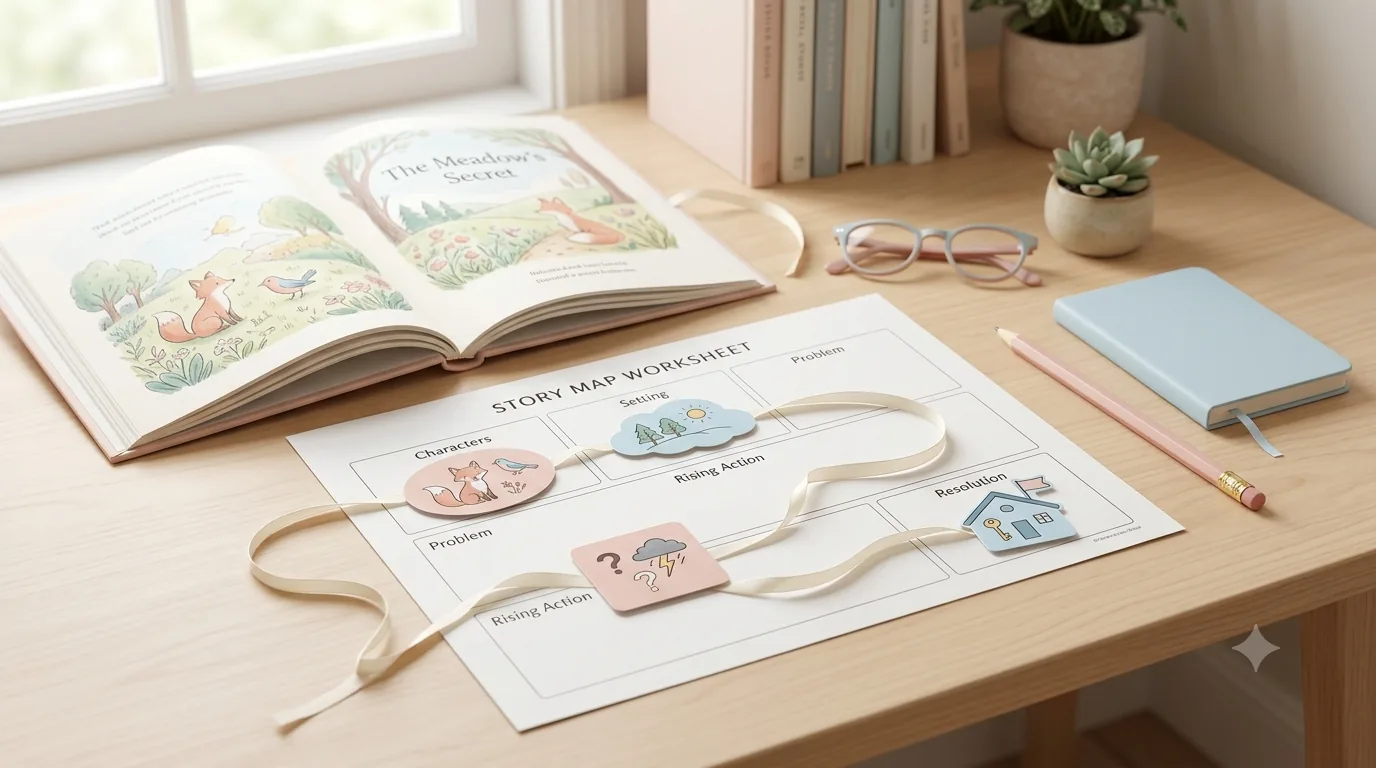
How to Use a Story Map for Better Reading Comprehension
Learn how to use a story map for characters, setting, problem, key events, and resolution, with a worked example and common fixes.
Read guide →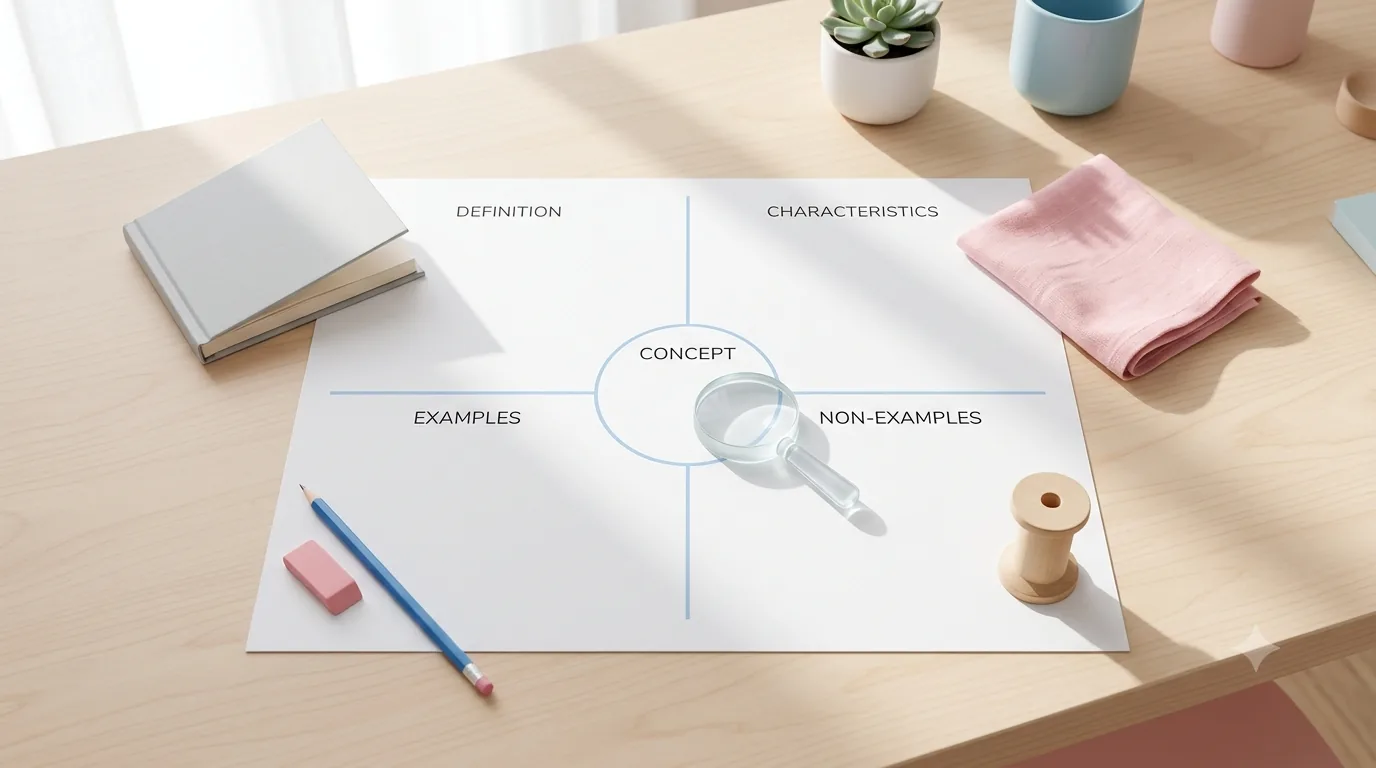
How to Use a Frayer Model for Vocabulary and Concepts
Learn how to use a Frayer Model with definitions, characteristics, examples, and non-examples, plus worked examples and common fixes.
Read guide →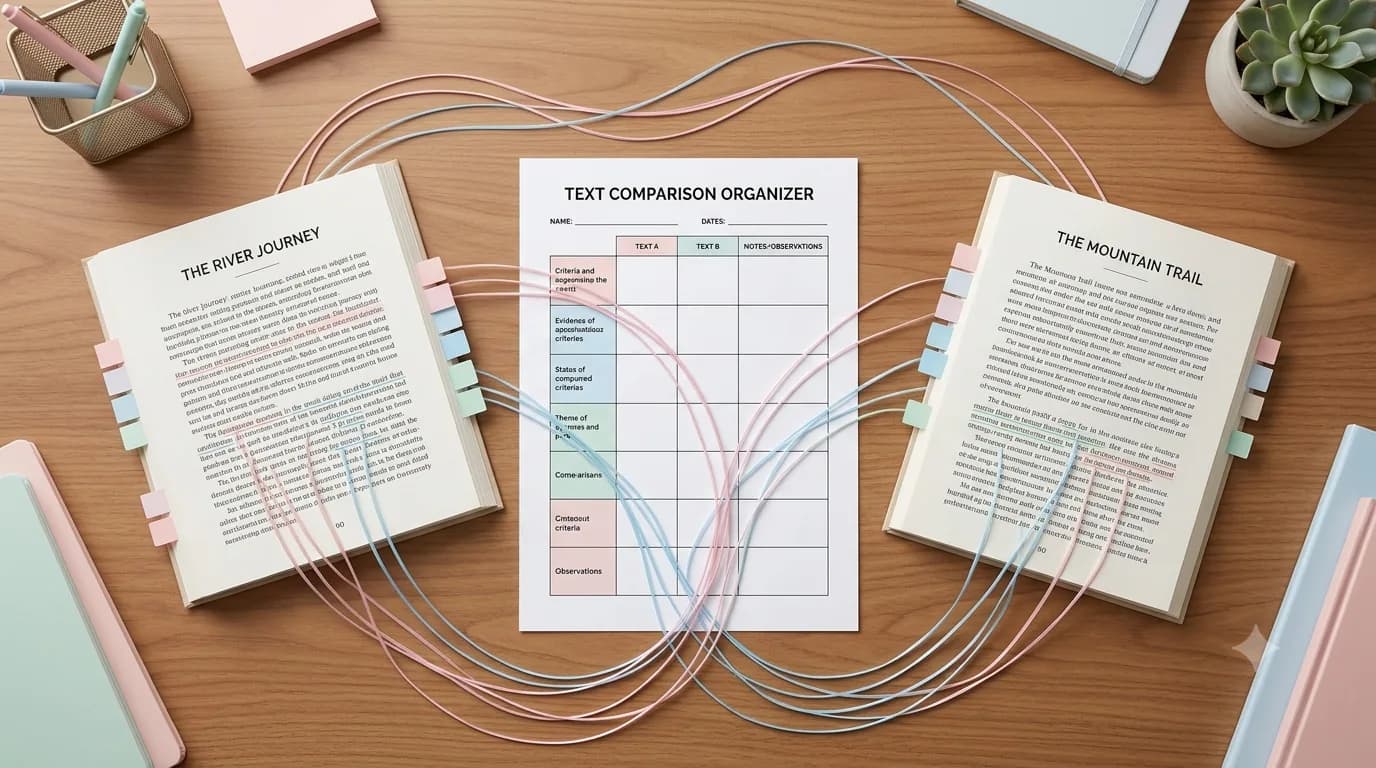
How to Compare and Contrast Two Texts Without Just Making a List
Learn how to compare and contrast two texts by matching criteria, gathering evidence, using a Venn diagram, and turning notes into a clear response.
Read guide →