Printable guide · Work & Study
Free Reading Comprehension Graphic Organizers by Reading Skill
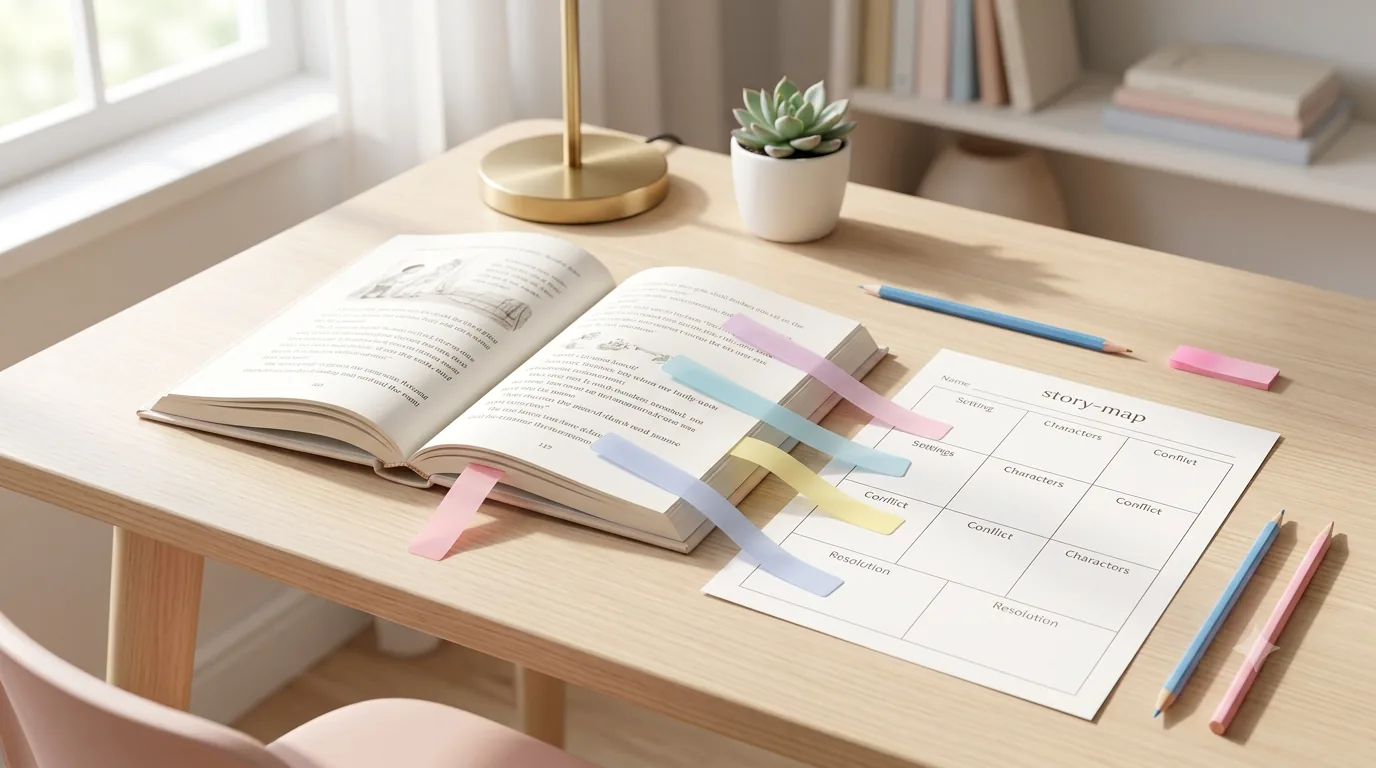
Reading comprehension is not one task, so one generic organizer cannot support every kind of reading. A student who cannot identify the main idea needs a different visual structure from a student who understands the facts but loses the sequence of events. The most useful organizer makes the relationship inside the text visible: hierarchy, chronology, causation, comparison, story structure, or concept knowledge.
This guide groups free printables by the reading move they support. The aim is not to complete more worksheets. It is to select a page that helps the reader notice something important, then use the completed organizer for a retell, explanation, discussion, or written summary.
For story elements: use a story map
A story map is the best fit when the reader needs to connect characters, setting, the central problem, important events, and resolution. Those elements belong together because they explain how a narrative works, not merely what happened first and last. Reading Rockets describes story maps as tools for identifying the elements and structure of narrative text, with simpler versions often focusing on beginning, middle, and end and more advanced versions adding plot or character development.
After completing the map, ask for a retell that uses the problem as the spine: Who wanted or needed something? What got in the way? Which events changed the situation? How was the problem resolved or left unresolved? That step turns labeled boxes into comprehension evidence.
For central meaning: use main idea and details
Main idea work is about hierarchy. The reader must decide which statement is broad enough to cover the section and which facts belong underneath it as support. A strong organizer makes that parent-child relationship visible instead of giving every sentence equal importance.
Do not ask students to fill every detail box simply because it exists. A small set of strong details that directly supports the main idea is better evidence of comprehension than filling every available box with copied sentences. After filling the page, have the reader state the main idea without looking and use the supporting details to justify it.
For order: use a sequence of events organizer
Use sequence when understanding depends on order. In narratives, the reader may track a chain of plot events. In nonfiction, the same structure can organize a process, cycle, set of instructions, or historical progression. Require each box to contain an event important enough that removing or moving it would change the reader's understanding.
Sequence is not the same as summary. A reader can correctly list six events and still miss what the passage is mainly about. Once the order is secure, ask which event was the turning point or how the sequence supports the main idea.
For why something happened and what resulted: use cause and effect
Cause-and-effect reading asks for a relationship, not just adjacency. Two events can happen one after another without the first causing the second. The organizer is most useful when the reader has to point to language, evidence, or logic that connects the cause to the result.
Informational texts often use signal language such as because, therefore, as a result, led to, or due to, but causes can also be implied. In a narrative, a character's choice may trigger a consequence several paragraphs later. After completing the sheet, ask the reader to say each row as a because-therefore sentence and check whether the relationship still makes sense.
For paired texts or two subjects: choose Venn or compare-and-contrast
A Venn diagram is ideal when the reader needs to see shared and unique traits at a glance. It works particularly well for two characters, two texts on the same topic, two habitats, or two versions of an event. Keep entries short enough that the overlap remains readable.
When the task requires fuller evidence, switch to a compare-and-contrast organizer with separate writing areas. The reader can compare the same feature across both subjects, explain the significance of the difference, and end with a conclusion. Using parallel criteria prevents the response from becoming two unrelated summaries.
For vocabulary depth: use a Frayer model
A copied definition does not show that a reader can recognize or use a concept. The Frayer model adds characteristics, examples, and non-examples, which forces the learner to define the boundaries of the idea. This is particularly useful for academic vocabulary in science, social studies, mathematics, and informational reading.
Choose terms central to understanding the text rather than filling a Frayer model for every unfamiliar word. For a strong check, give the learner a new example after the organizer is complete and ask whether it fits the concept and why.
Before and after reading: use a KWL chart selectively
A KWL chart can activate prior knowledge before a new topic and create questions that give reading a purpose. The important part is returning to the chart afterward. The Learned column should answer or revise ideas from the first two columns, not become a random list of facts.
If a statement in Know turns out to be inaccurate, do not erase it. Mark or revise it and discuss what evidence changed the reader's understanding. That turns the chart into a record of learning rather than a three-column warm-up.
How to teach the organizer instead of assigning it
The Institute of Education Sciences comprehension toolkit recommends explaining a tool, modeling how to use it, and giving students practice with support before expecting independent use. Reading Rockets similarly describes moving from explicit modeling toward blank organizers as students become more comfortable with text structures. That progression matters because a learner can fill boxes mechanically without understanding the reading strategy the boxes represent.
Use a familiar short text for the first model. Think aloud about one decision: why this sentence is a supporting detail, why this event belongs in the sequence, or why this trait belongs in the Venn overlap. Then let students make the next decision and explain it. The explanation is often more revealing than whether every box is filled.
Use the completed organizer for a second task
A comprehension organizer earns its place when it leads somewhere. Ask students to retell from the story map, write a concise summary from main idea and details, explain one causal chain, or make a comparison claim from the Venn diagram. This forces the reader to turn the visual structure back into language and gives you a stronger check of understanding.
If the second task is impossible because the page contains copied fragments with no clear relationships, the problem becomes visible. Revisit the organizer and improve the thinking rather than simply collecting the sheet as finished work.
Frequently asked questions
Which graphic organizer is best for reading comprehension?
There is no single best organizer. Match it to the skill: story map for narrative elements, main idea and details for hierarchy, sequence for order, cause and effect for causal relationships, and Venn or compare-and-contrast for paired texts.
Can graphic organizers be used with nonfiction?
Yes. Main idea, cause and effect, compare and contrast, sequence, KWL, Frayer, and text-structure organizers are especially useful with informational and expository texts.
Should students complete graphic organizers during or after reading?
Either can work. Some organizers support active reading as information is gathered, while others are useful after reading to organize and check understanding. The timing should match the strategy being taught.
Sources & further reading
These sources support the instructional background in this guide. The printable recommendations and usage notes above are The Printable Shelf's editorial guidance.
- Reading Rockets — Seven Strategies to Teach Students Text Comprehension — Overview of graphic organizers for text structure, relationships, and summarizing.
- Reading Rockets — Story Maps — Background on story maps for narrative elements and comprehension.
- REL / Institute of Education Sciences — Toolkit for Teaching K–3 Reading Comprehension — Instructional guidance on modeling and using graphic organizers with narrative and informational texts.
More guides
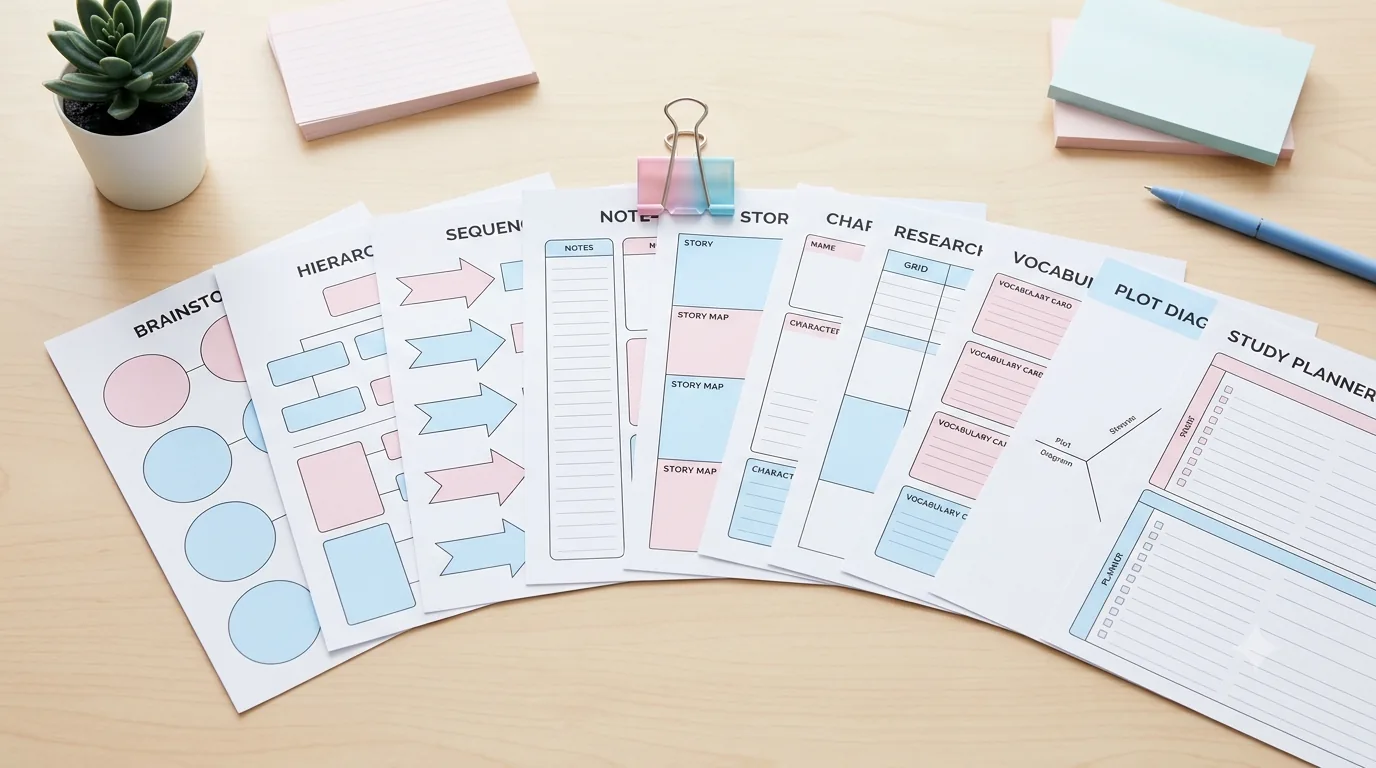
10 Free Graphic Organizers for Reading, Writing, and Studying
Download 10 free graphic organizers for reading, writing, comparison, vocabulary, sequencing, and study. Includes a guide to choosing the right one.
Read guide →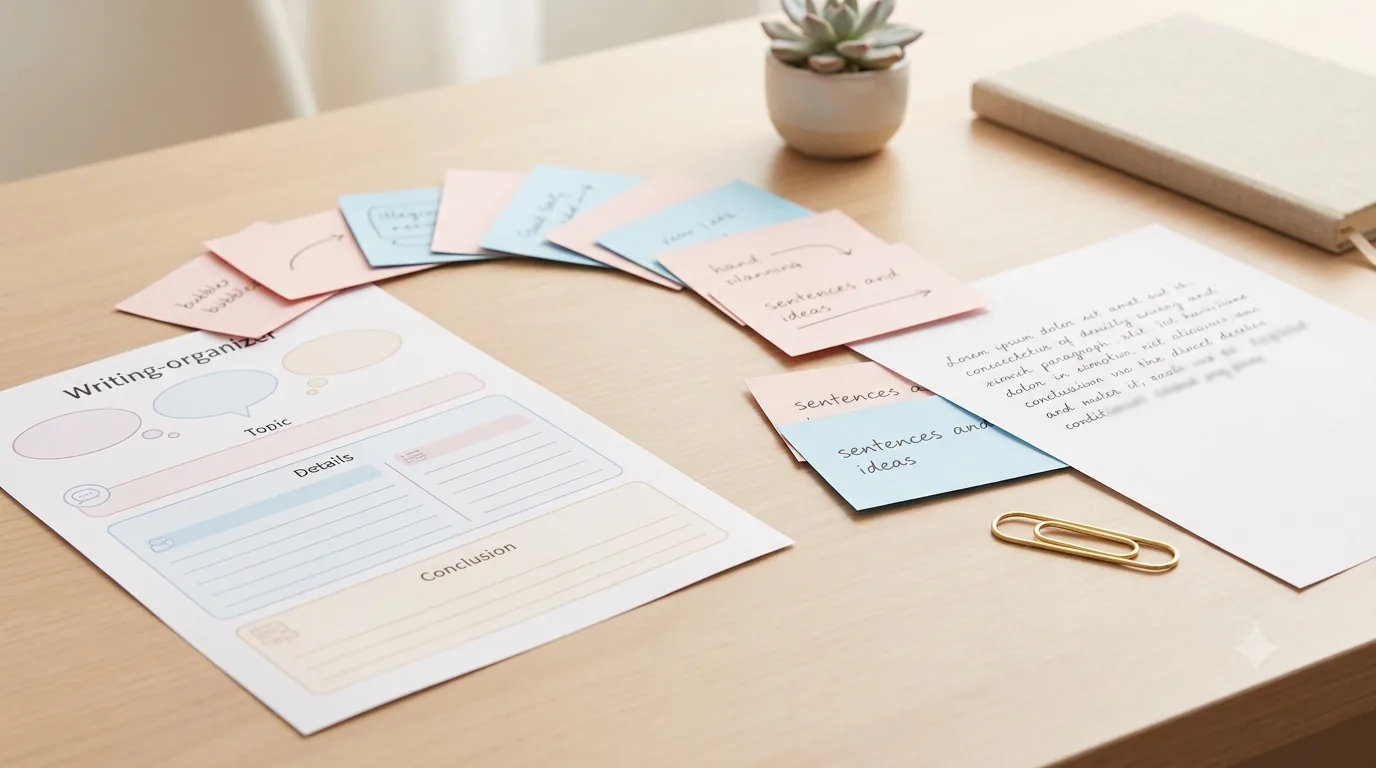
Free Writing Graphic Organizers: Which One to Use and When
Use free writing graphic organizers to plan ideas, structure paragraphs, compare evidence, sequence steps, and organize explanations before drafting.
Read guide →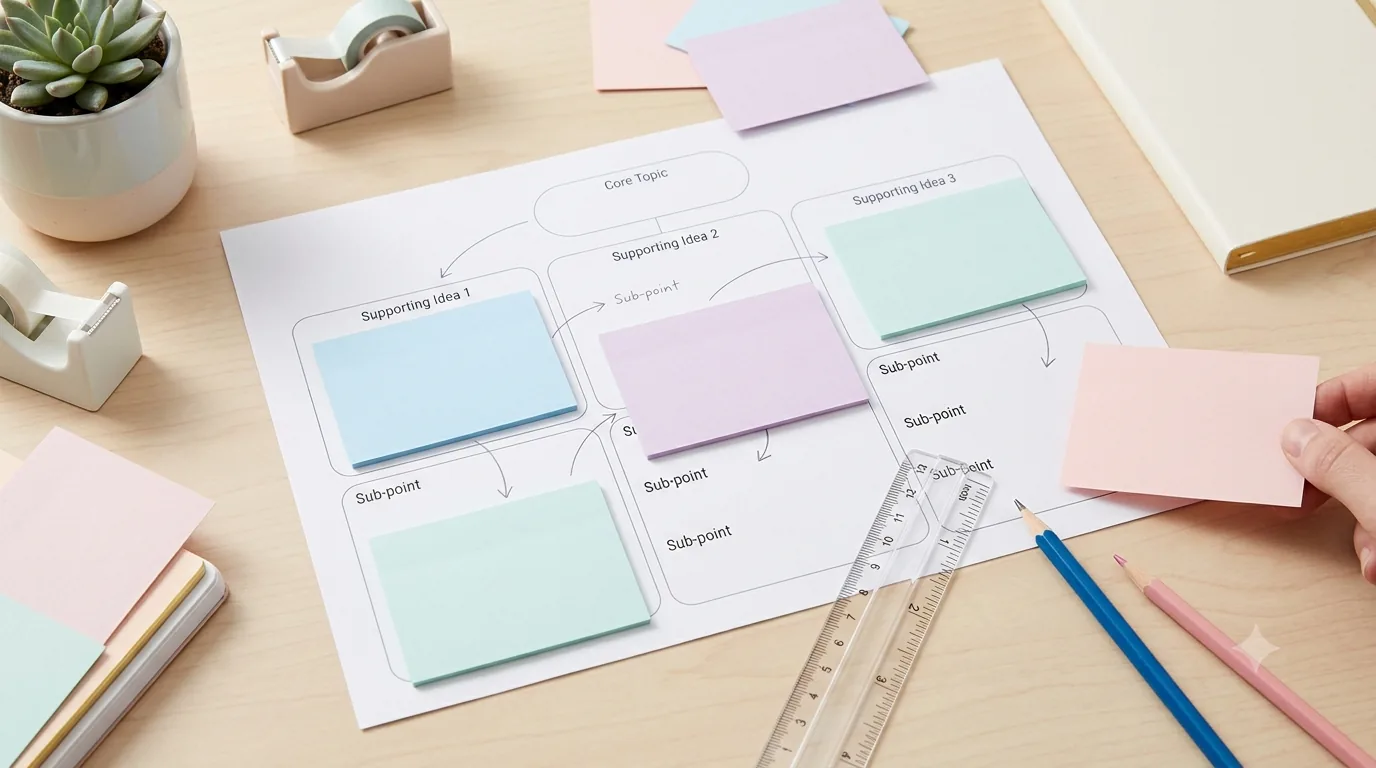
How to Use Graphic Organizers Effectively (Without Turning Them Into Busywork)
Learn how to choose, model, scaffold, and reuse graphic organizers so students think with them instead of simply filling in boxes.
Read guide →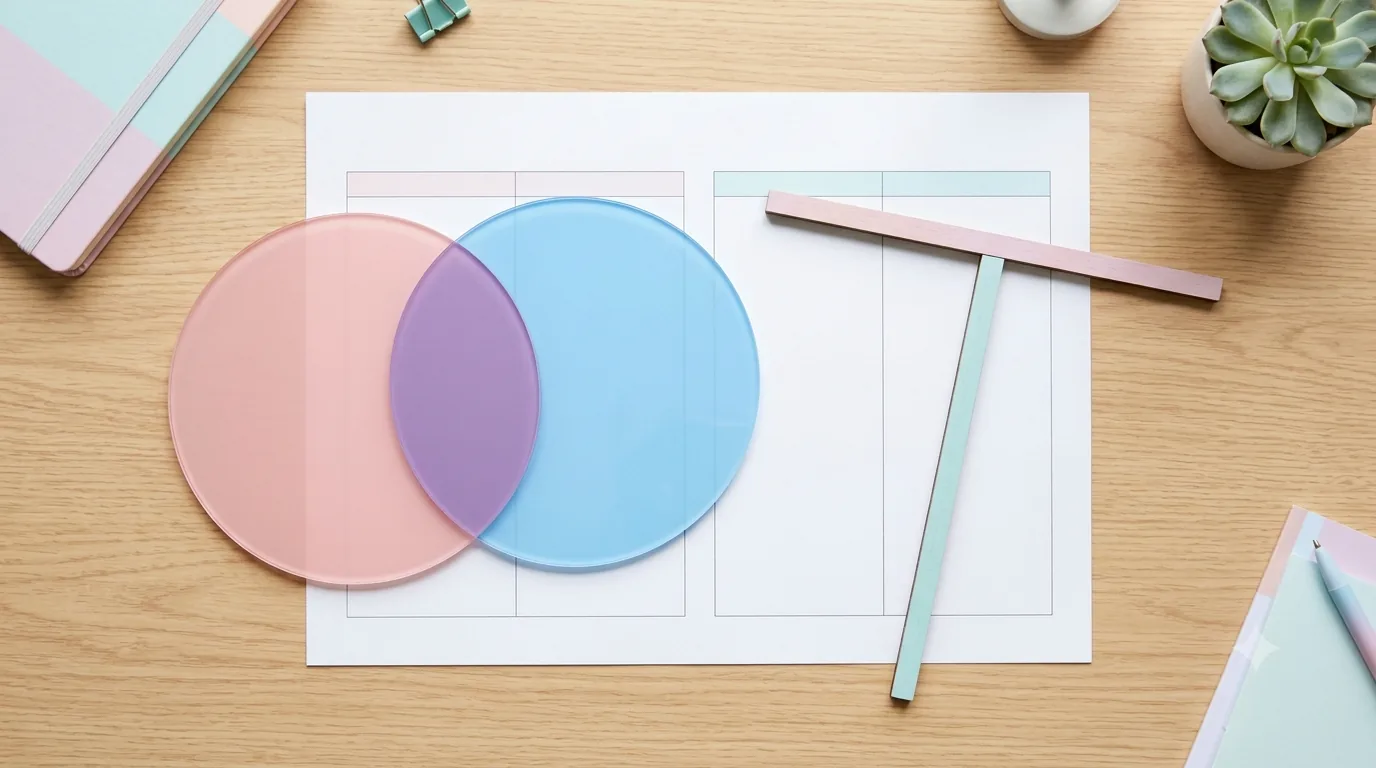
Venn Diagram vs. T-Chart: Which One Should You Use?
Compare Venn diagrams and T-charts, see when each organizer works best, and use a simple decision rule for reading, writing, and classroom tasks.
Read guide →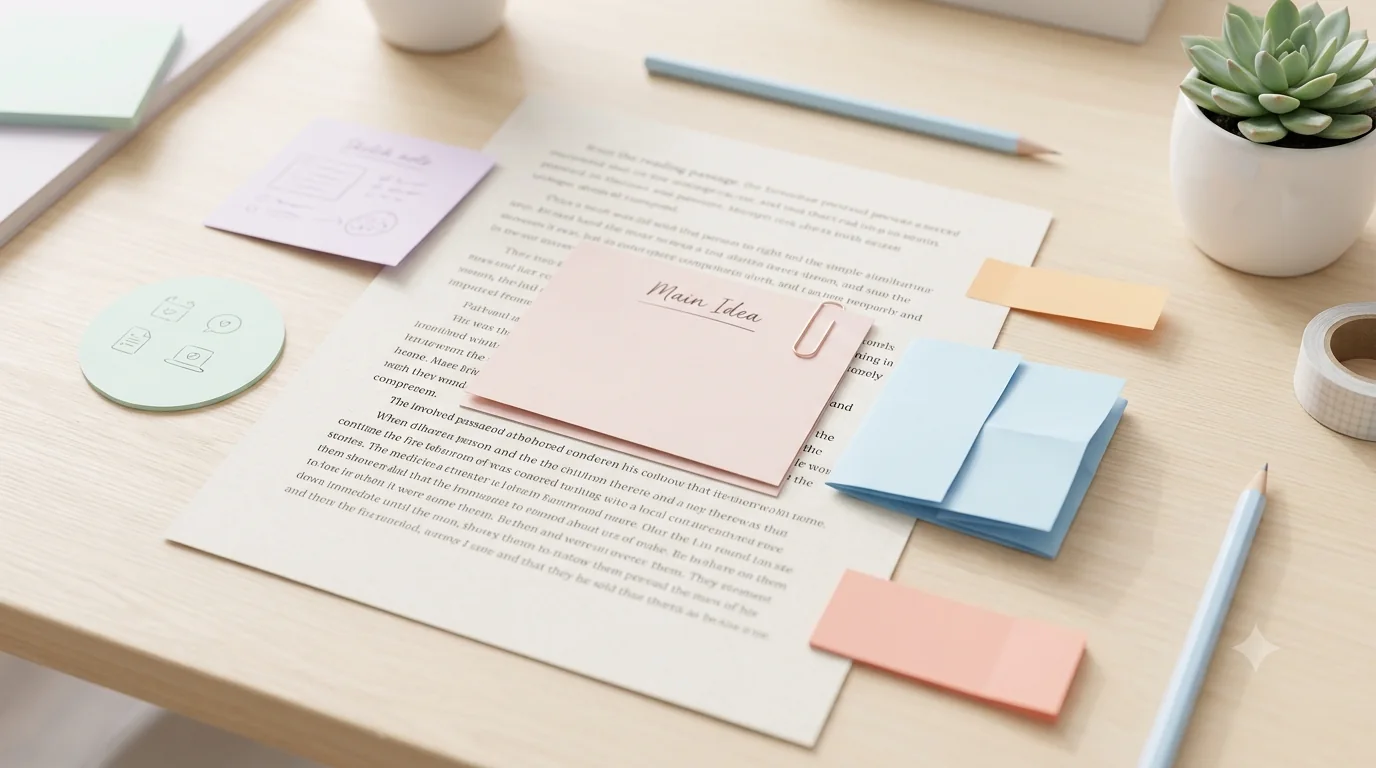
Main Idea vs. Summary: What's the Difference?
Learn the difference between main idea and summary, see worked examples, and use main idea plus key details to build a concise summary.
Read guide →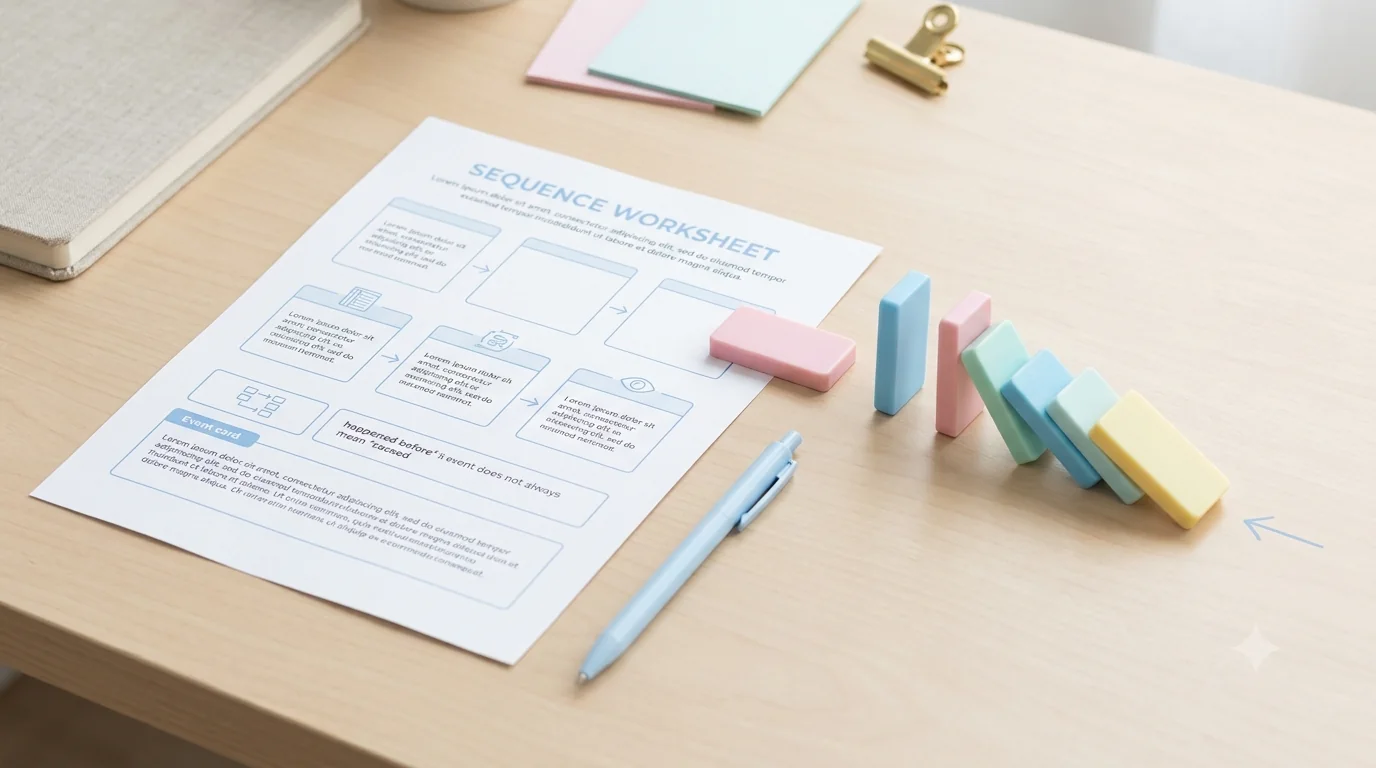
Cause and Effect vs. Sequence: How to Tell the Difference
Learn the difference between cause and effect and sequence, spot each text structure, and choose the right graphic organizer for reading or writing.
Read guide →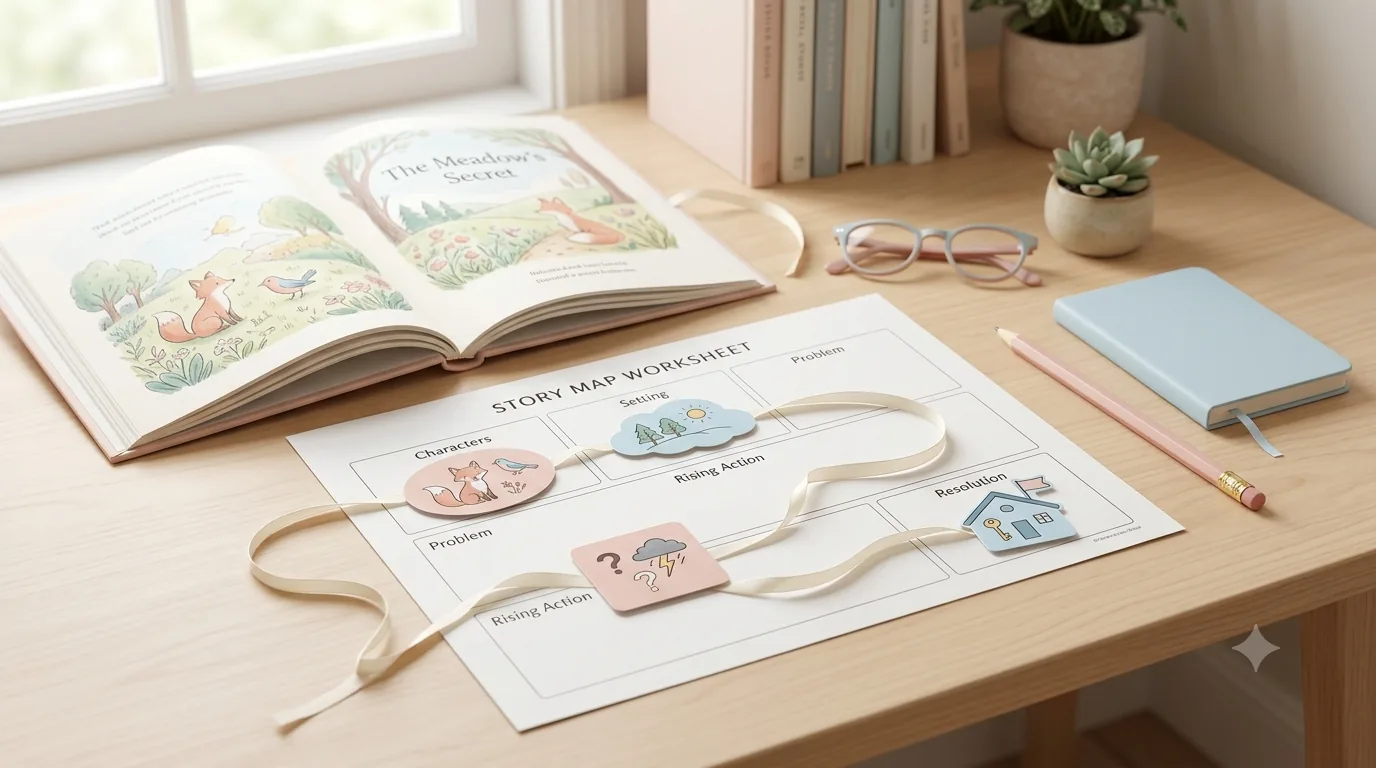
How to Use a Story Map for Better Reading Comprehension
Learn how to use a story map for characters, setting, problem, key events, and resolution, with a worked example and common fixes.
Read guide →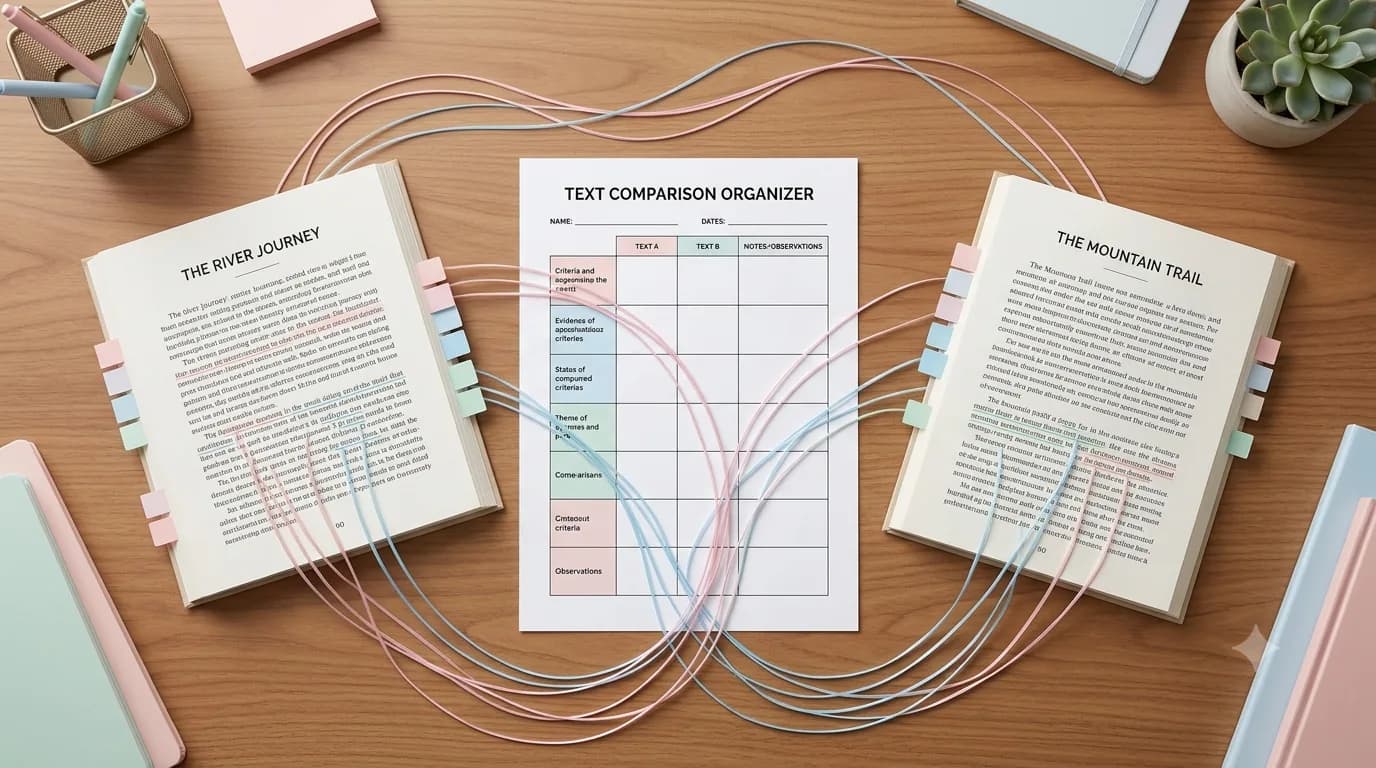
How to Compare and Contrast Two Texts Without Just Making a List
Learn how to compare and contrast two texts by matching criteria, gathering evidence, using a Venn diagram, and turning notes into a clear response.
Read guide →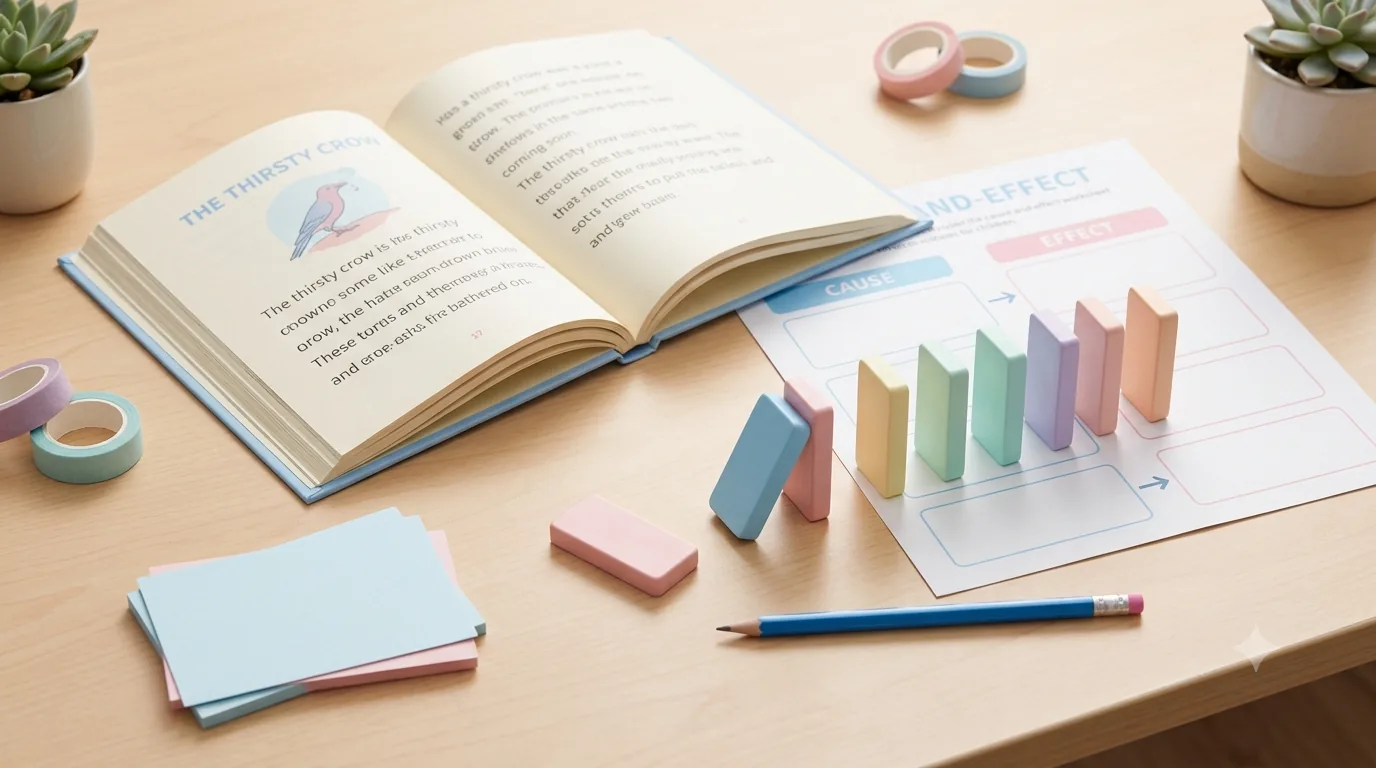
How to Teach Cause and Effect in Reading Without Teaching a Guessing Game
Teach cause and effect in reading with a practical routine for identifying real causal links, using evidence, and avoiding common student misconceptions.
Read guide →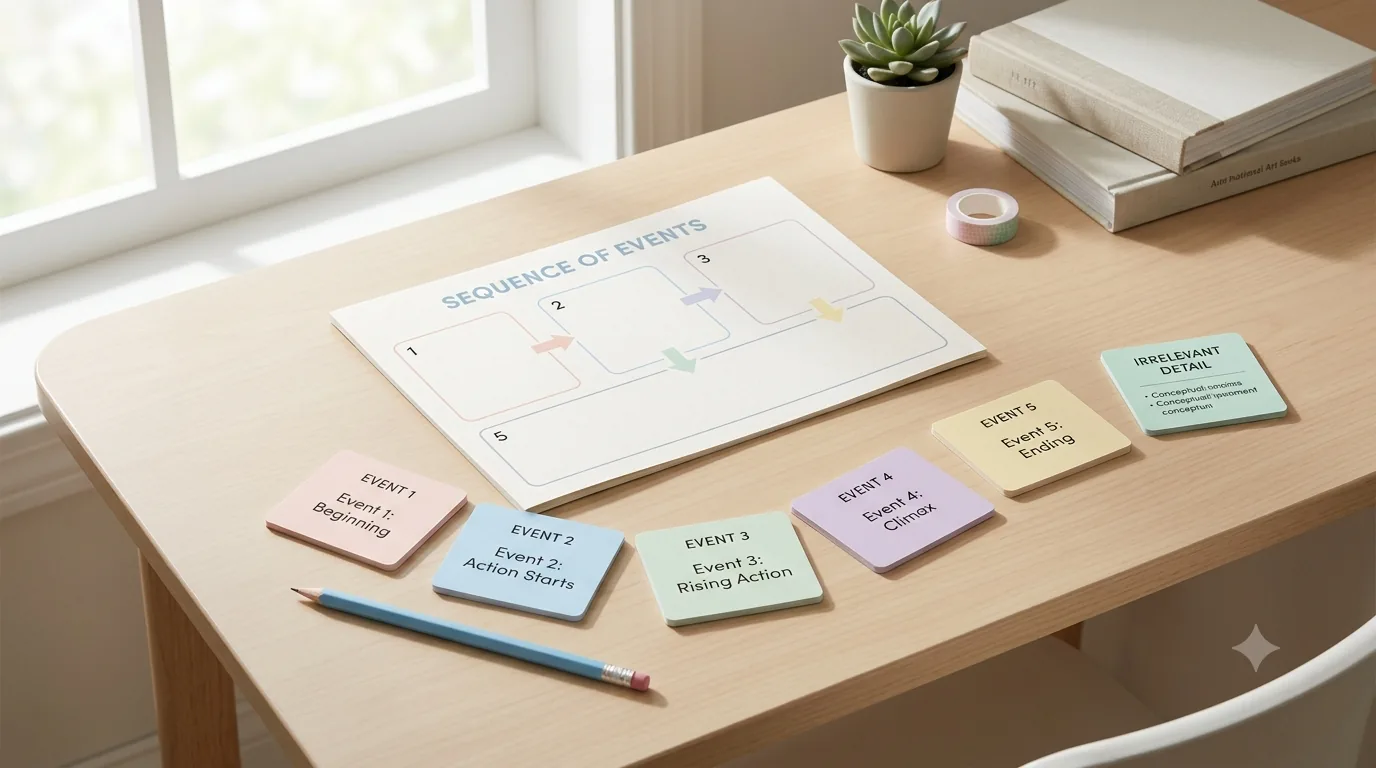
How to Teach Sequence of Events in Reading Beyond First, Next, Then, Last
Teach sequence of events in reading with a step-by-step routine for choosing key events, using order clues, retelling, and avoiding overloaded timelines.
Read guide →