Work & Study · Free printable
Free Printable Frayer Model Vocabulary Template
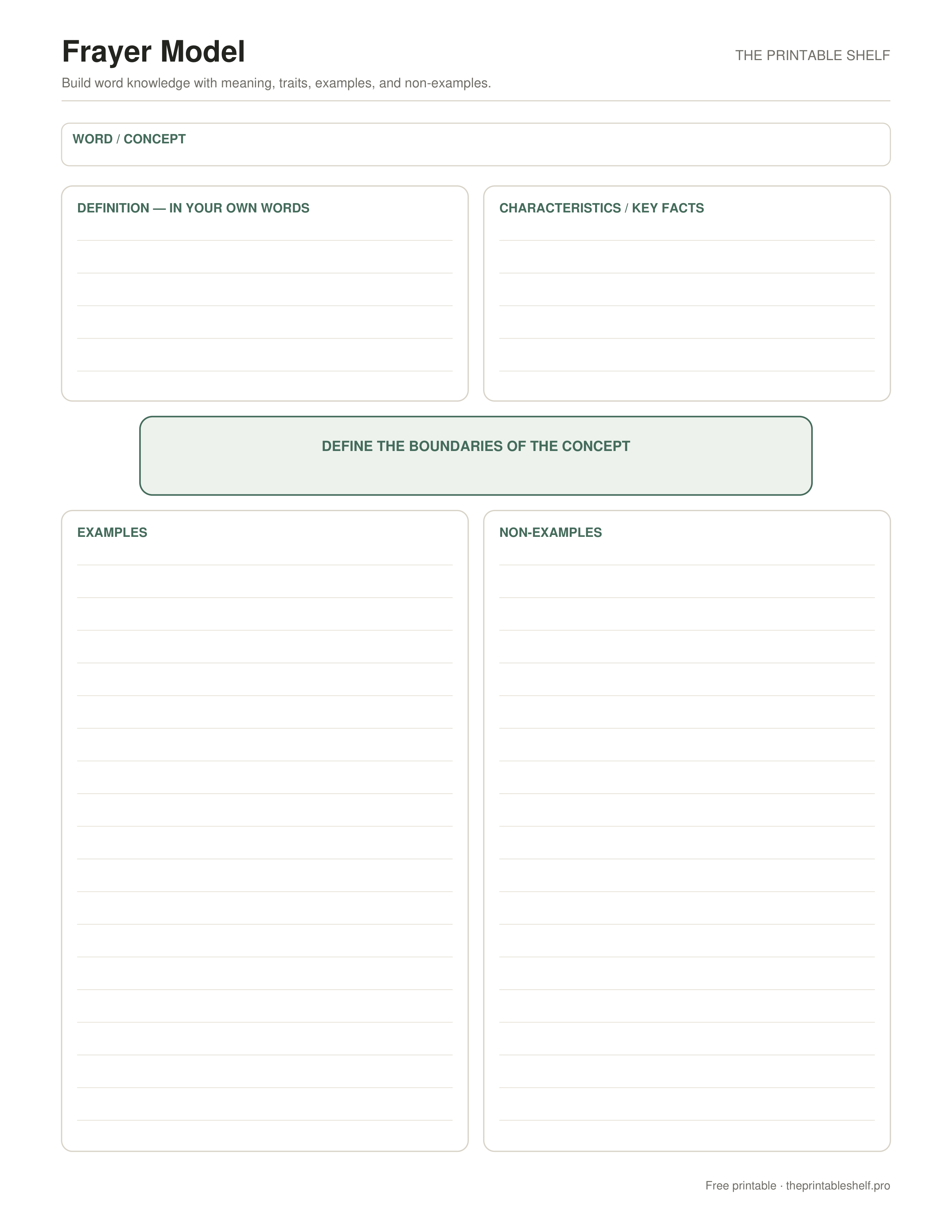
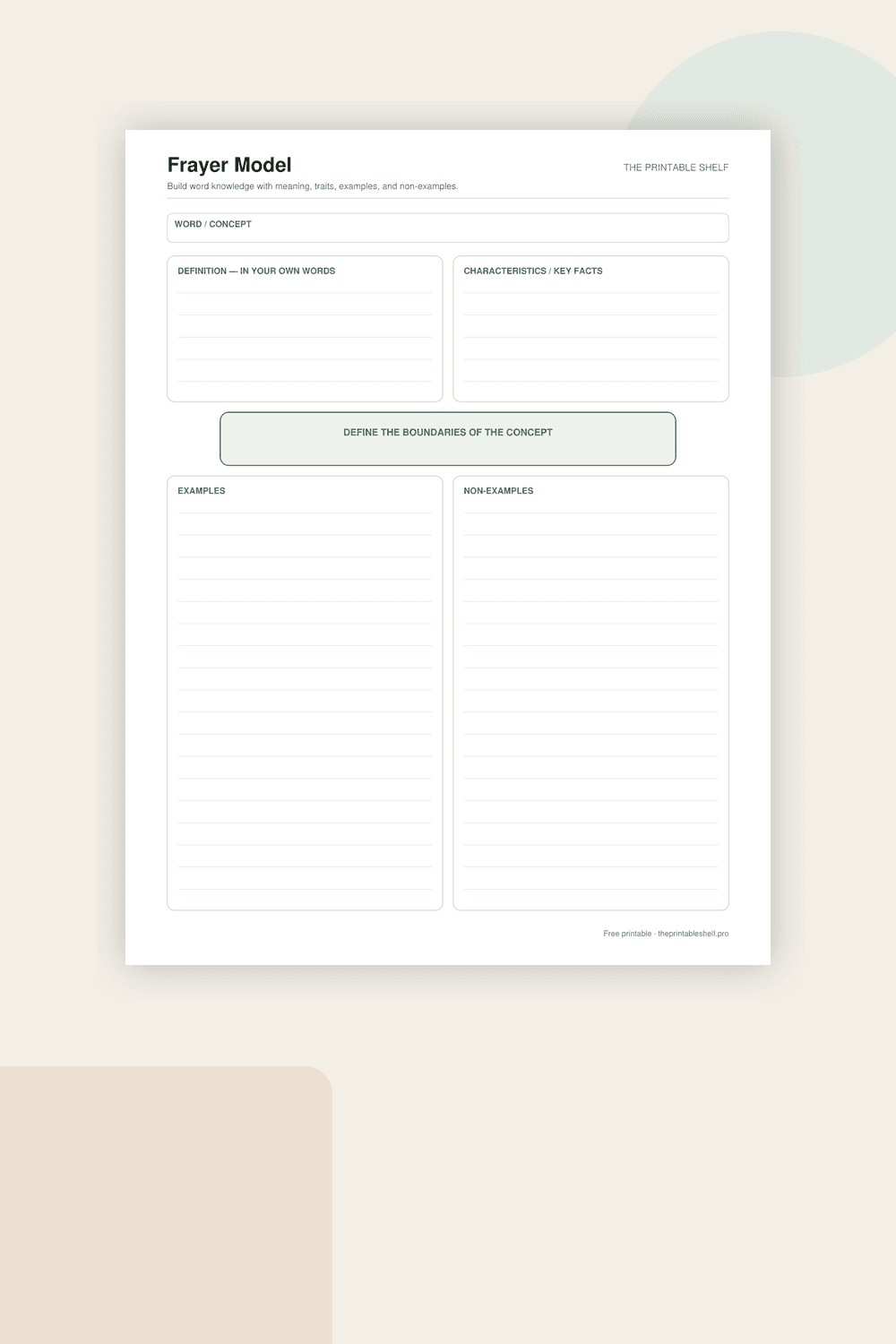
This free Frayer Model template helps learners understand a word or concept through four lenses: definition, characteristics, examples, and non-examples. The format is useful for vocabulary in reading, science, social studies, and math because it makes the boundaries of a concept visible. Download Letter, A4, or PNG.
Edited by Tessa Vaughn · Planning & Organization Editor
Free download
Choose your file size
Print at 100% / Actual Size for the cleanest margins. Pick the paper size your printer normally uses.
No sign-up required · personal/classroom use
What this printable is for
A classic four-part vocabulary and concept organizer upgraded from the site's older vocabulary map. Instead of stopping at a copied definition, the page asks for defining traits, clear examples, and deliberate non-examples, which helps learners distinguish what belongs to a concept from what only looks similar.
How to use it
Write one target word or concept in the field at the top. Choose a term that is important enough to unpack, not a simple word that can be learned from a quick synonym. The Frayer format works especially well for academic vocabulary, science concepts, math terms, and social studies ideas where understanding the boundaries of the concept matters as much as memorizing a definition.
Complete the Definition box in your own words after checking a reliable class source. Avoid copying a dictionary sentence you do not fully understand. A useful definition should be accurate but simple enough that you could explain it without looking back at the source. If the term has several meanings, use only the meaning that fits the current lesson and note the context beside it.
Use Characteristics / Key Facts for features that help define or recognize the concept. Prioritize defining attributes when category membership matters, while noting other important properties only when they clarify the lesson. This section is different from examples: “has three sides” is a defining characteristic of a triangle, while “equilateral triangle” is an example. Keeping the distinction clear forces more precise thinking than filling every box with related words.
Add Examples that clearly belong to the concept and Non-examples that are close enough to be useful contrasts. Random unrelated items make weak non-examples because they do not reveal the boundary. For the concept “renewable resource,” solar energy is an example and coal is a useful non-example; a pencil is not very informative. Ask yourself what feature separates each example from each non-example.
Finish by covering the definition and explaining the word using the other three boxes. If you can identify why each example fits and each non-example does not, you probably understand the concept rather than simply recognizing it. For group work, let pairs disagree over one non-example and defend their reasoning. That discussion is often the most valuable part of the organizer because it exposes fuzzy definitions that need revision.
Customize instead
Need a different title, paper size, or orientation? →
Use the free Graphic Organizer Maker to build a custom Venn, KWL, Frayer, story map, T-chart, main-idea, sequence, or cause-and-effect page.
Also in a free pack
Download this organizer together with related pages when you want one reusable master PDF instead of separate files.
Completed example
See how a finished page can look
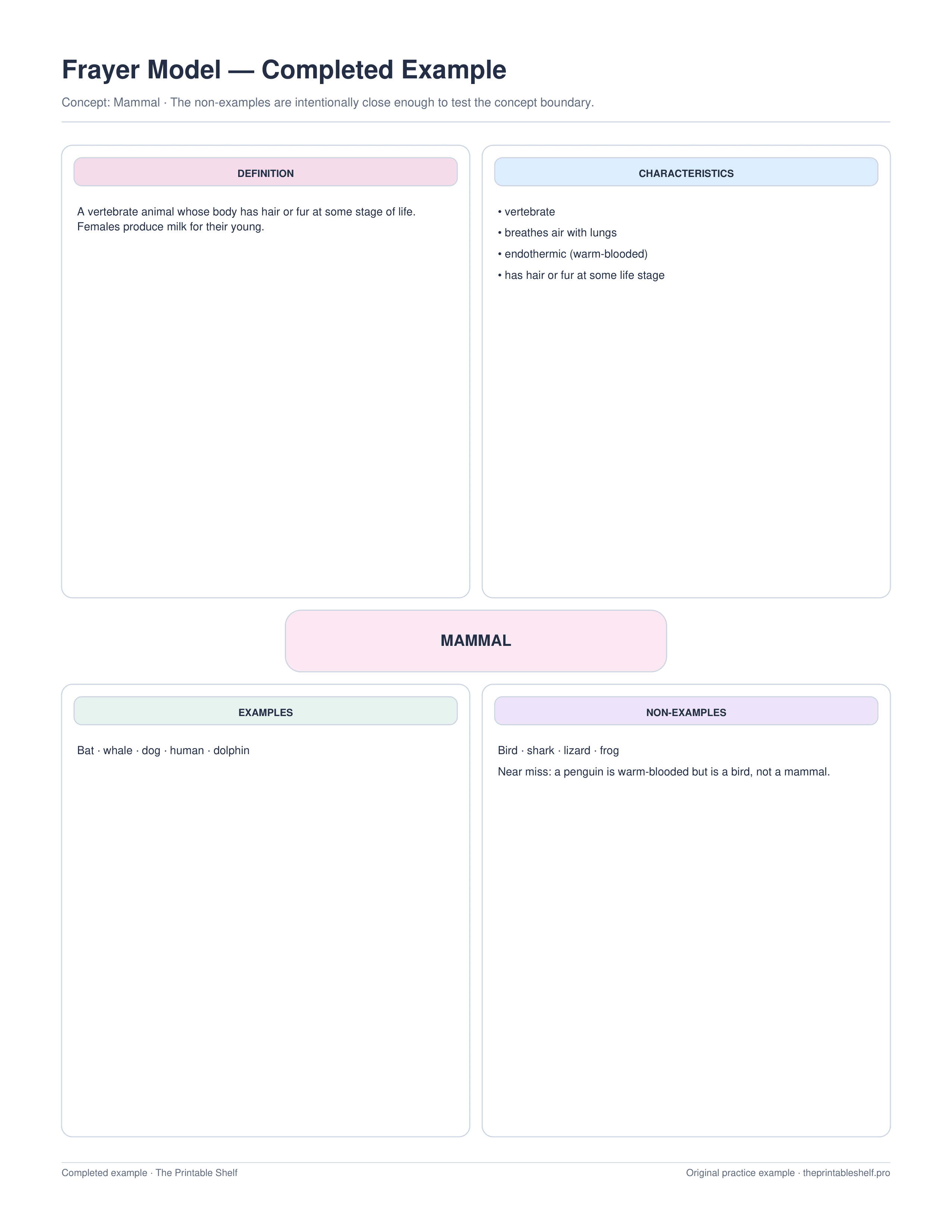
The filled model demonstrates the most important Frayer habit: characteristics describe the concept, examples belong to it, and non-examples are close enough to clarify the boundary.
Best uses for this template
Ways to use it
Learn more than a definition
Use the four sections to connect a definition with important characteristics, clear examples, and non-examples that show where the concept stops.
Test concept boundaries
Choose close non-examples that could be confused with the target concept, then explain the missing characteristic that keeps them outside the category.
Revisit after instruction
Complete part of the model before a lesson, then revise examples, characteristics, or the definition after reading, discussion, or practice.
Common mistakes to avoid
Copying a dictionary definition and stopping
Rewrite the idea in usable language and connect it to characteristics and examples that show understanding.
Choosing non-examples that are obviously unrelated
Use near misses when possible so the learner has to identify the characteristic that matters.
Writing vague characteristics
List features that help decide whether a new case belongs to the concept, not generic adjectives that could fit almost anything.
Classroom fit
Suggested grades, use modes & standards
Suggested grade bands
These are practical use ranges, not hard limits. Text complexity and the amount of teacher modeling matter more than the worksheet alone.
Good fit for
Scaffold level: Standard.
Common Core crosswalk
No narrow standards code is listed for this general-purpose template. Use it where the thinking task fits your local curriculum.
Frequently asked questions
What are the four parts of a Frayer Model?
A common Frayer Model uses definition, characteristics, examples, and non-examples around one target word or concept.
Why are non-examples useful?
Good non-examples clarify the boundary of a concept by showing what looks related but does not actually meet the defining characteristics.
Can I use a Frayer Model for math and science vocabulary?
Yes. It is especially useful for content-area terms because characteristics and non-examples can make abstract definitions more concrete.
Helpful guides
See where this organizer fits, when a different layout works better, and how to turn the completed page into a useful next step.
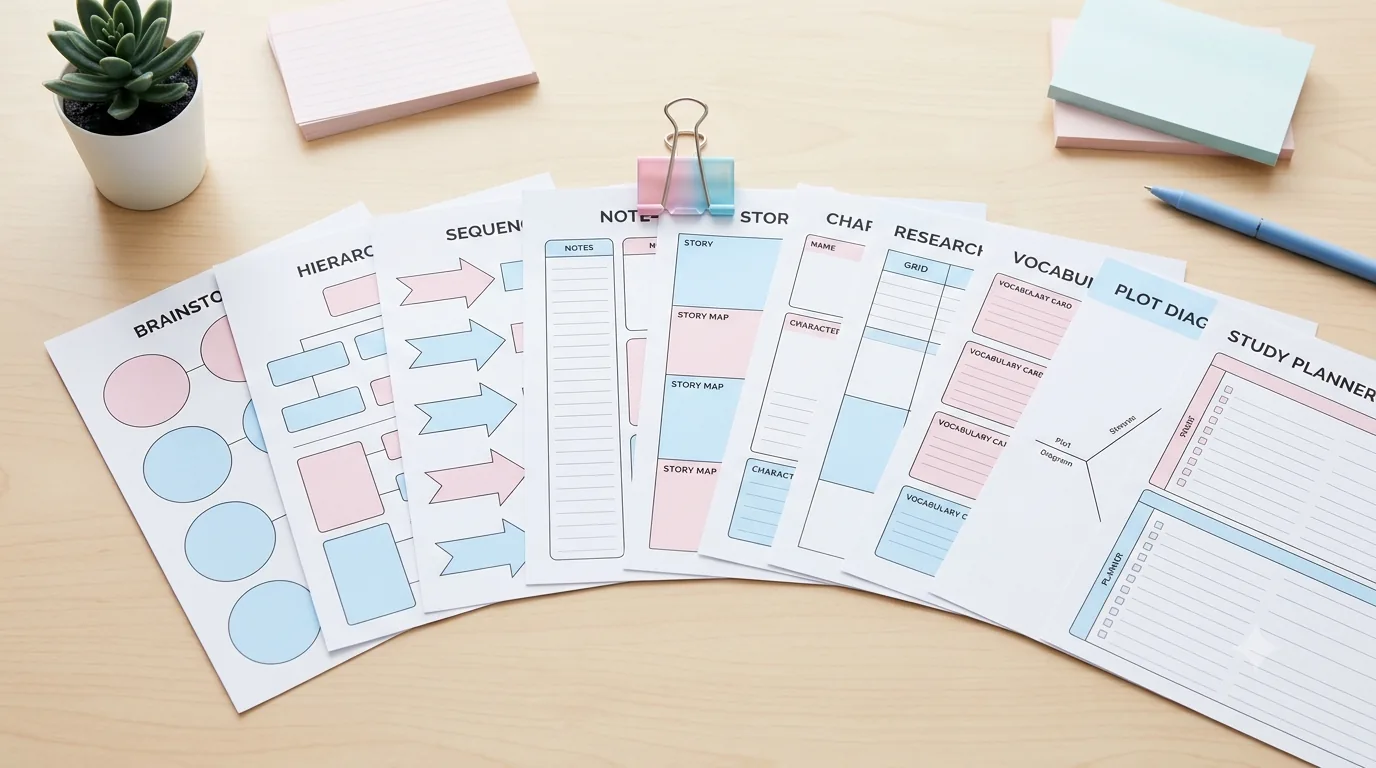
10 Free Graphic Organizers for Reading, Writing, and Studying
Download 10 free graphic organizers for reading, writing, comparison, vocabulary, sequencing, and study. Includes a guide to choosing the right one.
Read guide →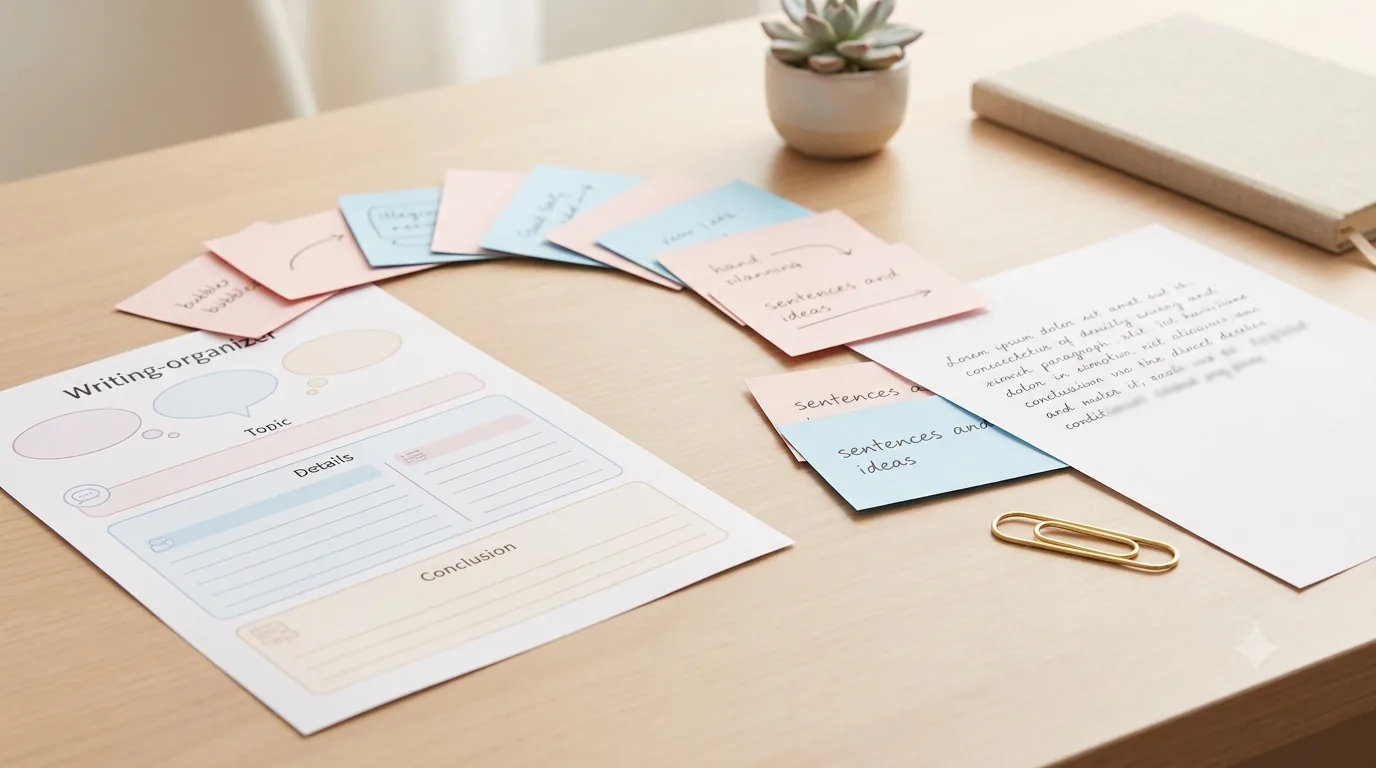
Free Writing Graphic Organizers: Which One to Use and When
Use free writing graphic organizers to plan ideas, structure paragraphs, compare evidence, sequence steps, and organize explanations before drafting.
Read guide →
Free Reading Comprehension Graphic Organizers by Reading Skill
Free reading comprehension graphic organizers for story elements, main idea, sequence, cause and effect, comparison, vocabulary, and prior knowledge.
Read guide →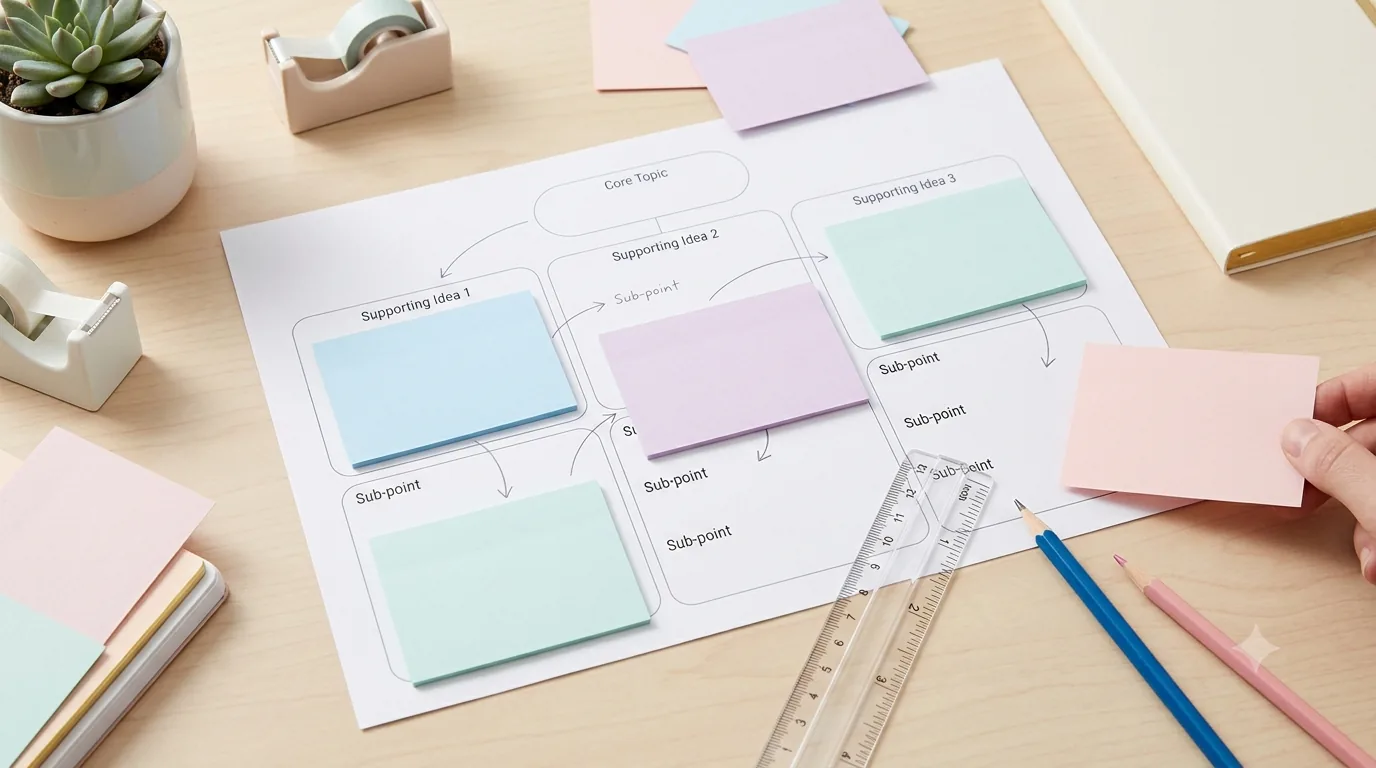
How to Use Graphic Organizers Effectively (Without Turning Them Into Busywork)
Learn how to choose, model, scaffold, and reuse graphic organizers so students think with them instead of simply filling in boxes.
Read guide →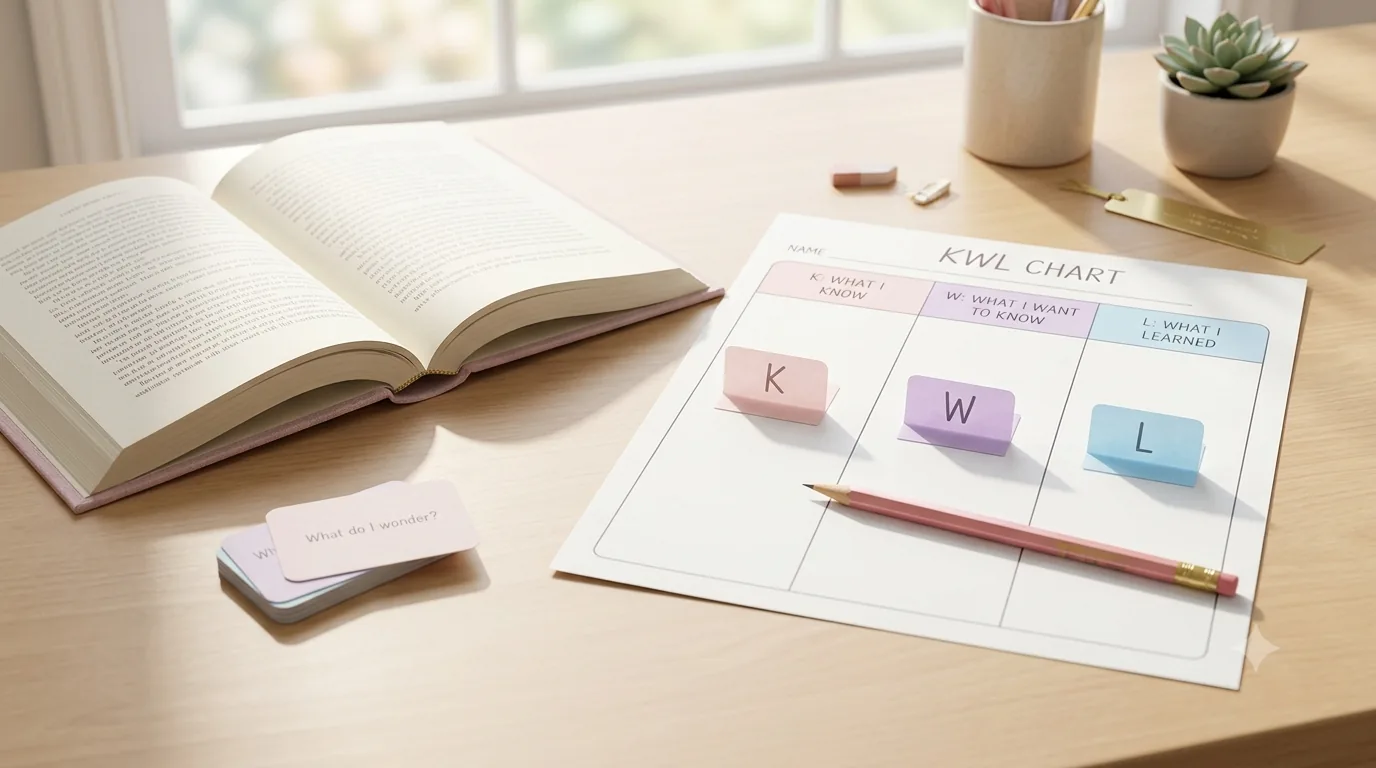
How to Use a KWL Chart Before, During, and After Reading
Learn how to use a KWL chart before, during, and after reading, with practical prompts, a worked example, and fixes for common KWL mistakes.
Read guide →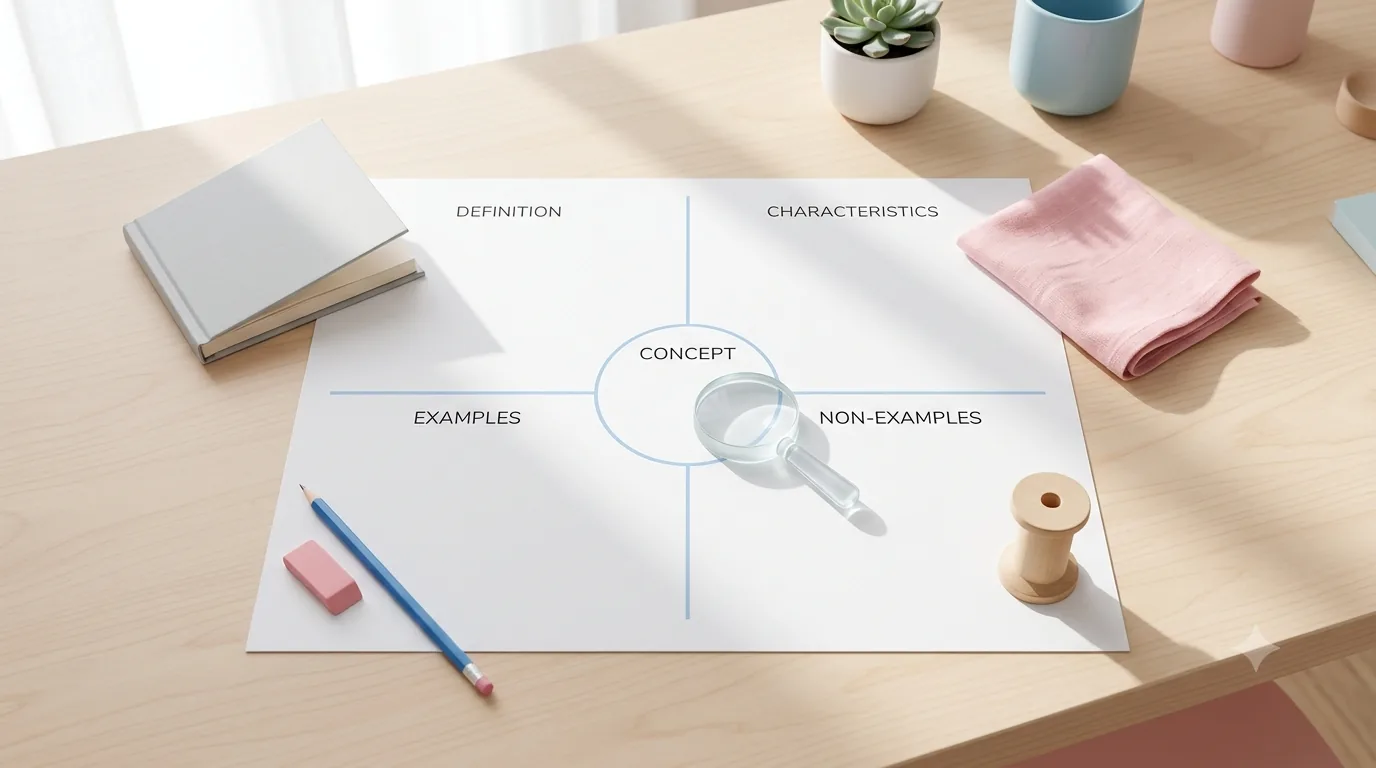
How to Use a Frayer Model for Vocabulary and Concepts
Learn how to use a Frayer Model with definitions, characteristics, examples, and non-examples, plus worked examples and common fixes.
Read guide →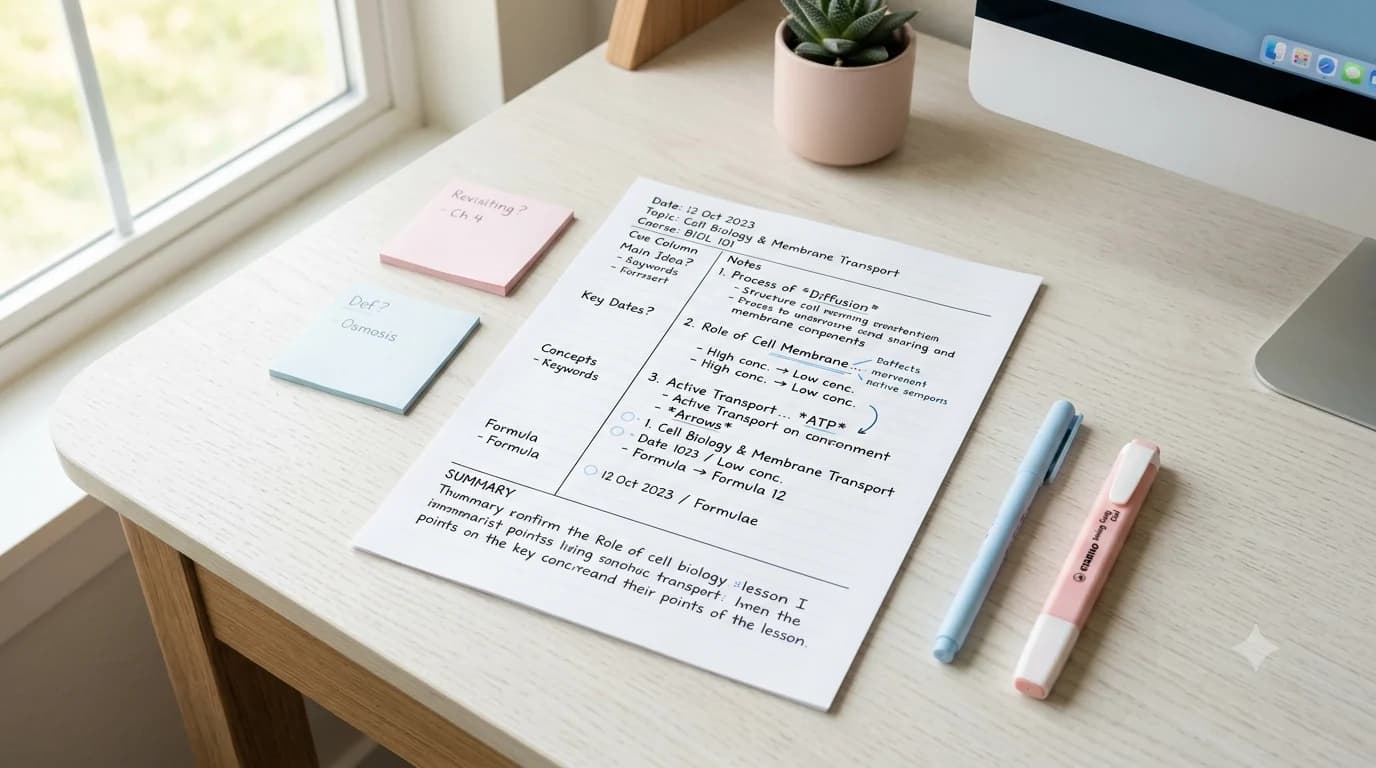
7 Cornell Notes Mistakes That Make the Method Less Useful
Fix seven common Cornell Notes mistakes, from empty cue columns to passive rereading, and turn each page into a practical study tool.
Read guide →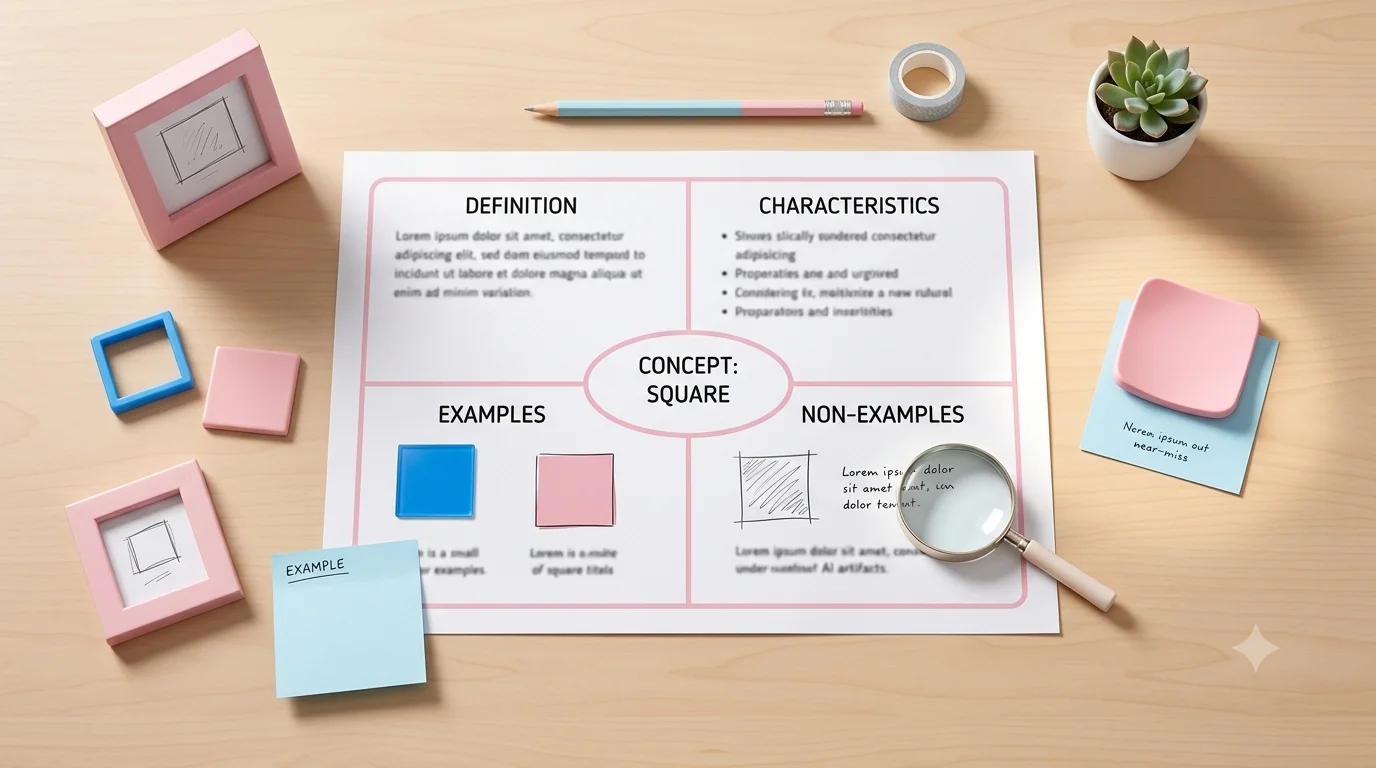
Frayer Model Examples and Non-Examples: How to Choose Ones That Actually Teach the Concept
Learn how to choose strong Frayer Model examples and non-examples, including near-misses, defining characteristics, and worked examples across subjects.
Read guide →How to Use Context Clues to Figure Out Word Meaning
Use context clues to infer an unfamiliar word, test the meaning in the sentence, and recognize when the text is too weak and a reference is needed.
Read guide →Keep organizing
You might also like
Free printable
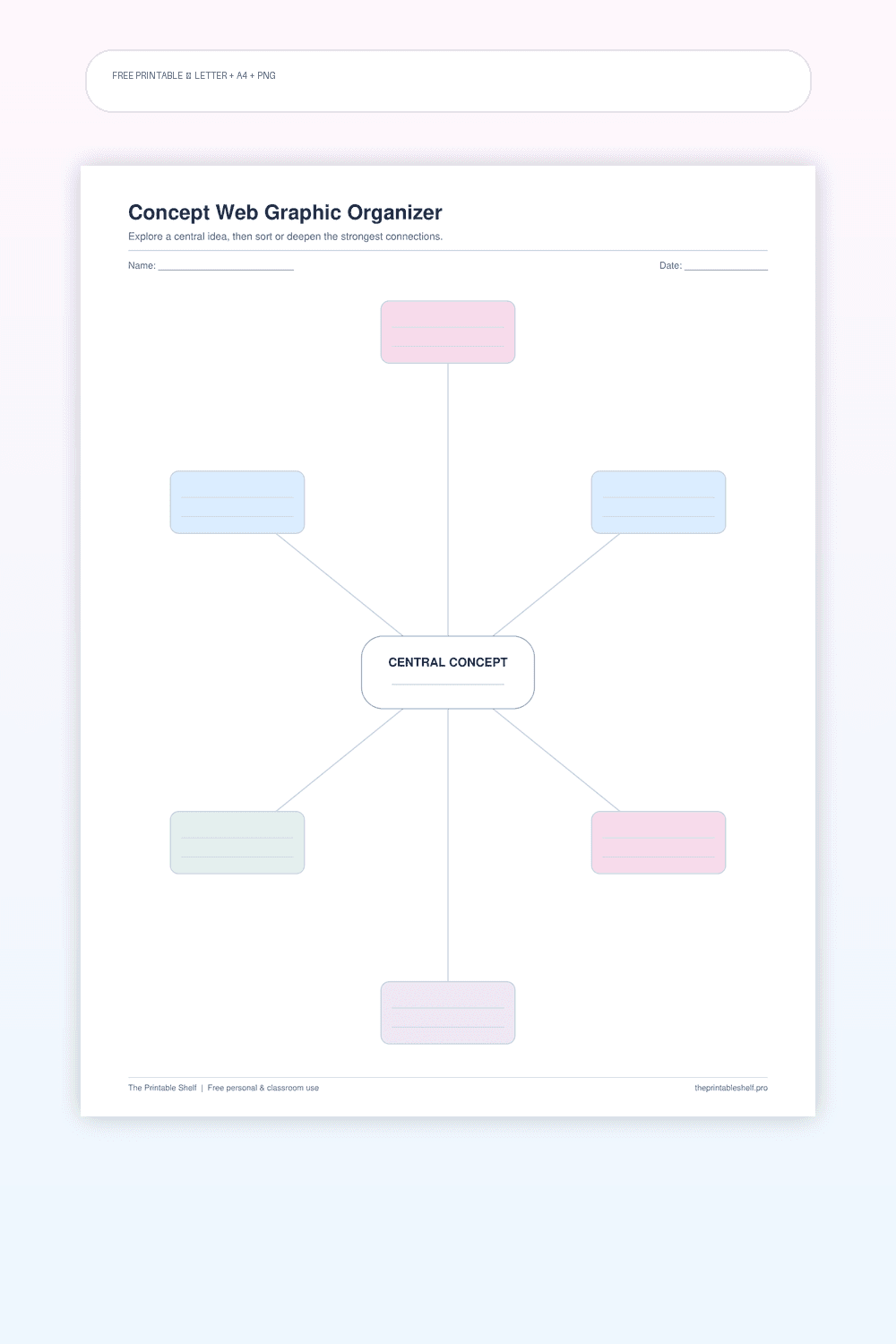
Concept Web Graphic Organizer
A radial organizer with one central concept and multiple surrounding branches. Unlike a main-idea-and-details sheet, the surrounding ideas do not all have to function as evidence for one sentence. The web is better for exploring a topic broadly, grouping associations, and making relationships visible before the user decides how the information should be ordered.
Free printable
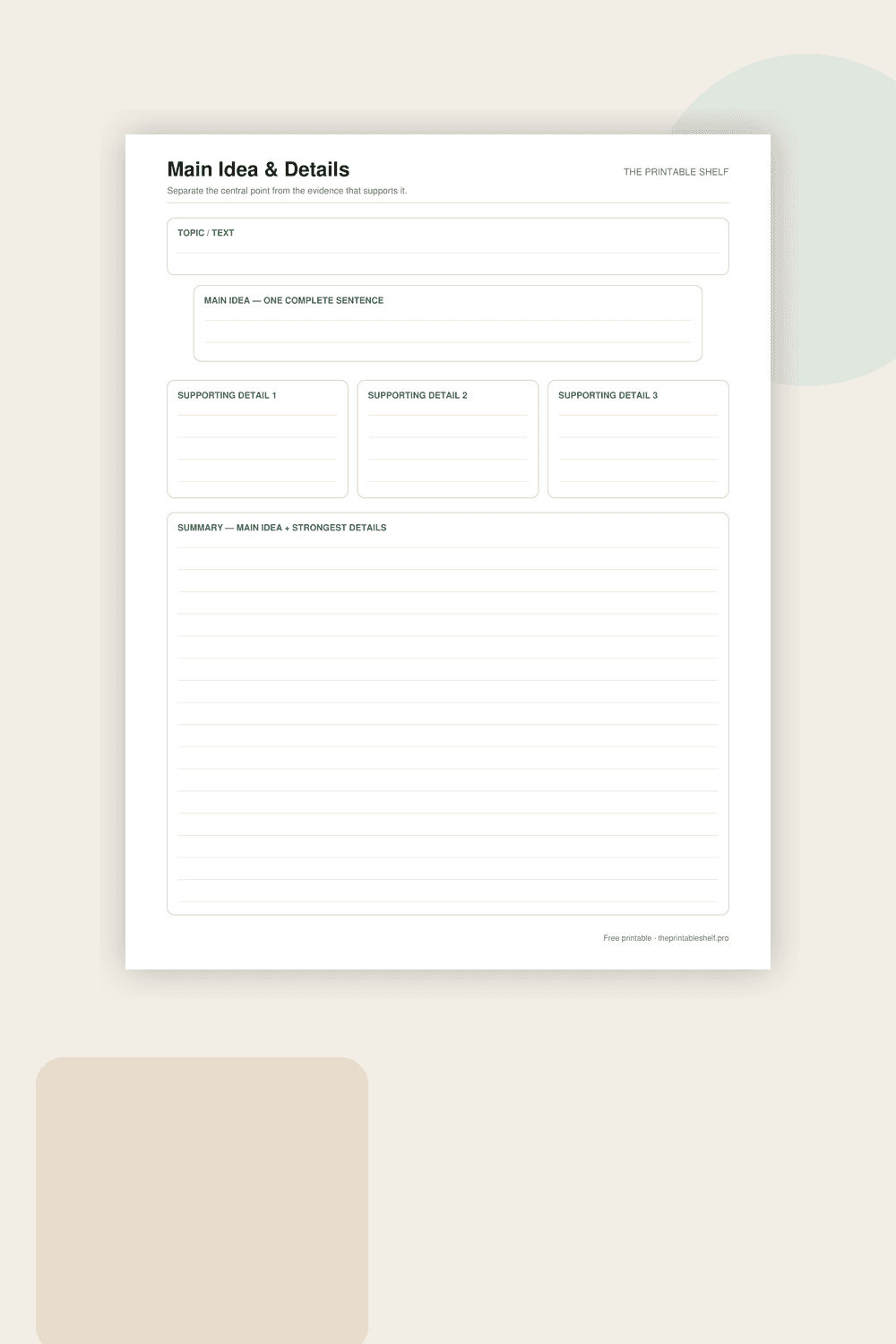
Main Idea and Details Graphic Organizer
A reading and note-taking organizer built around one central idea and three pieces of support. The extra topic box helps learners distinguish a broad subject from the author’s actual main point, while the final summary asks them to recombine the important information in their own words.
Free printable
Printable KWL Chart
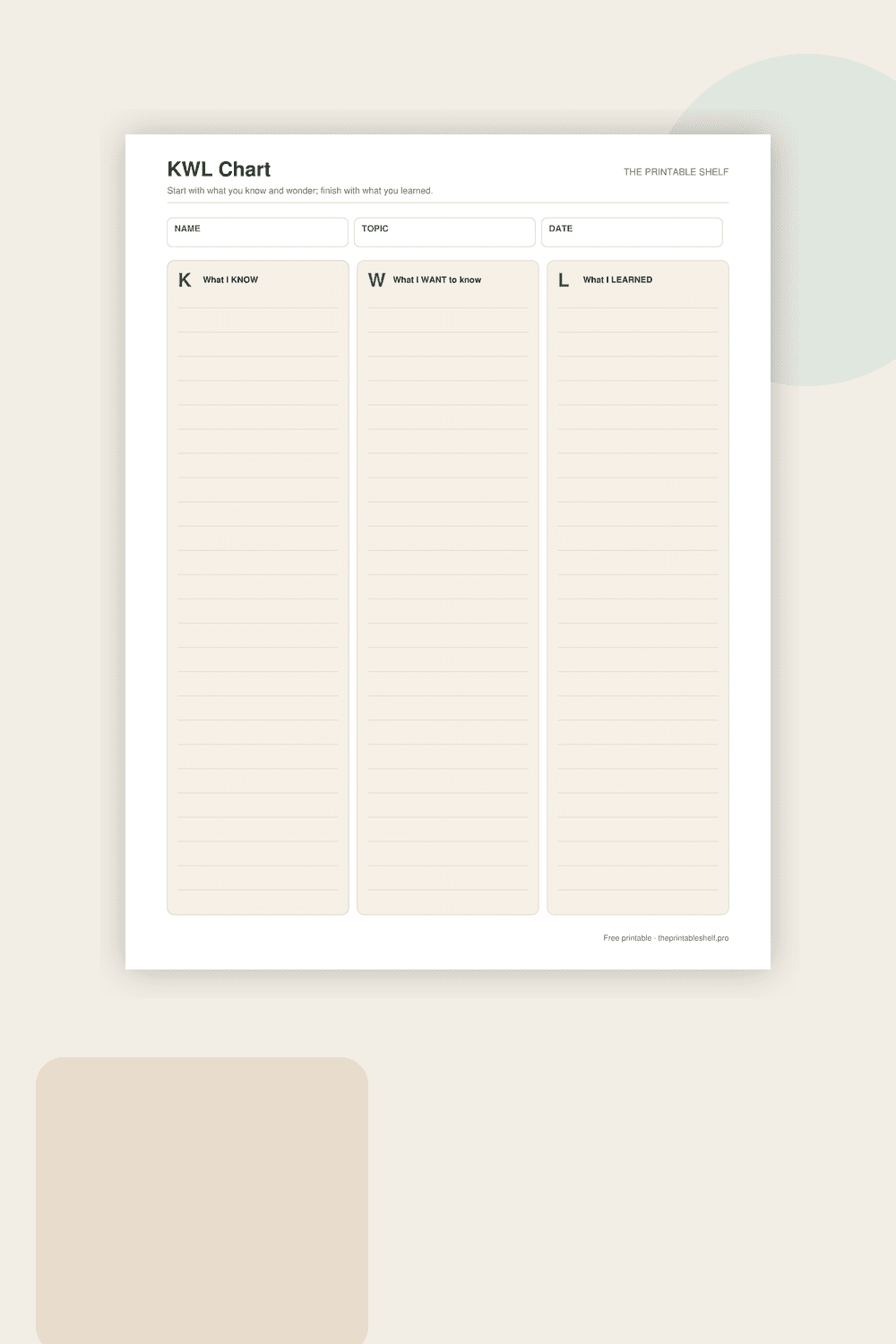
A three-column learning organizer for activating prior knowledge and making questions visible before a lesson begins. The K column records what the learner thinks they know, W captures questions or wonderings, and L is completed afterward with new information, corrections, and answers discovered during learning.