Work & Study · Free printable
Free Compare and Contrast Graphic Organizer
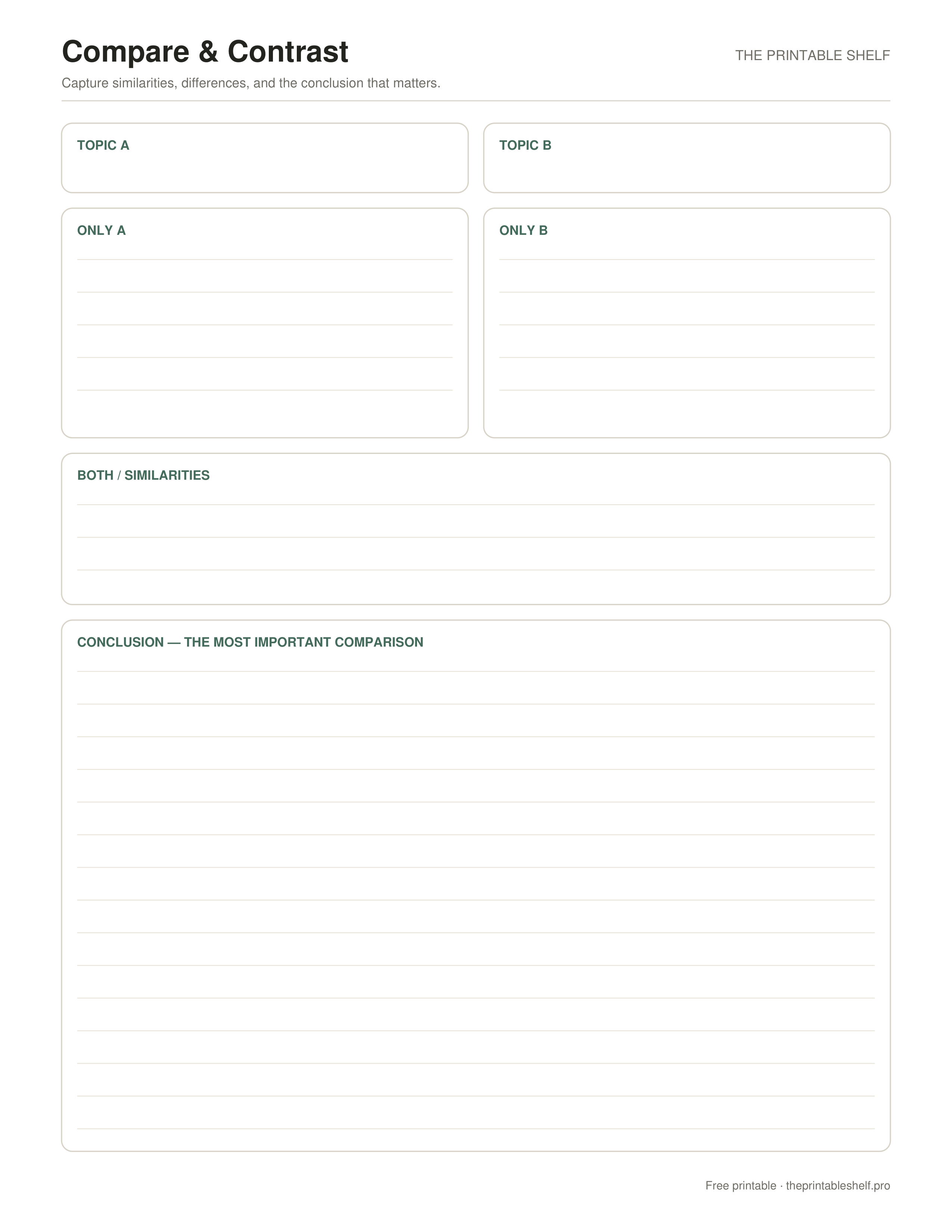
This free compare and contrast organizer separates details that belong only to Topic A, only to Topic B, and to both. A conclusion box then asks the learner to state the most important comparison. It works for texts, concepts, people, events, or choices and downloads in Letter, A4, or PNG.
Edited by Tessa Vaughn · Planning & Organization Editor
Free download
Choose your file size
Print at 100% / Actual Size for the cleanest margins. Pick the paper size your printer normally uses.
No sign-up required · personal/classroom use
What this printable is for
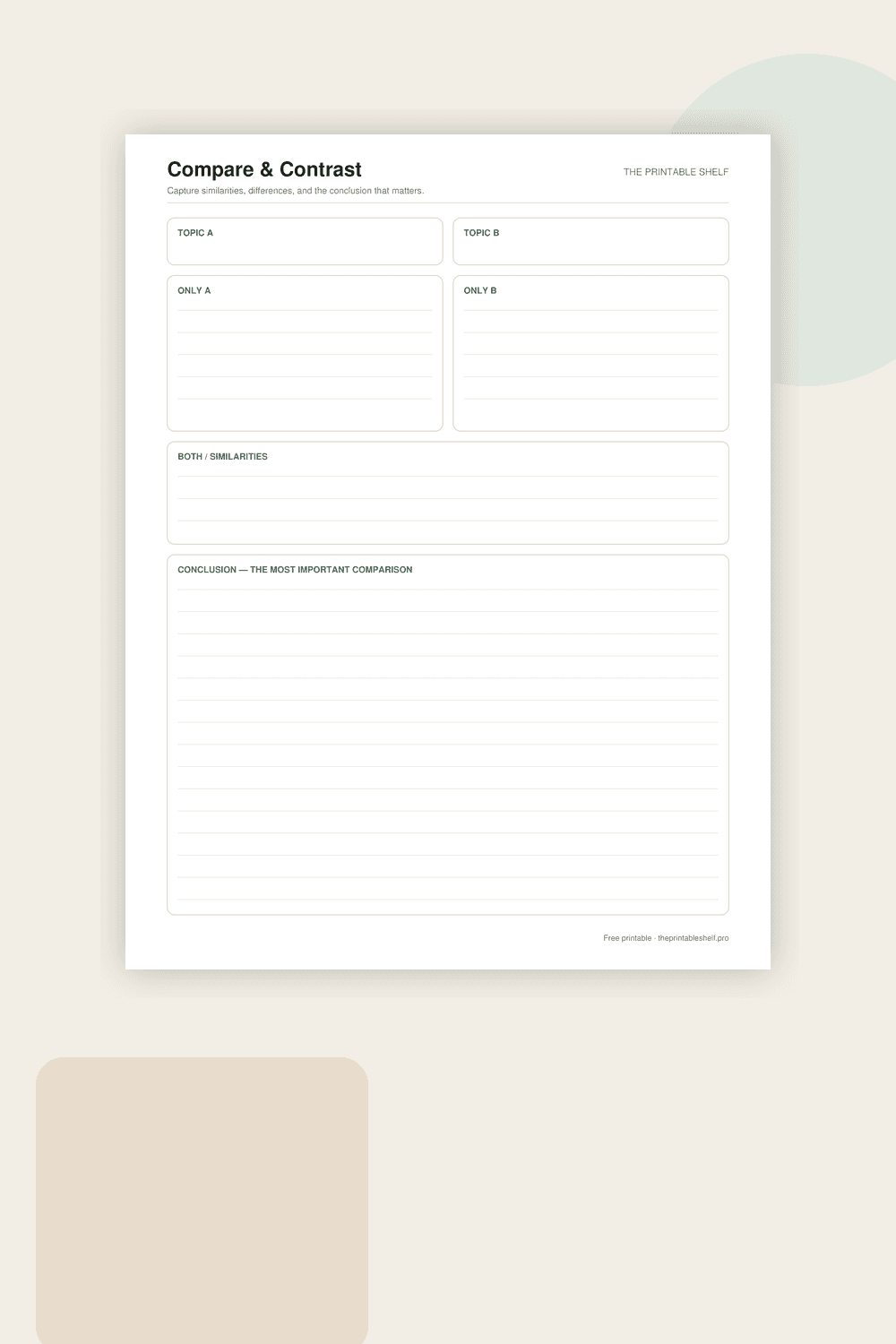
A structured alternative to a Venn diagram for learners who need more writing space. Two difference boxes sit side by side, a full-width similarities area keeps shared traits together, and the final conclusion section turns the collected notes into an actual comparison rather than stopping at a list.
How to use it
Write the two things you are comparing in Topic A and Topic B. Make sure they are comparable at the same level: two characters, two historical events, two solutions, two texts, or two concepts. If one topic is extremely broad and the other is narrow, the organizer will fill unevenly. Narrow the broader topic before you begin so the comparison has a clear purpose.
Use Only A and Only B for meaningful differences. Try to compare the same feature on both sides when possible. For example, if you note the setting for Topic A, look for the setting of Topic B rather than switching immediately to a completely different feature. Parallel comparisons make the notes easier to interpret later and help prevent a list of unrelated facts.
Put shared traits in Both / Similarities. Avoid vague entries such as “they are both interesting.” A useful similarity should tell you something about the content: both use first-person narration, both rely on renewable energy, or both events changed a particular policy. If a trait sounds similar but has an important difference, record the shared feature here and explain the distinction in the two difference boxes.
Finish with the Conclusion section. Do not simply count which side has more notes. State the most important relationship you discovered: which difference matters most, what the two examples reveal together, or why the similarities outweigh a surface-level difference. For an essay or short response, this conclusion can become the seed of a thesis sentence while the three sections above supply organized evidence.
A useful final check is to circle the comparison category that mattered most: purpose, cause, effect, evidence, structure, cost, or another feature relevant to the task. That keeps the finished organizer focused on an analytical point rather than a pile of disconnected observations. If the assignment gives you comparison criteria, write those criteria beside the two topic names before filling the page so every note answers the same task.
Fill it online
Type directly into this organizer →
Your answers autosave only in this browser. Print or save the filled page as PDF, download a high-resolution PNG, or clear it and start again—no account required.
Customize instead
Need a different title, paper size, or orientation? →
Use the free Graphic Organizer Maker to build a custom Venn, KWL, Frayer, story map, T-chart, main-idea, sequence, or cause-and-effect page.
Also in a free pack
Download this organizer together with related pages when you want one reusable master PDF instead of separate files.
Choose the support level
Blank, guided, example, or fill online
Use the blank page when students already know the routine. Choose the guided version when they need short prompts inside the sections. A completed example is available when this template benefits from modeling, and the online version lets students type before printing.
Blank
Independent use →
The standard printable with open writing space and no embedded hints. Download the Letter PDF.
Guided
Prompted scaffold
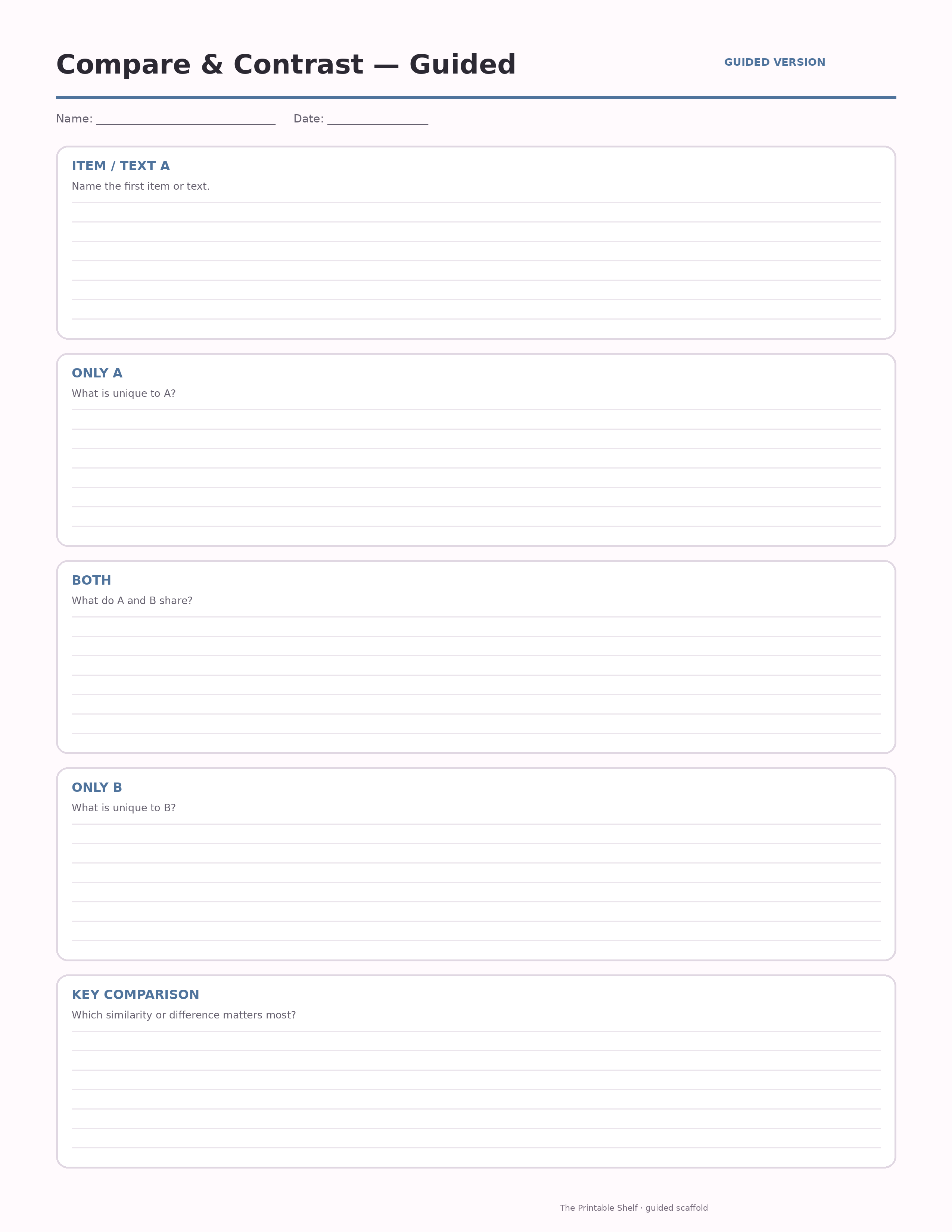
A scaffolded version with short prompts inside each section to help students know what kind of evidence or thinking belongs there.
Model
Completed example ↓
Use the finished sample to model the thinking before students work independently.
Online
Type before printing →
Autosave locally, print/save as PDF, or export the filled organizer as PNG.
Teaching set · 3 pages
Blank + guided + completed example in one PDF
Print the model first, practice with prompts, then move to the blank page without downloading three separate files.
Completed example
See how a finished page can look
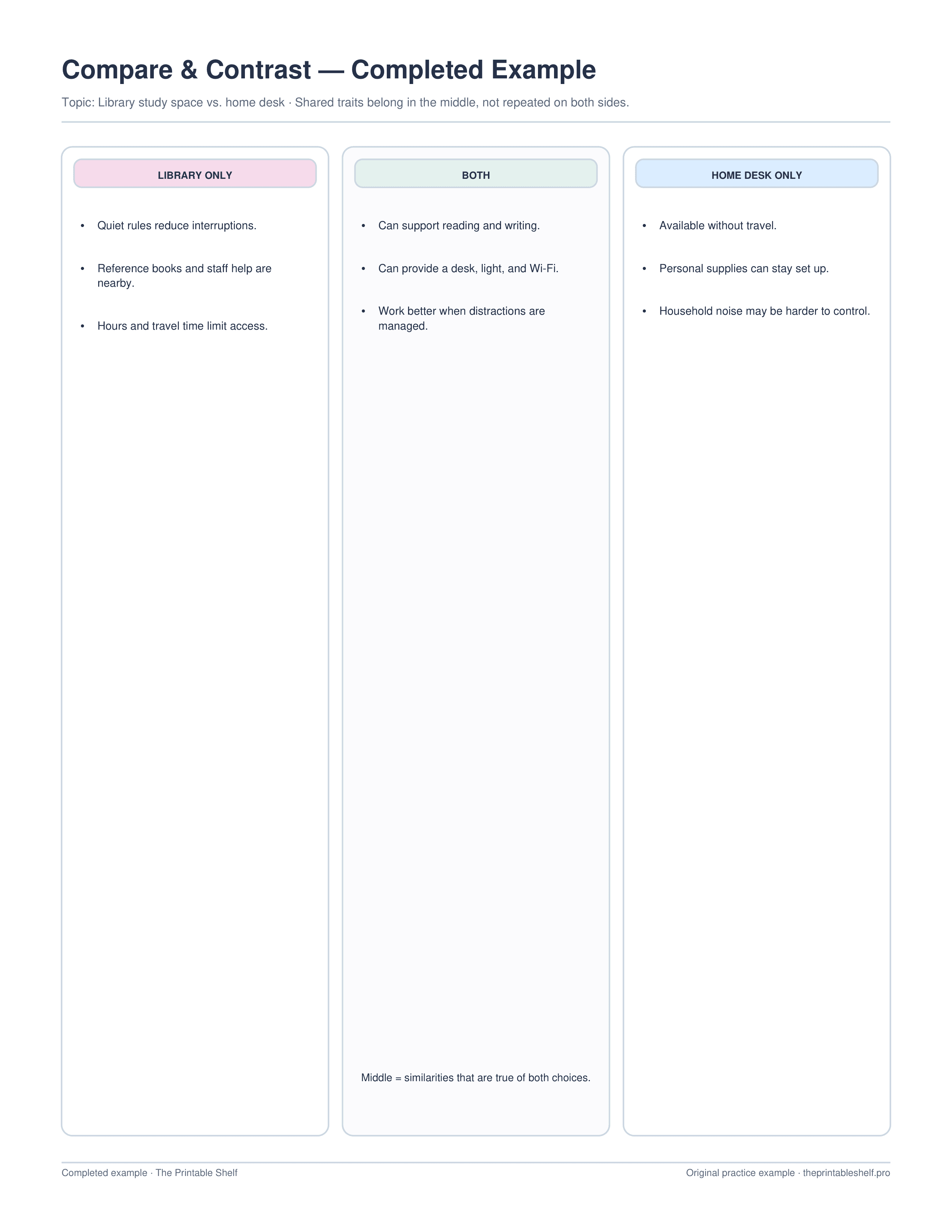
See a filled three-part comparison that keeps unique library traits on one side, unique home-desk traits on the other, and genuine similarities in the middle.
Best uses for this template
Ways to use it
Compare with a shared criterion
Name the two subjects, then compare them across the same features so the page does not become two unrelated lists.
Add evidence and explanation
Use the larger boxes when a Venn diagram does not provide enough room for examples, evidence, or why a similarity or difference matters.
Plan a comparison paragraph
Circle the strongest similarities and differences, decide what point they support, then move those ideas into a paragraph or discussion.
Common mistakes to avoid
Comparing different features on each side
Use the same criterion for both subjects before deciding how they are alike or different.
Listing observations without a comparison point
End by stating what the pattern of similarities and differences helps you conclude.
Forcing every detail into the organizer
Keep the evidence that matters to the purpose of the comparison and leave decorative facts out.
Classroom fit
Suggested grades, use modes & standards
Suggested grade bands
These are practical use ranges, not hard limits. Text complexity and the amount of teacher modeling matter more than the worksheet alone.
Good fit for
Scaffold level: Standard.
Common Core crosswalk
- RL.5.3 · Compare and contrast characters, settings, or events
- RI.5.5 · Compare and contrast the structure of events, ideas, concepts, or information
- RI.5.9 · Integrate information from several texts on the same topic
These codes are a practical crosswalk for skills this organizer can support. They are not a claim that the worksheet alone fully teaches or assesses the standard.
Frequently asked questions
How is this different from a Venn diagram?
It organizes the same basic compare-and-contrast thinking but gives more rectangular writing space and adds a dedicated conclusion section.
What can I compare with this printable?
You can compare texts, characters, people, events, concepts, products, options, or any two subjects that share useful points of comparison.
Should similarities go in both difference boxes?
No. Put shared traits in the Both / Similarities section and reserve the side-by-side boxes for features unique to each topic.
Helpful guides
See where this organizer fits, when a different layout works better, and how to turn the completed page into a useful next step.
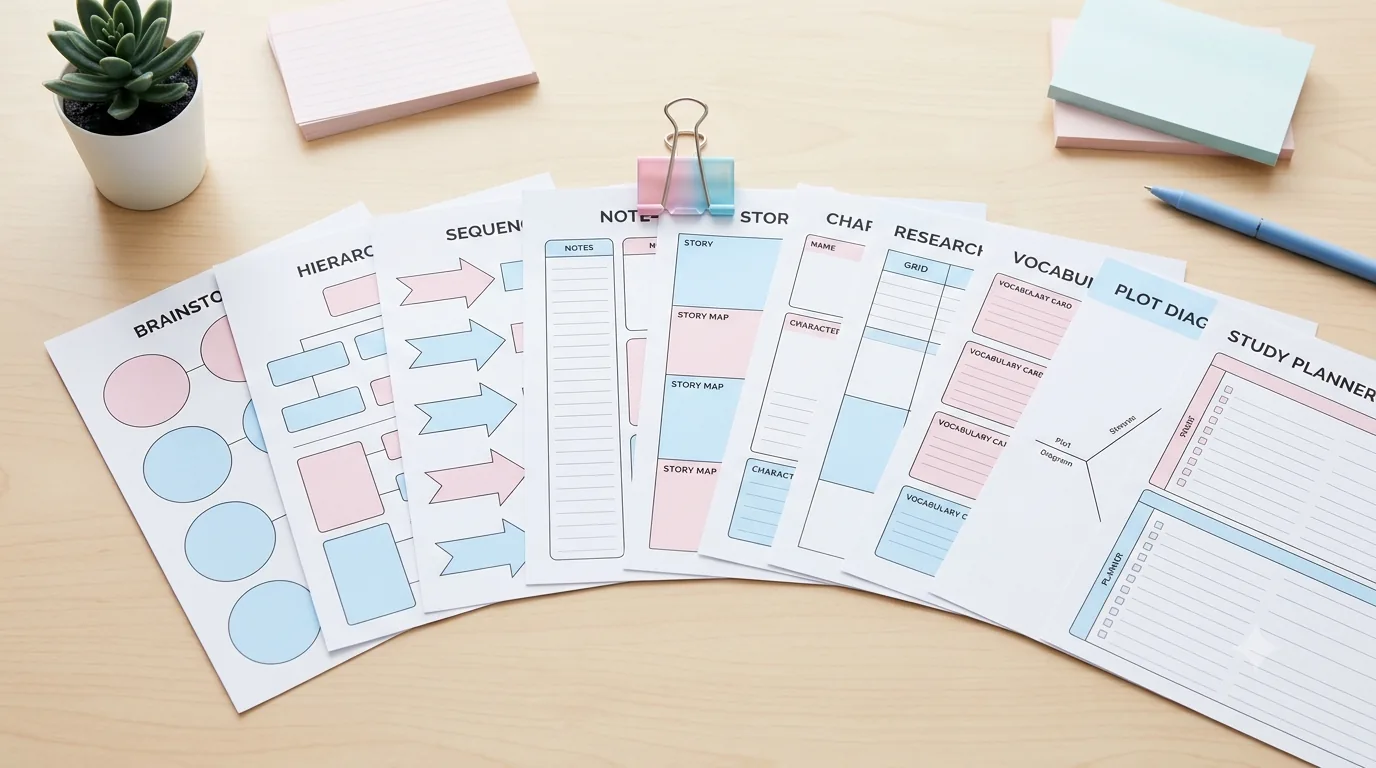
10 Free Graphic Organizers for Reading, Writing, and Studying
Download 10 free graphic organizers for reading, writing, comparison, vocabulary, sequencing, and study. Includes a guide to choosing the right one.
Read guide →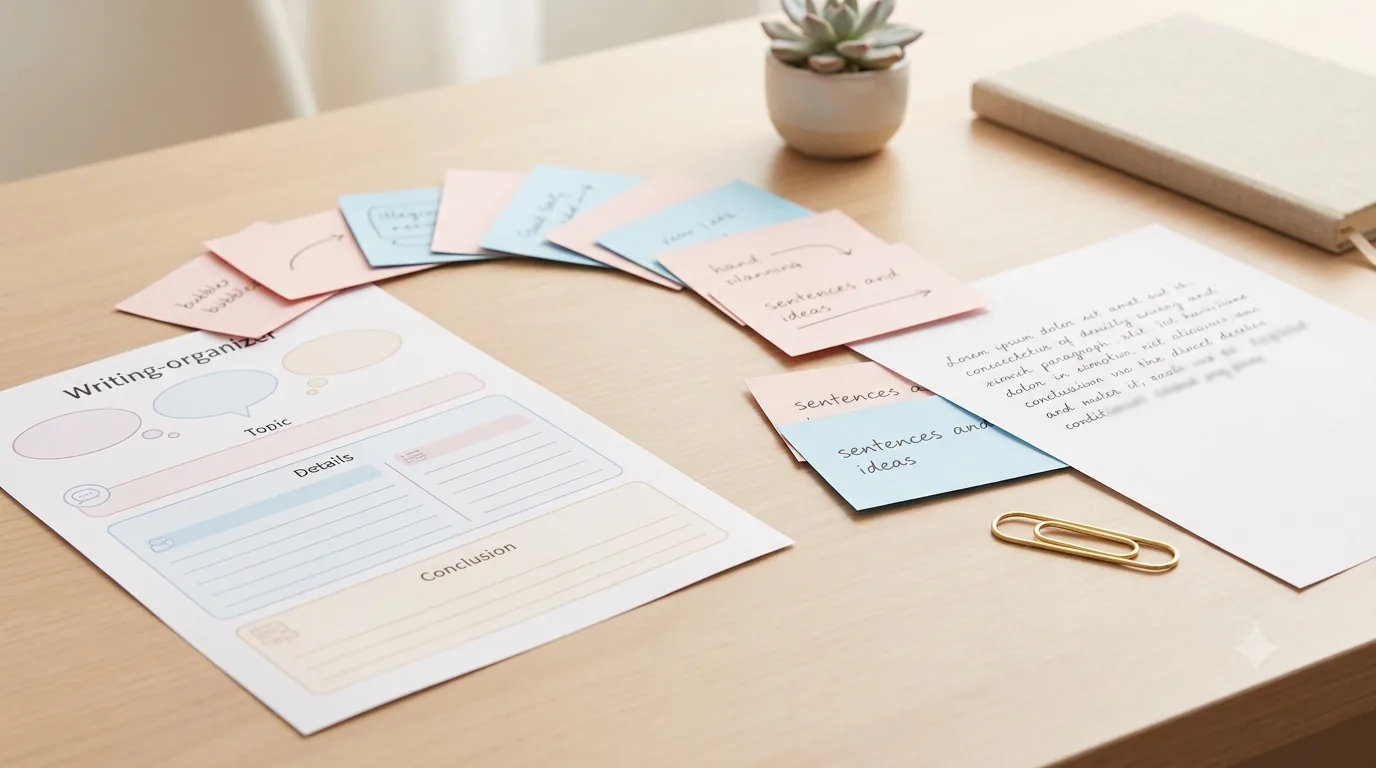
Free Writing Graphic Organizers: Which One to Use and When
Use free writing graphic organizers to plan ideas, structure paragraphs, compare evidence, sequence steps, and organize explanations before drafting.
Read guide →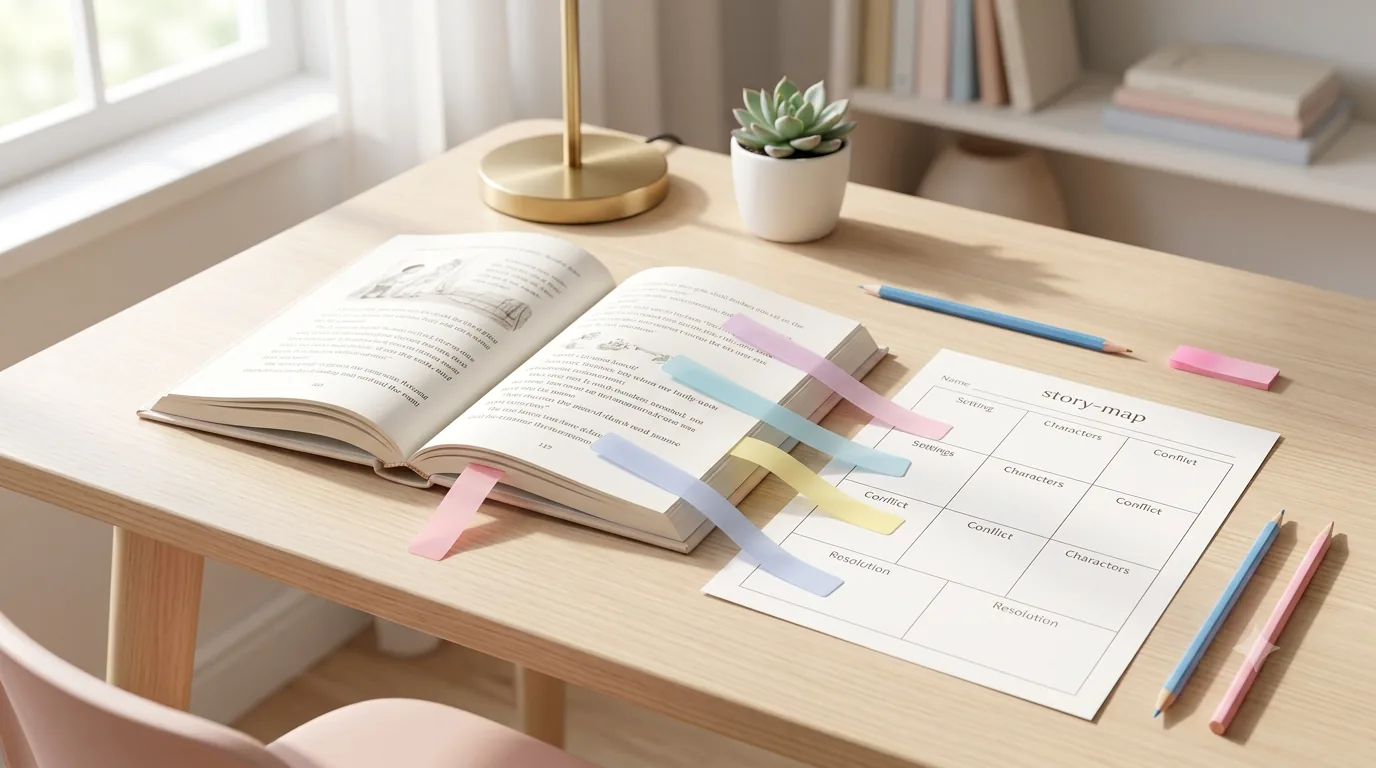
Free Reading Comprehension Graphic Organizers by Reading Skill
Free reading comprehension graphic organizers for story elements, main idea, sequence, cause and effect, comparison, vocabulary, and prior knowledge.
Read guide →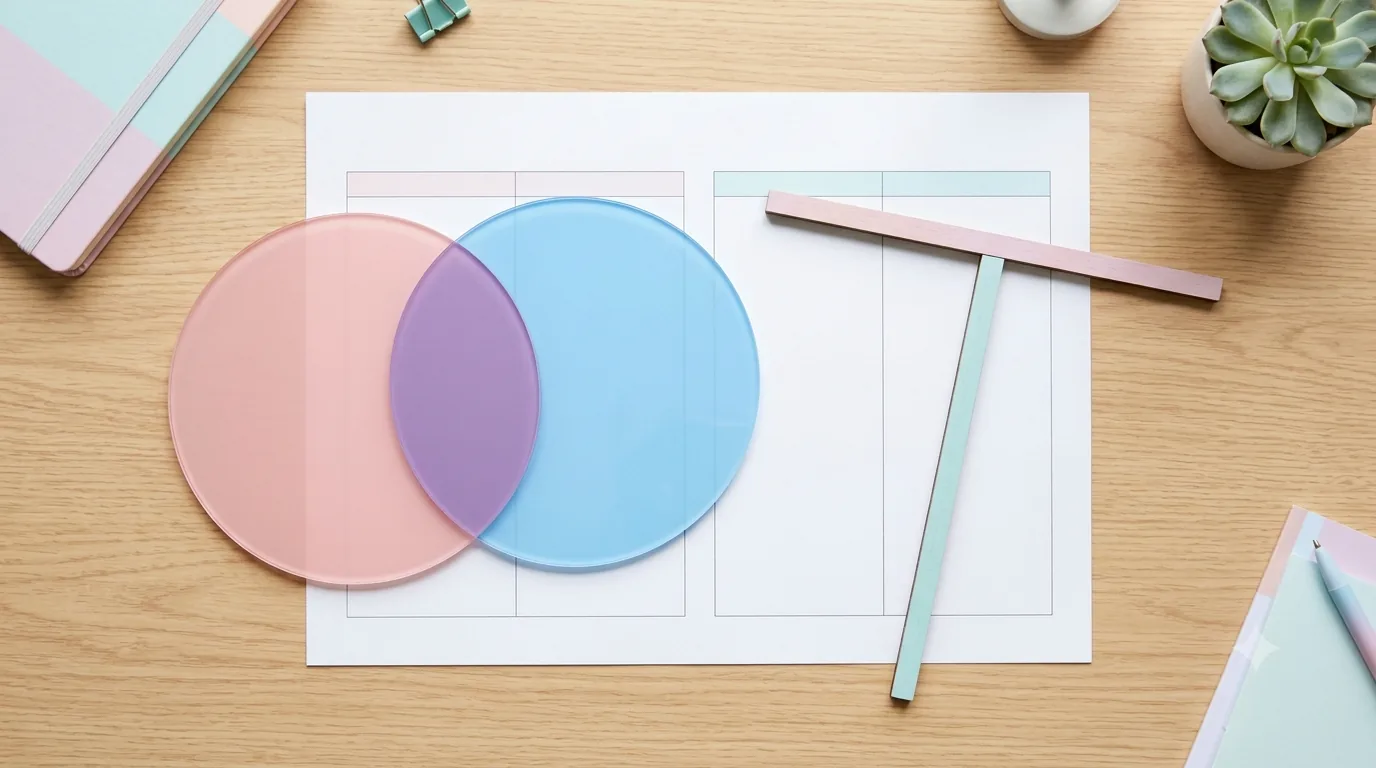
Venn Diagram vs. T-Chart: Which One Should You Use?
Compare Venn diagrams and T-charts, see when each organizer works best, and use a simple decision rule for reading, writing, and classroom tasks.
Read guide →
How to Compare and Contrast Two Texts Without Just Making a List
Learn how to compare and contrast two texts by matching criteria, gathering evidence, using a Venn diagram, and turning notes into a clear response.
Read guide →
How to Use the Four-Square Writing Method to Plan a Paragraph
Learn how to use the four-square writing method to plan a focused paragraph, choose strong supports, and turn the organizer into a draft.
Read guide →
Frayer Model Examples and Non-Examples: How to Choose Ones That Actually Teach the Concept
Learn how to choose strong Frayer Model examples and non-examples, including near-misses, defining characteristics, and worked examples across subjects.
Read guide →
7 Venn Diagram Mistakes That Make Compare-and-Contrast Work Weaker
Fix seven common Venn diagram mistakes, from mismatched criteria to vague overlap, and turn the organizer into stronger compare-and-contrast thinking.
Read guide →Keep organizing
You might also like
Free printable
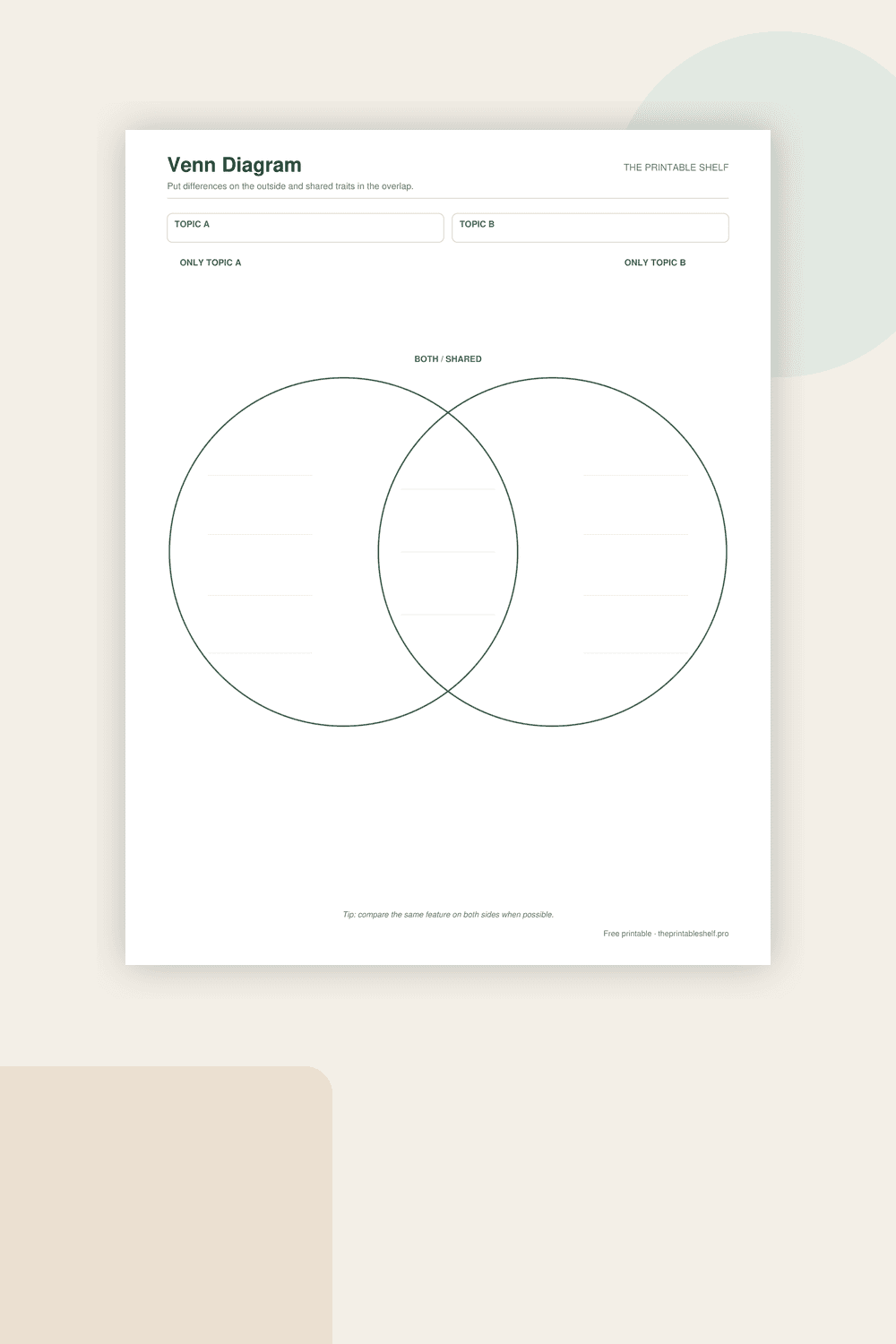
Printable Venn Diagram Template
A clean two-circle comparison organizer with dedicated topic fields, generous writing space, and light writing guides. The page is intentionally simple so the visual relationship does the teaching: differences stay on the outside, while anything true of both topics belongs in the middle overlap.
Free printable
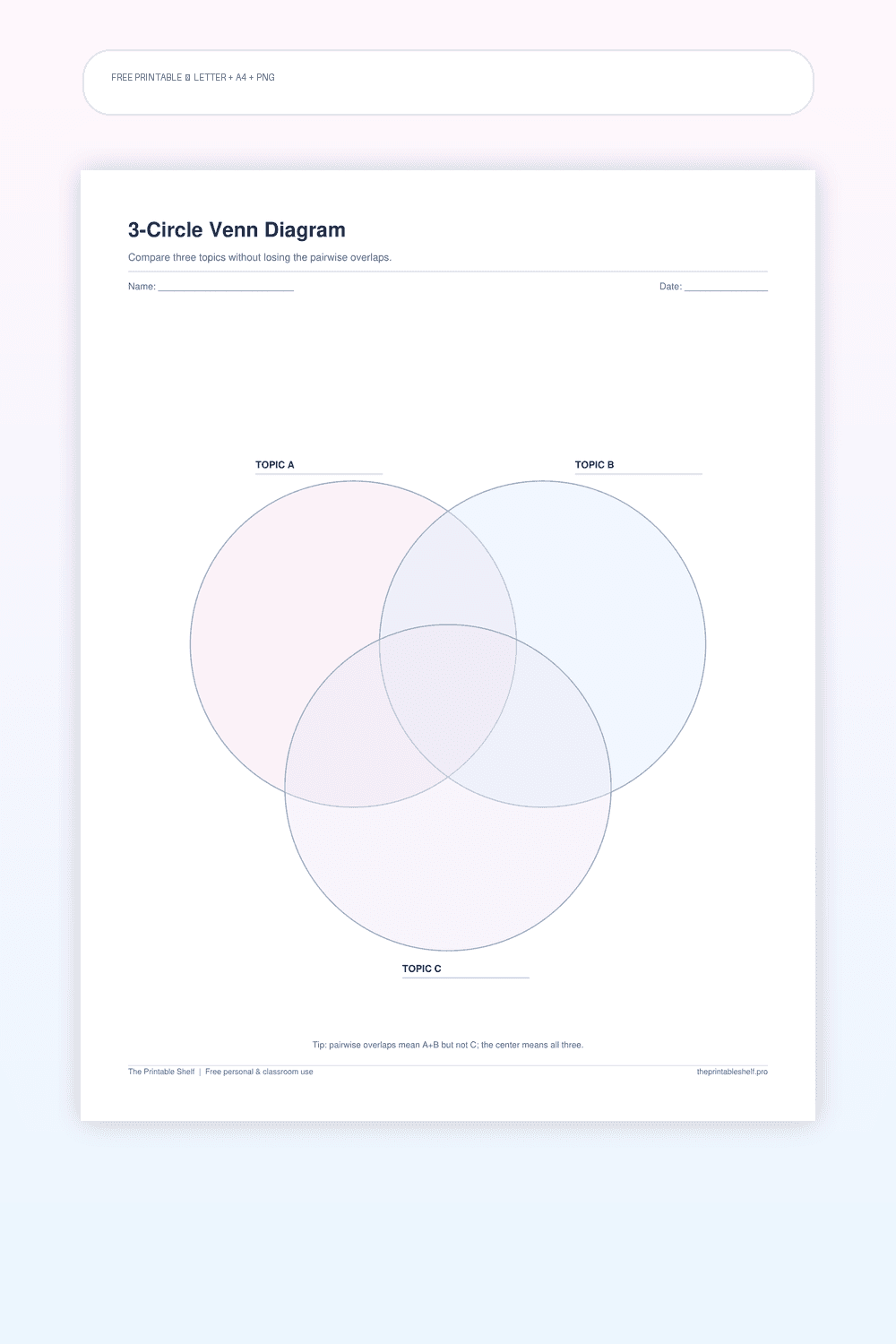
Printable 3-Circle Venn Diagram
A three-set comparison organizer with seven meaningful regions: three outer-only areas, three pairwise overlaps, and one center shared by all three topics. It is more demanding than a standard two-circle Venn, so the layout is intended for concise notes and relationships rather than paragraph-length writing. The page also leaves room to label all three topics clearly before the comparison begins.
Free printable
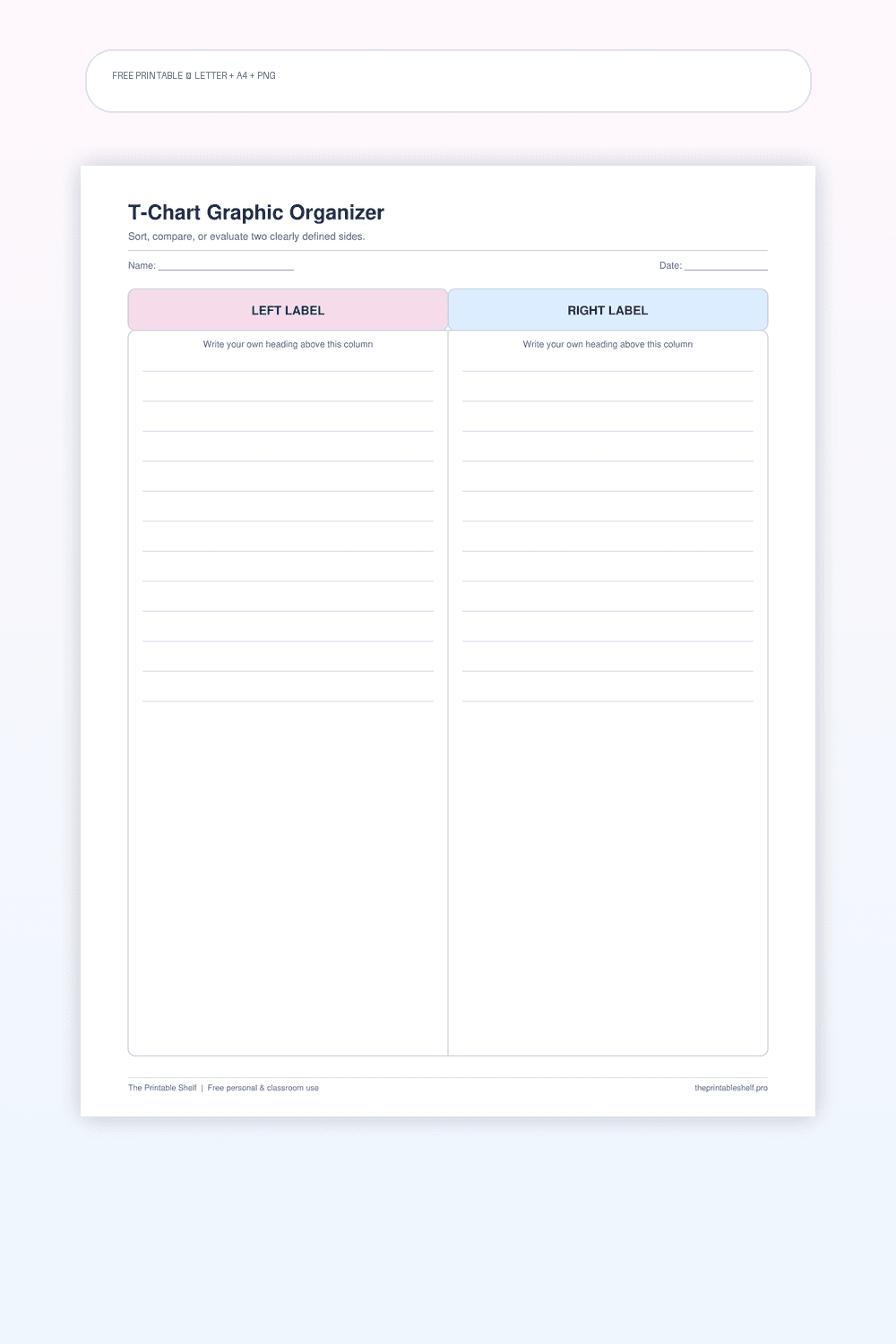
Printable T-Chart Graphic Organizer
A clean two-column thinking sheet that can be relabeled for dozens of school, study, and planning tasks. Unlike a compare-and-contrast organizer with fixed prompts, a T-chart stays intentionally open: the user decides what the two sides mean, which makes it useful for classification, decision-making, text evidence, observation, and quick note sorting.